

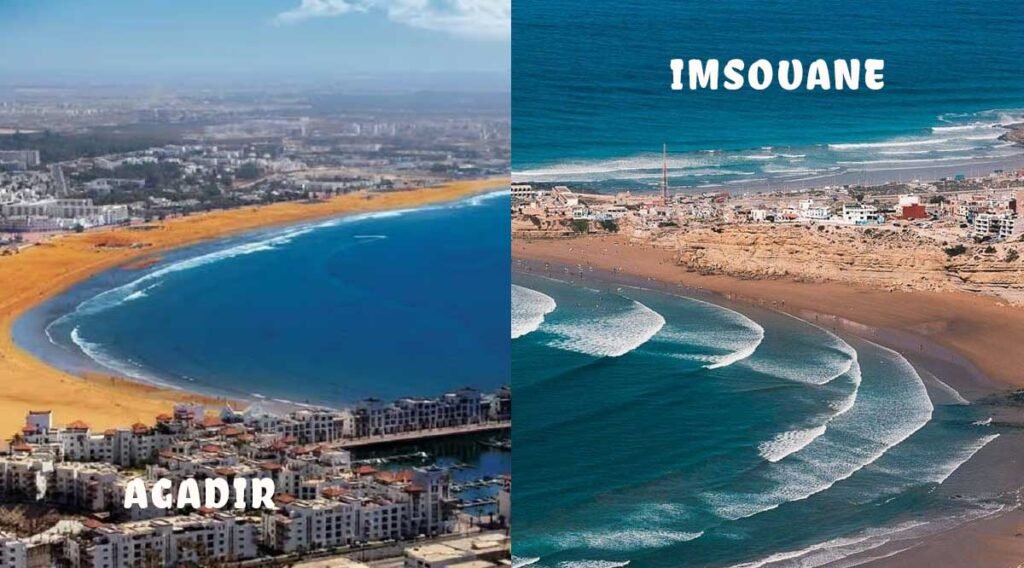
Agadir surfing is a phrase that gets googled before almost every other Morocco surf decision, because most trips start the same way: you see a cheap flight to Agadir, you book it, and then you try to work out where you should actually sleep. Agadir itself? Taghazout, the name every forum mentions? Or Imsouane, a couple of hours further up the coast that keeps showing up in longboard videos?
We run a camp in Imsouane, so you should read what follows with that bias in mind. It doesn’t mean we’ll pretend Agadir has no role — it has a very specific one. It just isn’t the role most buyers assume it is when they click “book”. Here is the honest version.
The short answer: Agadir is the airport. Imsouane is the destination. If you learn nothing else from this page, internalise that sentence and your trip-planning suddenly gets a lot easier.
Why most surf buyers land in Agadir
Agadir Al Massira Airport (AGA) is the main European gateway for the southern Moroccan coast. There are direct flights from the UK, Germany, France, the Netherlands, Belgium, Spain and Scandinavia — which is why almost every surf itinerary in this part of the country begins with the same runway.
Because AGA is right there, a reasonable assumption takes hold: closest = best. If Agadir is where you land, and Agadir has beaches and surf schools, why not just stay in Agadir? It’s a fair question, and it’s the one this comparison exists to answer.
The thing worth saying early is that airport-proximity is a logistics benefit, not a wave benefit. The Atlantic coast of Morocco is long, and the stretch of it that makes Morocco famous for surfing isn’t right outside the terminal. It’s further north, in the fishing villages and reef points that most of the camp industry is actually built around.
Agadir surfing: the honest scene report
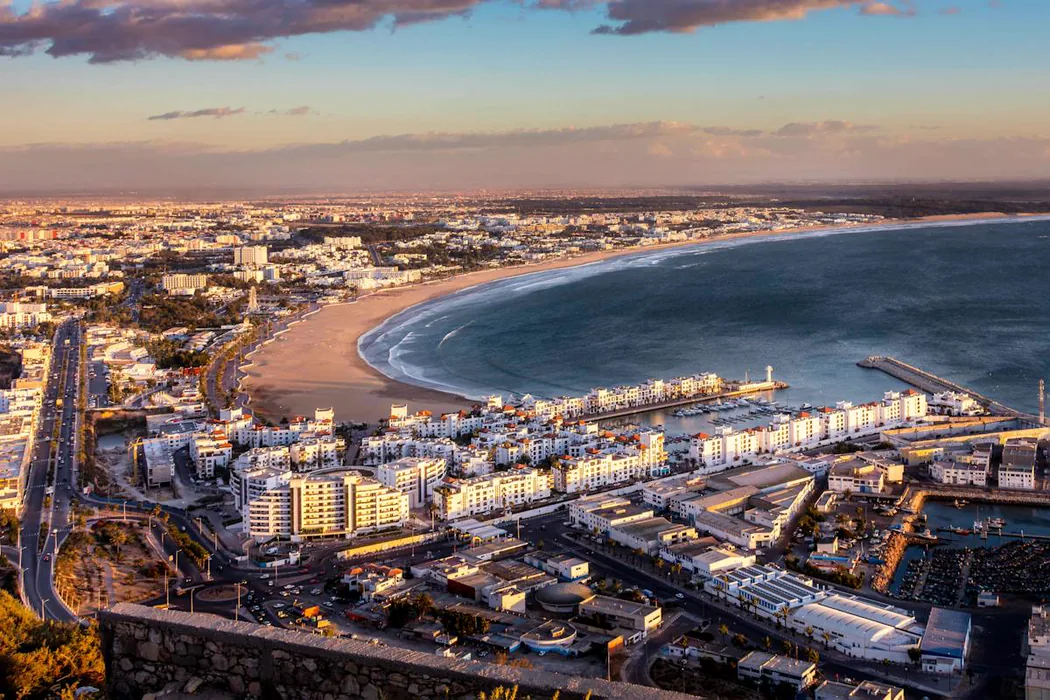
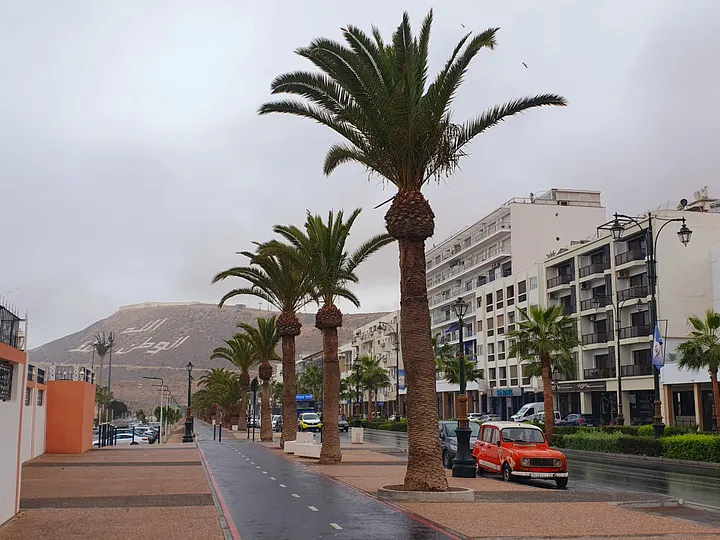
Agadir itself is a modern resort city rebuilt after the 1960 earthquake. It has a long beachfront promenade, big hotels, a marina, and genuine surf — but the surf scene you find here is specific. It’s beach-break territory, and it sits inside a city.
The main spots most travellers encounter are:
- Anza Beach — just north of central Agadir. A beach break that works for beginners and improvers. Google’s AI Overview correctly lists this as one of the top Agadir-adjacent spots.
- Devil’s Rock / Le Camel — reef-adjacent break a short drive north. Steps up in difficulty.
- Tamraght beach breaks — technically Tamraght (a separate village), but travel blogs often lump them into the “Agadir surf zone” for convenience.
- Banana Point — also up the coast, also listed under the “Agadir region” by some guides even though it’s closer to Tamraght than to Agadir itself.
Notice the pattern? Half of what gets marketed as “Agadir surf” is actually 30–40 minutes up the coast road. TheSurfAtlas puts it plainly: “Agadir surf includes the coastline up to Taghazout, which has fantastic beginner beach breaks and some points.” In other words, the label “Agadir surfing” is a geographic convenience rather than a description of what’s in Agadir.
Peak season for this stretch runs October through March, when Atlantic swells are at their most powerful. Summer (May through August) serves up the mellower, more forgiving beach-break conditions that beginners prefer. Agadir’s setup works year-round; it just works differently depending on the month. For a full month-by-month breakdown, see our best time to surf in Morocco guide.
Where Agadir surfing loses as a home base
Here’s where we stop being polite. If you came to Morocco specifically to surf, staying in central Agadir is almost always the wrong call. Not because the waves are bad, but because of what surrounds them.
- City feel, not surf-village feel. Agadir is tourism infrastructure — four-star hotels, promenade restaurants, casino-adjacent bars, package holidays. The rhythm of a surf trip (early starts, salt hair, second breakfast, nap, check the forecast, dinner, sleep) doesn’t fit a city that’s built around general-tourism pacing.
- You still have to drive to the waves. The actually-good breaks are up the coast. You end up commuting out of Agadir every morning in a school van anyway — which means you’re paying city prices for a room you barely sleep in, to commute to waves you could have been walking to from a village.
- No walkable lineup. The best surf trips have the sea within sight of your bed. Agadir has promenade between your hotel and the sand, traffic between you and the better waves, and the wrong scale for the trip you actually came for.
- It’s where nightlife lives, not where surf life lives. If you want clubs and resort bars, Agadir does those well. If you want an honest surf week, every night out in central Agadir is a morning you don’t want to paddle.
This isn’t a knock on Agadir as a destination — it’s a fine city break with a beach attached. It’s a knock on Agadir as a surf trip base. Those aren’t the same thing, and the whole surf-camp industry has quietly migrated up the coast precisely because that distinction matters.
The Imsouane alternative: why the detour is worth it
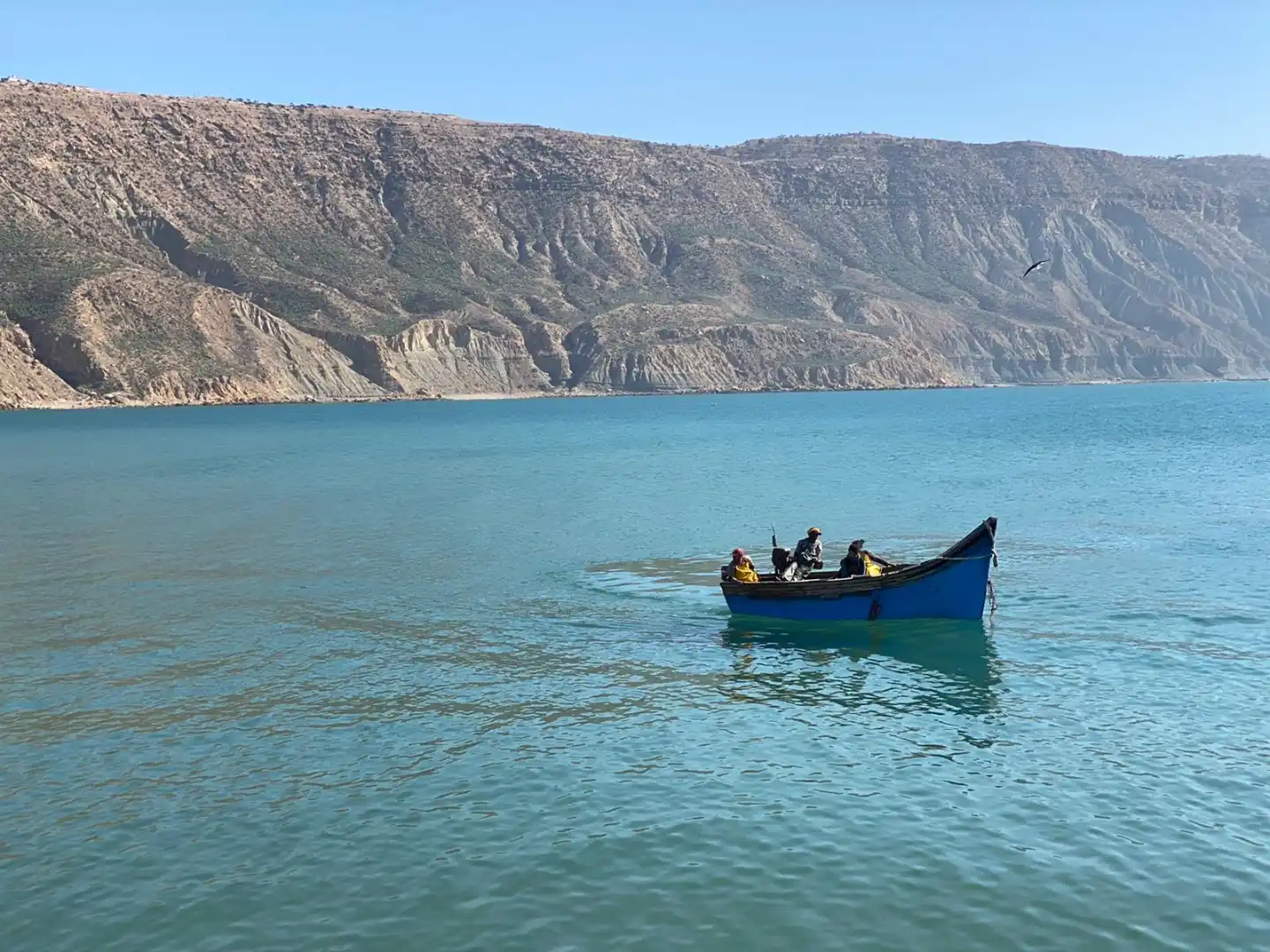
Imsouane sits about two hours north of Agadir by car. It’s a working fishing port rather than a resort town. Boats unload sardines in the morning, a small collection of camps and guesthouses sit above the bay, and the water is a short walk from almost any bed in the village.
What makes it worth the transfer:
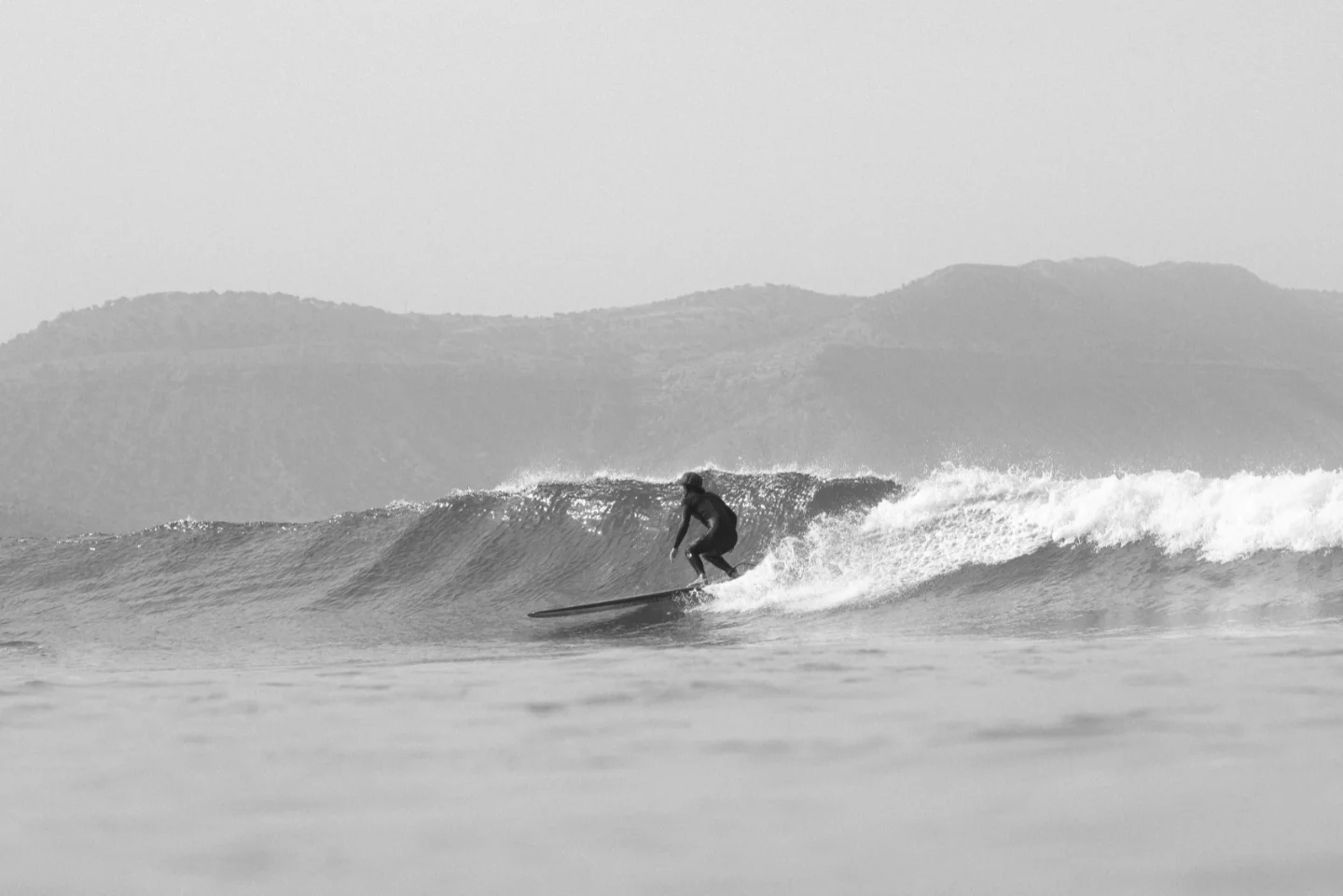
- The Bay. Imsouane’s main wave is widely described as the longest right-hand point break in Africa. Rides can run 300–500m on a good clean swell. It’s a mellow, slope-shouldered wave that holds shape for a beginner learning to trim and a longboarder cross-stepping the nose on the same set. For the full mechanics, read our Imsouane Bay surf guide.
- The Cathedral. A shorter, punchier reef break on the other side of the village for when you want a bit more intensity.
- Village, not city. Imsouane has roosters, fishing boats, a handful of cafés, and not much else. That’s the point. There’s nowhere to be but the water, the camp, and the roof terrace.
- Smaller crowds, in general. The Bay can get busy on the best winter days — it’s famous, we’re not going to pretend otherwise — but the day-to-day crowd factor is lower than the Taghazout-Tamraght stretch and dramatically lower than central Agadir’s city beach on a weekend.
- Walkable rhythm. You wake up, you look at the bay from the terrace, you walk down, you paddle out. That’s the experience you’re actually paying for when you book a surf trip.
The two-hour transfer from AGA is the “cost”. In return, you get a village built around the water instead of a city that happens to have some next to it. For most buyers, that’s an excellent trade.
Agadir surfing vs Imsouane: side-by-side comparison
| Factor | Agadir | Imsouane |
|---|---|---|
| Airport proximity | ~25 min from AGA | ~2 hr drive from AGA |
| Wave type | Urban beach breaks | Long right-hand point + reef |
| Beginner-friendly? | Yes, mellow summer beach breaks | Yes — the Bay is famously forgiving |
| Longboard-friendly? | Situational | Arguably the #1 longboard wave in Africa |
| Crowd density | City-beach crowds + surf schools | Smaller — peak winter Bay days are the exception |
| Atmosphere | Resort city, promenade, hotels | Fishing village, cafés, port |
| Walkable to surf | Rarely — you drive | Almost always |
| Nightlife | Yes, properly | Minimal — it’s a village |
| Accommodation range | Budget hostels to 5-star hotels | Guesthouses, surf camps, apartments |
| Cost of week | Wide range, city premium on hotels | Generally lower than equivalent city room |
| Best for solo? | Fine, but you do your own thing | Excellent — camp social scene built in |
| Best for couples? | City romance, if that’s what you want | Quiet sunset terraces, if that’s what you want |
| Best for families? | Plenty of non-surf amenities | Smaller scale, beginner wave, less for non-surfers to do |
| General-tourism value | High — museums, souks, day trips | Low — it’s a surf village |
| Dedicated-surf-trip value | Compromised by city rhythm | High — everything aligns |
If we had to sum the table up in a single line: Agadir wins on variety, Imsouane wins on focus. A surf trip wants focus. For more on how these two towns sit against the other famous name in the region, our Imsouane vs Taghazout comparison covers the third corner of that triangle.
Combining both in one trip
You don’t actually have to choose one over the other. A sensible Morocco-surf itinerary uses Agadir for what it’s good at (landing, logistics, a last dinner out) and uses Imsouane for what it’s good at (the actual surf week). Something like:
- Day 0 — Arrival in Agadir. You land late, tired, jet-lagged. Stay one night in or near Agadir so you don’t drive in the dark on your first evening. Eat, sleep, rehydrate.
- Day 1 morning — Transfer to Imsouane. Private transfer typically runs €60–€100 each way. Grab a coffee stop on the road if the driver suggests one. Arrive mid-morning, unpack, first paddle that afternoon.
- Days 1–7 — Imsouane. The actual trip. Surf twice a day if conditions allow. Eat with the group. Sleep well. Repeat. The beginner’s guide to surfing in Morocco walks through what a typical week looks like hour-by-hour.
- Day 8 — Optional final night in Agadir. If your flight is early, sleep in Agadir the night before. If it’s an afternoon flight, transfer direct from Imsouane in the morning and you’re done.
This pacing gives you the best of both: the city as a functional entry and exit point, the village as the trip itself. For a fuller logistics walkthrough (flights, visas, cash, SIM, transfers), see our Morocco surf trip planning guide.
Seasons: which base suits which month
Agadir’s beginner-friendly beach breaks work more months of the year, because city beaches tolerate smaller and less consistent swell. The summer months (May–August) are Agadir’s sweet spot for a mellow learner trip.
Imsouane’s headline season is winter. October through March is when Atlantic swells arrive with real power, and the Bay hits its stride as a long, carvable point break. Shoulder months (April, September) still give you plenty, especially if you’re improving rather than starting from zero. Pure summer (July–August) is the quietest period — the Bay still works, but it’s a softer, smaller version of itself, which incidentally makes it excellent for first-timers.
A rough rule of thumb: if you’re coming in summer and you’re a total beginner, either base works, and Imsouane still edges it because the rhythm is built around surf. If you’re coming in autumn through spring, Imsouane wins more convincingly, because that’s when the Bay and the Cathedral show what they can actually do.
The verdict
Stay in Agadir if any of the following is true: you physically cannot face a two-hour transfer after your flight; you’re combining surf with a general city break; you want resort-style amenities and nightlife alongside your lessons; or you’re travelling with non-surfing family members who need museums, souks and a promenade to keep them occupied.
Go to Imsouane if you’re taking the trip primarily because you want to surf. Go to Imsouane if you want the village rhythm, the walkable lineup, and a wave that forgives a first pop-up and rewards a thousandth one. Go to Imsouane if you want the trip to feel like a surf trip, not a city holiday with lessons tacked on.
In practice, that’s most buyers. That’s why the whole camp industry moved up the coast. The airport is a logistics problem solved by a two-hour drive; the destination is a choice that shapes the whole week.
If you’d rather see our own Imsouane setup specifically, the Olas Surf Camp Imsouane page has the accommodation detail, and the best surf spots in Morocco listicle gives you the wider map if you want to compare Imsouane against more than just Agadir. For the established forecast view on Agadir surfing conditions, Surfline’s Morocco regional forecast is the industry reference.
FAQ
Is Agadir good for surfing?
Yes, within limits. Agadir has genuine beach breaks (Anza, Devil’s Rock area) and a long shoreline that TripAdvisor accurately describes as suitable for “beginners, intermediates, and pros.” It’s a year-round surfable stretch. The question isn’t whether Agadir has surf — it does — but whether you want to stay in a city to access beach breaks that you still have to drive to. For most dedicated surf trips, the answer is no.
Is it worth going to Imsouane if I’m flying into Agadir?
Yes. A two-hour transfer from AGA to Imsouane is trivial compared to the flight you already took to get to Morocco, and what you arrive at is a proper surf village built around one of Africa’s most famous point breaks. Private transfers typically run €60–€100 each way. Split across a group it’s almost nothing.
How big are the waves in Agadir?
Most of the year, small to medium. Agadir’s beach breaks see their most power between October and April, when Atlantic swells push size and shape. In summer (May–August) conditions are mellow by design — which is exactly why Agadir is sold as a beginner-friendly window during those months. If you want bigger, more consistent waves with a longer ride, that’s a point-break question, and Imsouane is the answer.
What’s the best surf spot between Agadir and Imsouane?
The whole stretch is surfable — that’s partly why the “Agadir surf zone” label gets used so loosely. The standout wave on the coast north of Agadir is Imsouane Bay itself, because of its length, its forgiving shape, and its longboard pedigree. Shorter, punchier reef breaks (like Imsouane’s Cathedral or the reef setups around Tamraght) are the alternative when you want more intensity. Which one is “best” depends on what you’re trying to do that day.
Should I stay in Agadir or Taghazout for my first surf trip?
Neither is usually our answer. Taghazout is closer to the Agadir-zone beach breaks and has a more developed surf-village scene than central Agadir, so it’s a better surf base than the city itself. But it’s also busier and more expensive than Imsouane for a comparable experience. Most first-time surfers get more out of a quieter village with a forgiving, long wave — which points to Imsouane. Taghazout earns its place for a second or third trip once you’re chasing specific points.
Can I visit both Agadir and Imsouane in one week?
Easily. The standard pattern is one night in or near Agadir on arrival (to avoid a long dark drive on day one), six nights in Imsouane for the actual surf week, and optionally one final night in Agadir before your flight home. You get your surf trip without skipping the city entirely, and you don’t sacrifice a single surf day to logistics.
Ready to plan it?
If any of the above has convinced you that Agadir is the airport and Imsouane is the destination, you can see dates, rooms and pricing on our booking page. If you’re still weighing it up, our Imsouane vs Taghazout comparison closes the third corner of the triangle.


0 Comments