
A beginner surf camp Morocco trip is, for most first-timers, a quiet pre-arrival panic: will I be okay on day one? Behind that sits a queue of smaller worries — am I too old, am I too unfit, will I be the worst in the group, what if I can’t swim very well, what if the water is freezing, what if I hate it by Tuesday. Most surf-camp content online answers the easy questions and pretends the other ones don’t exist. This post is for the other ones.
We run a small beginner surf camp in Imsouane, on the Atlantic coast about two hours north of Agadir. We’ve walked hundreds of first-timers through their first week. What follows is what actually happens — the real rhythm, the real emotional arc, the things nobody warns you about. If you haven’t chosen a camp yet, read our seven questions to ask before you book first. If you want the category-level overview, the Morocco surf camp guide is the pillar post. For the basic mechanics of learning — how a foam board works, what pop-up drills look like — the International Surfing Association’s primer on what surfing actually is covers it in one read.
Day 0 at a beginner surf camp in Morocco: you arrive, you’re fed, you sleep
Your week starts, realistically, at Agadir Al Massira airport (AGA). Direct flights land from London, Manchester, Bristol, Dublin, Paris, Brussels, Amsterdam, Madrid, Barcelona, Milan, Berlin, Frankfurt, Düsseldorf, Zurich, Geneva. For most European buyers, it is a three-to-four-hour flight and you land in the late morning, late afternoon, or late evening depending on your airline.
If you want to decode the surf lingo before you arrive — “green wave”, “pop-up”, “inside”, “impact zone” — Surfer Today’s glossary of surfing terms is the cleanest reference we’ve found.
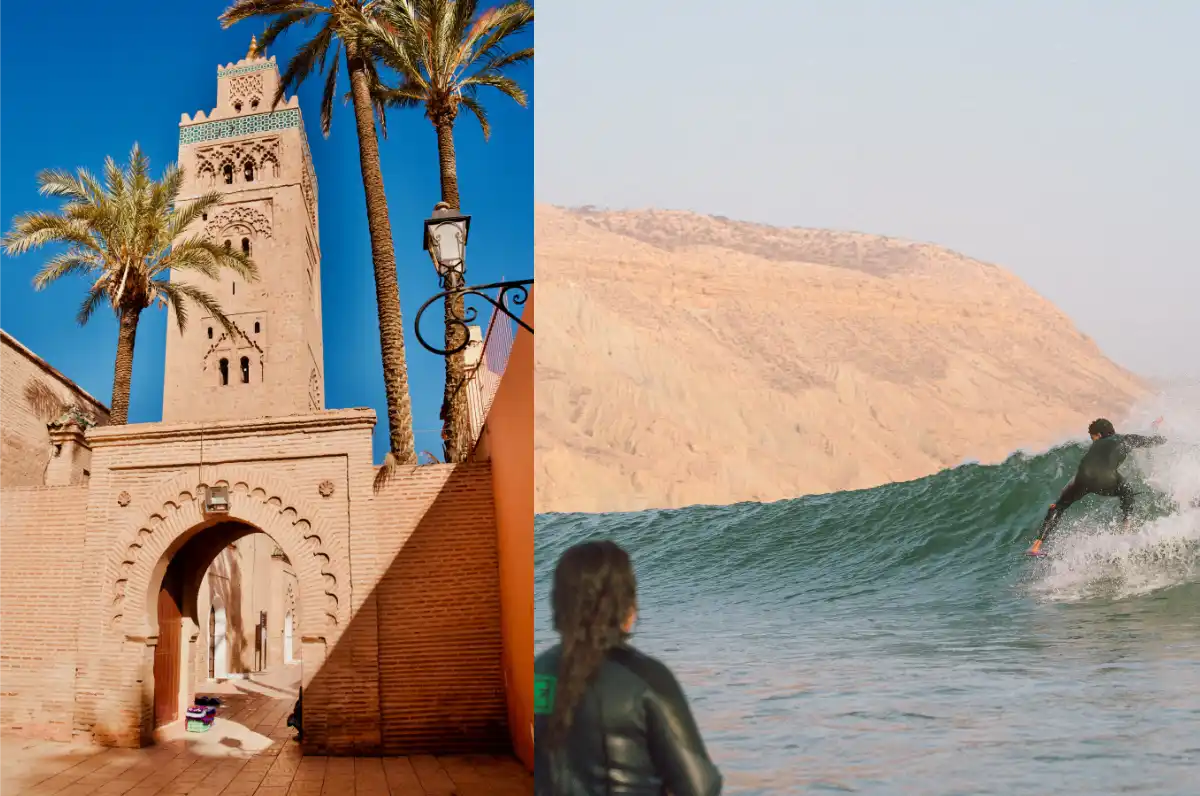
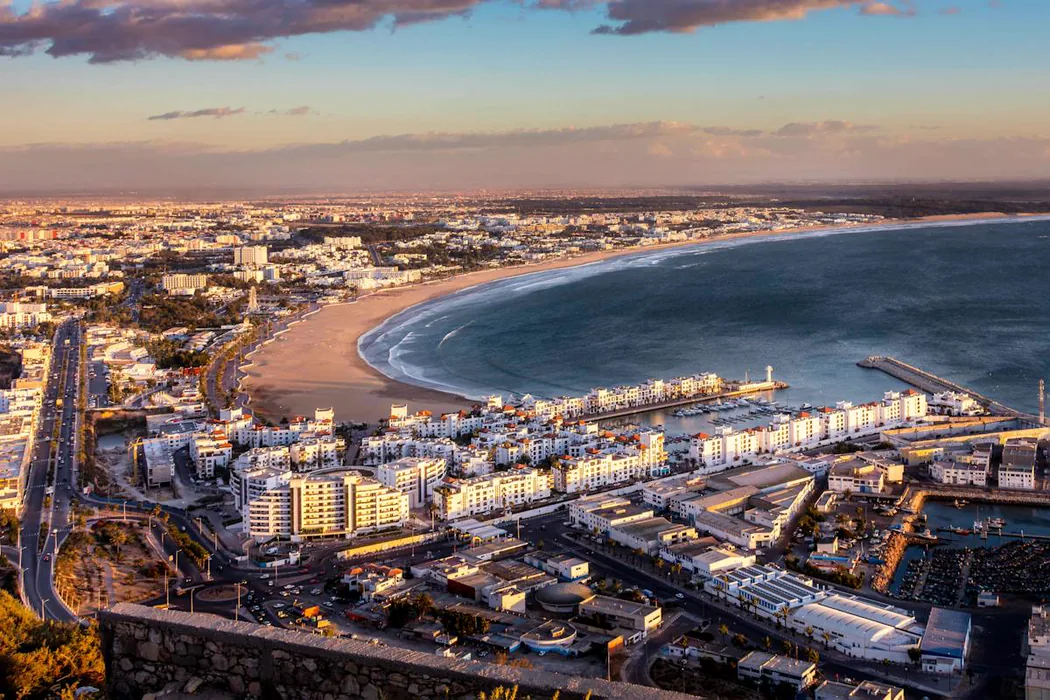
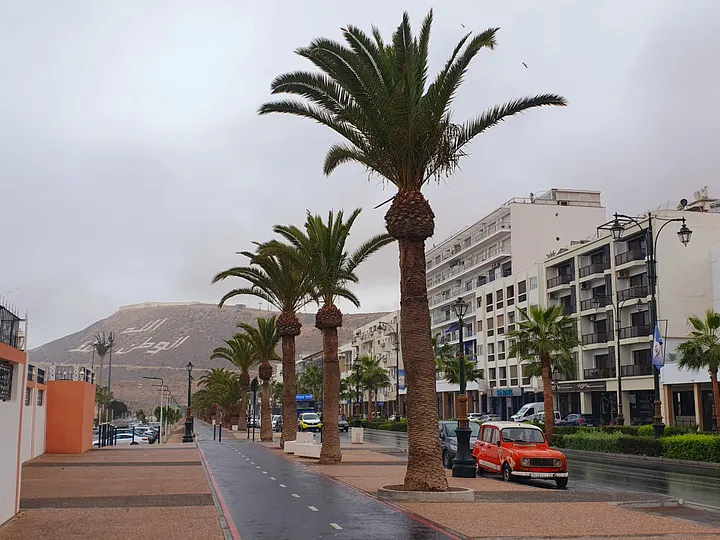
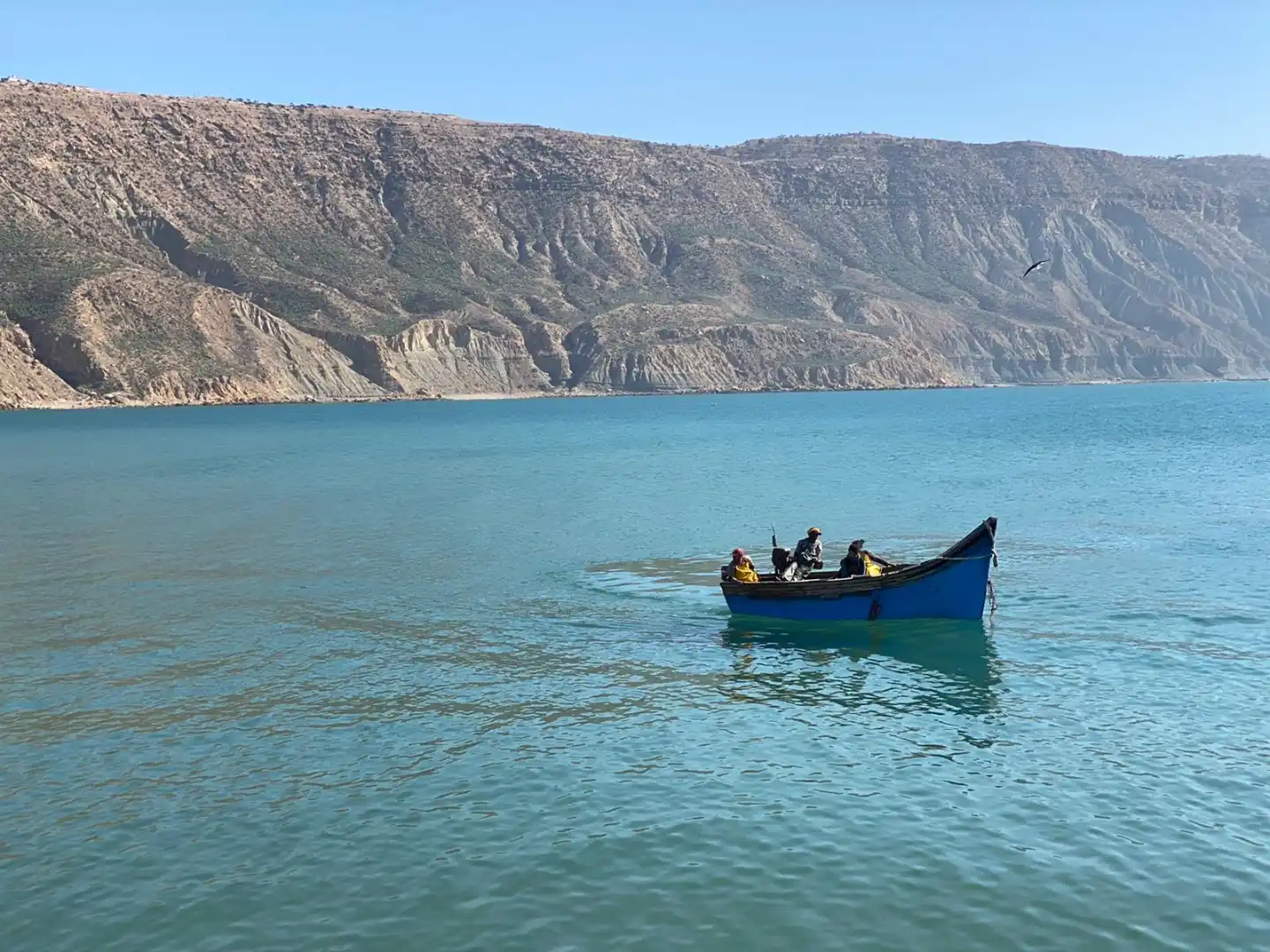
You will be a little tense at arrival. This is normal. You collect your bag, walk past the taxi desk, and find the transfer driver holding a sign with your name on it. The drive to Imsouane is two hours up the coast — not the shorter Taghazout drive that most camps do. You will see Agadir’s long beach, then the road climbs into the argan forests, and about ninety minutes in you hit a switchback and the Bay appears below you. If you have been travelling since 5am it is an emotional moment. We have seen guests cry. (If you are weighing up the two regions, our Imsouane vs Taghazout comparison walks through why we are up here and not down there.)
You arrive at the camp, someone shows you to your room, you wash off the flight. Dinner is at 7:30. You will sit at a long table with people you have never met — the Monday starters who got here earlier, the Saturday-to-Saturday guests in their final dinner. It is awkward for about fifteen minutes and then it is not. There is something about sharing a first Moroccan tagine with strangers on a rooftop that shortcuts small talk faster than a week in a normal hotel. By 10pm you are in bed, a little jet-lagged, a little excited, and very asleep.
Day 1: Beach theory and your first paddle
You wake up around 7:30 — the light through the window does it, plus the roosters down by the fishing port. The first morning is the slowest because everything is unfamiliar: the coffee on the rooftop, the smell of Moroccan bread from the kitchen below, the rustle of wetsuits being laid out in the yard.
Breakfast around 8:30. Eggs, olives, bread, honey, yoghurt, mint tea, Moroccan pancakes called msemen. Eat. You will burn this off by 11.
9:30 is the forecast huddle. The head coach reads the swell chart out loud, explains what the wave will look like today in plain language (“small, clean, onshore by 1pm so we go out now”), and splits guests into groups by level. If you are a genuine first-timer, you go with the beginner instructor. If you have some experience, you go with the intermediate instructor. Nobody is sorted based on whether they said “intermediate” on the booking form and can actually paddle out — we sort based on what the instructor sees in the first 30 minutes of the session, and we move people up or down through the week as they progress.
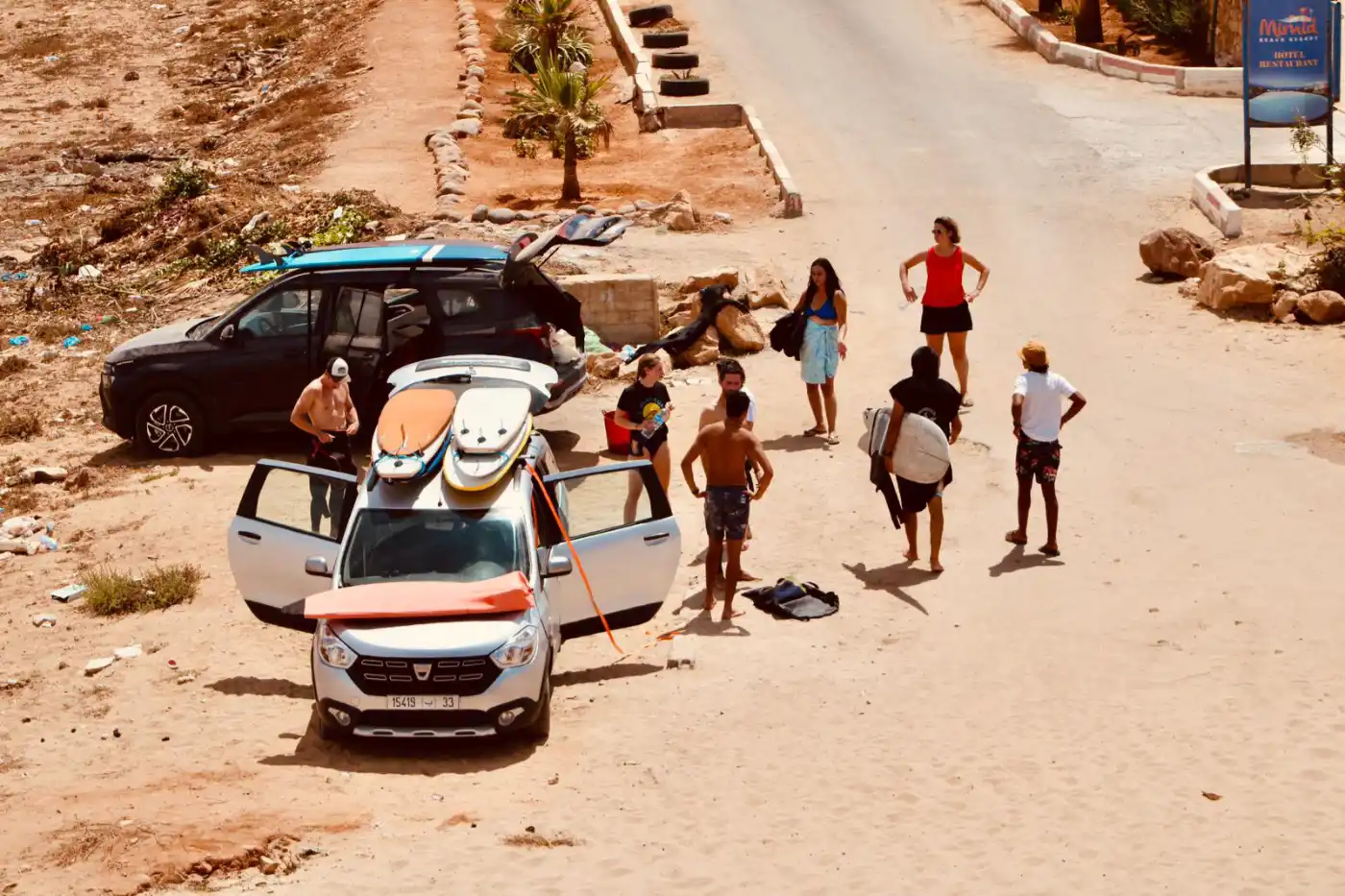
You walk or van-transfer to the beach. Boards come off the roof. Wetsuit on — and yes, the first wetsuit of your life will feel ridiculous. Everyone looks like everyone else. This is part of the point: your self-consciousness lasts about seven minutes before it is replaced by the much bigger problem of trying to stand on a floating piece of foam.
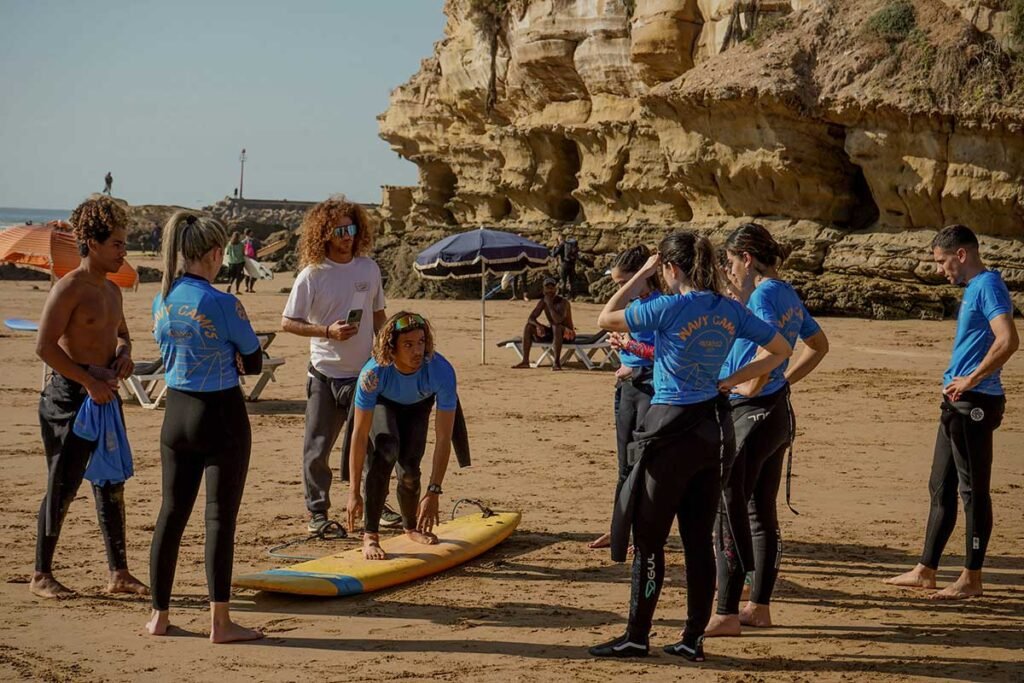
The first 40 minutes are on sand. You learn three things: how to lie on the board (much further back than you think), how to pop up (it is not a push-up, it is a jump), and how to stay safe (where to position relative to other surfers, how to fall off the board, why you never let go of it). The drills feel repetitive. Do them anyway. The sand is where you build the muscle memory that will come online when a wave is under you and your brain has stopped working.
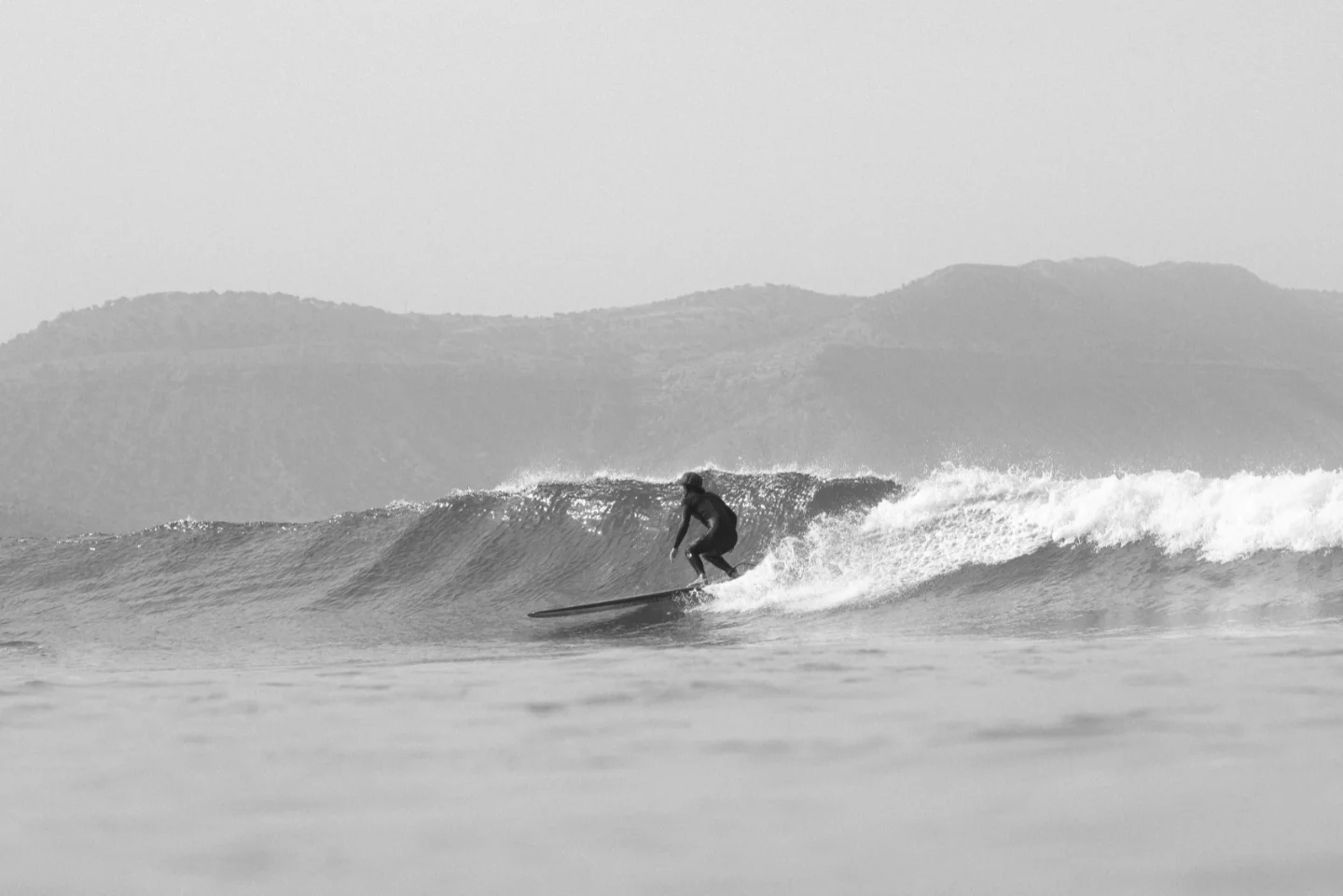
Then you go in the water. You will not stand up on your first wave. You will not stand up on your tenth wave. Somewhere between the twentieth and thirtieth wave, in the whitewater, for maybe a second and a half, you will stand. You will then fall in the ugliest way possible. Nobody saw. Even if they did, nobody cares — they are busy with their own failed pop-up twenty metres down the sandbar. We are in the water with you for the whole session, not just the push-off. The instructor is calling waves, telling you when to paddle, catching you when you need catching.
Out of the water around 12:30. You are wrecked. You did not know human arms could feel like this. Lunch is at 1pm — a three-course Moroccan meal in a house that smells of cumin and baked bread. You eat more than you thought possible. You go and fall asleep for an hour whether you planned to or not. If any of this feels overwhelming, you are having the normal Day 1 experience. Our Morocco surfing beginner’s guide walks through the mechanics in full if you want to read ahead.
Day 2: Your first actual wave
Day 2 is when beginners stop falling off on pop-up and start popping up more consistently. You are still in whitewater for most of the session, but toward the end the instructor may paddle you a little further out and push you onto an unbroken wave — the “green wave” — and there it is. Smooth acceleration instead of shove-and-pray. A noise will come out of you that you have never made before.
Or not. Some people’s Day 2 is not their breakthrough day. That is also fine. Surfing progresses in steps, not lines. Somebody in your group will catch nothing green and will be visibly frustrated at dinner. Somebody else will catch three and will not stop talking. By Day 4 they will have swapped positions. Do not measure your week on Day 2.
Dinner on Day 2 is when the group starts forming. You will notice it. The solo travellers have paired up with the couples, the Germans are sitting next to the Brits, and someone has broken out a bluetooth speaker. Welcome to the mid-week lock-in.
Day 3: The breakthrough and the muscle ache
Day 3 is the hard day. Your lats — the muscles along the side of your back that you did not know existed — will be yelling. Your triceps from paddling, your obliques from trying to twist off the board, your neck from looking over your shoulder at oncoming waves. You wake up on Day 3 and moving to the bathroom feels like punishment.
And then, usually, Day 3 is also the day it clicks. Something about the pop-up mechanics suddenly works. You find yourself standing more often than you are falling. The instructor starts moving you to slightly bigger pieces of wave. Guests who at breakfast were muttering about quitting surfing forever are, by lunch, asking when the afternoon session starts. We have watched this exact turnaround happen in maybe a hundred different guests. Treat the Day 3 slump as a signal that the breakthrough is coming, not as a reason to stop.
Afternoons from Day 2 onwards are flexible: you can take an optional second session if the forecast is good, swap to an hour of video review where the coach goes through your session footage frame by frame, go for a walk down to the fishing port, read on the rooftop, or just lie down. Most guests do one optional session and spend the rest of the afternoon horizontal.
Mid-week: The social lock-in
By Wednesday night you know everybody by name. The group has its in-jokes — somebody’s catastrophic wipeout has become a running bit, the instructor’s pronunciation of “bottom turn” has become another, and half the group is now saying “send it” to each other at dinner as though they have been surfing for years.
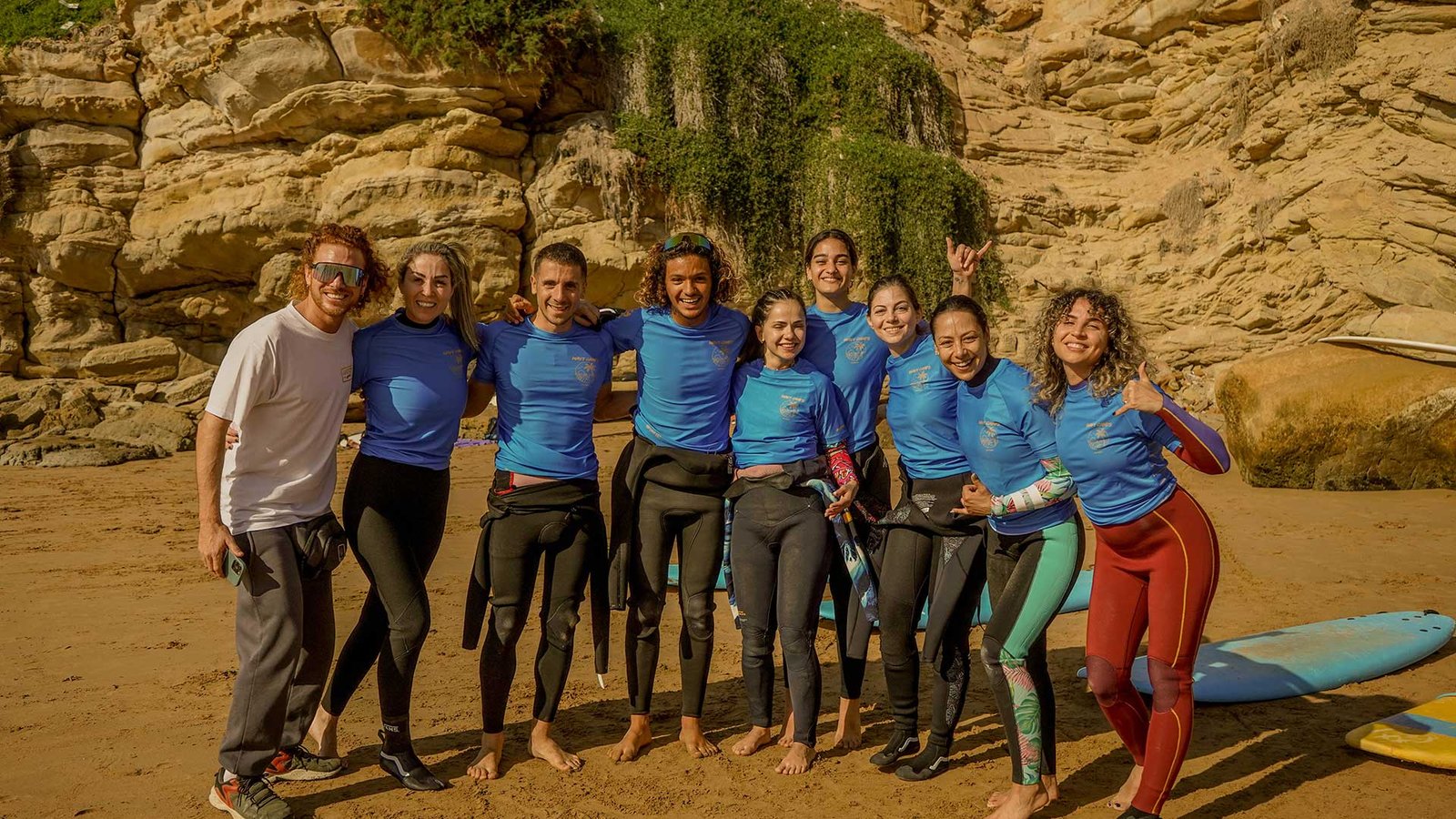
This is the bit solo travellers always worry about and almost never regret. Morocco surf camps draw an unusual mix — a retired couple from Brittany, a tech worker from Berlin between jobs, two London nurses who booked together, a solo German woman who has been three times. Shared physical exhaustion plus a shared in-joke is a faster social solvent than most things. You do not need to be good at small talk. The sport does the work.
If you are a solo traveller specifically worried about arriving into a booked-out couples week, ask us before you book. We can tell you the rough age range and solo/couple split of the week you are considering, and if it is heavily skewed one way we will say so.
Day 6–7: What you actually leave with
Let us be honest. You will not leave Morocco after one week as “a surfer”. That is a marketing line and a bad one. Here is what you will actually leave with:
- The ability to paddle out on a beginner beach break in easy conditions, catch waves yourself without a push, and ride them straight.
- A basic vocabulary — green wave, whitewater, pop-up, priority, lineup — that means you can walk into any surf shop or camp on the next trip and not feel clueless.
- A physical skill that is stuck in your body whether you surf again next week or next year. Pop-up muscle memory does not vanish. You will be faster to pick it up the second time.
- Almost certainly, a second trip already half-planned in your head. Maybe Portugal in the summer, maybe back here in October. The “what if I hate it” problem tends to invert into a “when is the next one” problem by Saturday morning.
You fly home on Day 7 or 8, wetsuit rash on the back of your neck, a WhatsApp group of people you now care about, and legs that have not felt this used in years. The airport on the way out feels different to the one on the way in. That is the whole product.
Common beginner surf camp Morocco fears, answered plainly
“I’m 45 / 55 / 65 — am I too old?”
No. Our oldest active guest last season was 68. The two things that actually matter with age are joint comfort (paddling is hard on shoulders; most people are fine, a few with rotator-cuff history struggle) and recovery speed (you may need a full rest day mid-week where a 25-year-old would not). Neither disqualifies you. A guest in her mid-50s who had never stood on a board made her first green wave on Day 4 last October. If anything, older first-timers tend to listen better and progress faster than nervous 20-somethings who try to muscle through the pop-up.
“I can’t swim very well — can I still come?”
The honest answer: you need to be comfortable enough in water that falling off a board and being pushed around by small whitewater for a few seconds does not panic you. You do not need to swim a mile. You are in a wetsuit (buoyant), with a board leash (attached to you), in water that at the beach break is typically waist- to chest-deep for the first few days. If the question is “I can doggy-paddle 25 metres but I am not fit” — you are fine. If the question is “I genuinely cannot swim and panic when my feet cannot touch the bottom” — book a pool-course at home first.
“I’m not fit enough.”
You are fitter than you think. Paddling is cardiovascular exercise but it builds across the week — Day 1 you will feel destroyed after 90 minutes, Day 5 you will be going two hours and still wanting more. If you can walk briskly for 45 minutes, you have the baseline. The single most useful pre-trip prep is not running; it is five minutes a day of press-ups and plank work in the month before, which spares your shoulders on Day 1.
“I’ll be the worst person in the group.”
Maybe. Someone has to be, mathematically. We sort groups so that absolute beginners are with other absolute beginners, and improvers are with other improvers, specifically to avoid this feeling. The secret nobody tells you: the person in the group who is “worst” at the start is almost always the one who has the biggest improvement by Friday, and the group all clap when they catch their breakthrough wave. Last week’s worst is this week’s favourite story.
“What if the water is freezing?”
It is not. The Atlantic in Morocco sits at 18–22°C across the year. You are in a 3/2 mm wetsuit (provided). Welsh surfers laugh at our winter water temperatures. Irish surfers openly weep with relief. If you are a Mediterranean-summer-only person you will find January cold-ish for the first 10 minutes and forget about it afterwards.
“What if I hate it on Day 1?”
Some guests do. Day 1 is the hardest session of the week in most cases — the body is fresh to the sport, the brain is overloaded with instruction, and you have not yet had the pop-up moment that rewires the whole experience. If you genuinely hate it after Day 1, come to dinner, eat, sleep, and do Day 2 anyway. We have never met a guest who hated Day 1 and still hated it by Day 3. If by some miracle it does happen, we can flex your week — more walks, more afternoon off, different spot on a different board. Nobody forces anyone back into the water.
A real day at our beginner surf camp in Morocco
Here is the schedule, plainly. This is Olas on a standard day.
- 7:30am — you wake up. The light does it.
- 8:30am — breakfast on the rooftop or in the dining room. Eggs, bread, olives, honey, yoghurt, msemen, mint tea, real coffee.
- 9:30am — forecast huddle with the head coach. Group splits announced. Boards checked.
- 10:00am–12:30pm — first session. Typically two and a half hours including the theory/warm-up on sand.
- 1:00pm — lunch. A proper three-course Moroccan meal.
- 2:00–4:00pm — free time. Most guests sleep. Some read. A few walk down to the port.
- 4:00–6:00pm — optional second session or video review with the coach.
- 7:30pm — dinner. Long table, everybody eats together. Couscous on Fridays.
- Evening — rooftop, conversations, early bedtime for most.
The full week programme — what is included, what counts as an “optional” session, what happens on the no-surf day — is on our surf camp page. For the precise all-inclusive breakdown (transfers, meals, equipment, lessons, extras), our all-inclusive page spells out line by line what you are paying for.
FAQ
Is Morocco good for complete beginners?
Yes — arguably the best international beginner surf destination from Europe. The stretch from Agadir up through Taghazout and Imsouane has soft beach breaks, slow rolling whitewater, forgiving bay waves, and water warm enough not to require thick wetsuits. Flights from most European cities are direct to Agadir, and the beginner surf camp infrastructure is well developed. If it is your first trip, Morocco is a safer choice than most.
How many days does it take to stand up on a surfboard at a Morocco surf camp?
Most beginners stand up in whitewater on Day 1 or Day 2, briefly — usually for a second or two. “Stand up properly” (a few seconds, in control) typically happens Day 2 or Day 3. Catching an unbroken green wave yourself — the real milestone — happens for most beginners on Day 4 or Day 5. A small percentage get there on Day 2. A small percentage need a second trip. All of these are normal.
Am I too old to learn to surf at a camp in Morocco?
Almost certainly not. Our active guests range from teenage to late-60s regularly, and occasionally older. Age affects recovery time more than learning ability. If you have severe shoulder or knee injuries that would rule out swimming laps, talk to us before booking. Otherwise, you are fine.
Do I need to be fit to come to a beginner surf camp in Morocco?
You need a baseline of general fitness — comfortable walking 45 minutes, able to swim 25 metres, no severe shoulder issues. Beyond that, paddling fitness builds fast across the week. The most useful pre-trip preparation is press-ups and core work, not cardio.
Do I need to swim well to go to a Morocco surf camp?
You need to be comfortable in water, not a competitive swimmer. Wetsuits float, boards are leashed to you, and beginner sessions happen in chest-deep water. If you genuinely panic when your feet cannot touch the bottom, book a pool course at home before you come.
What if I hate it on day 1?
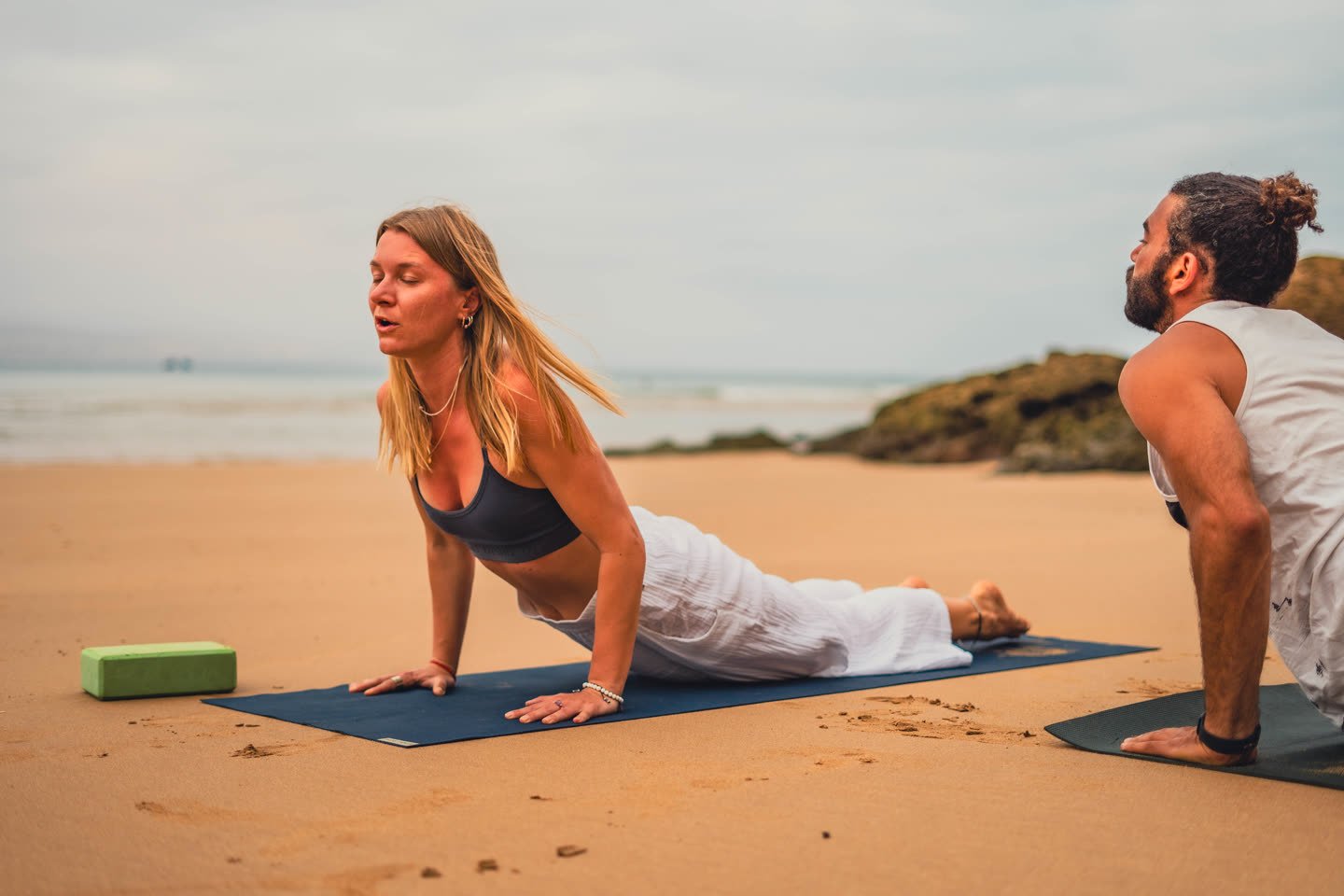
Come to dinner anyway, sleep, and try Day 2. In our experience, guests who hate Day 1 almost always love Day 3. If after two sessions surfing is genuinely not for you, we can adjust — more rest, easier conditions, walks and yoga instead. No guest is ever forced back in the water.
If you’ve read this far
You are probably ready to book. Our booking page is the quickest path. If you are still turning the worries over in your head, reply to any email from us with your list — we answer every pre-trip question guests send, not because it is a sales move, but because nervous guests have better weeks than overconfident ones.
0 Comments