
If you’re searching surf camp Morocco, you’ve probably already noticed the problem. Every result shows you Taghazout. Then more Taghazout. Then Agadir. A Reddit thread. A big brand that won’t tell you the price until you fill a form. And somewhere on page two, buried, there’s a mention of Imsouane — which is where most of us who actually live here and surf every morning ended up.
There are five real surf towns in Morocco, not one. Each suits a different kind of trip. Most guides pretend only Taghazout exists because Taghazout has the most camps paying for visibility. That’s not the same as Taghazout being right for you.
This guide covers all five. We run a surf camp in Imsouane, so we’re not neutral — we think Imsouane is the best first-trip town for most people, and we’ll explain why. But you’ll also read, honestly, when Taghazout is the better answer. And when Essaouira is. The aim isn’t to sell you our rooms. The aim is that by the end of this page you know which Moroccan surf town matches the trip you’re actually taking, and roughly what it costs.
What a “surf camp” in Morocco actually is
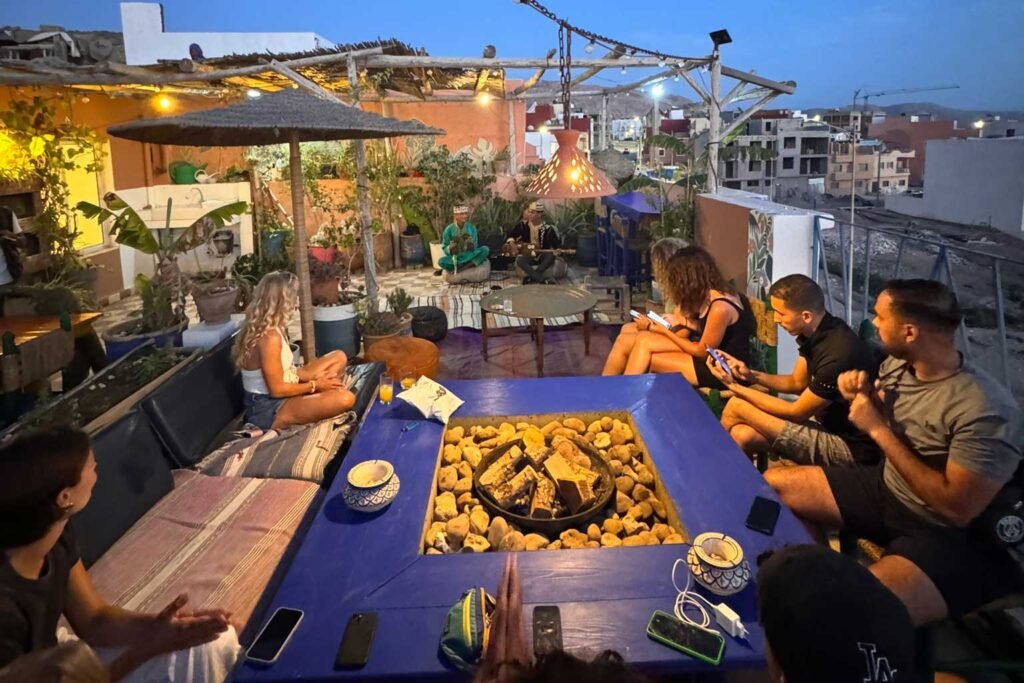
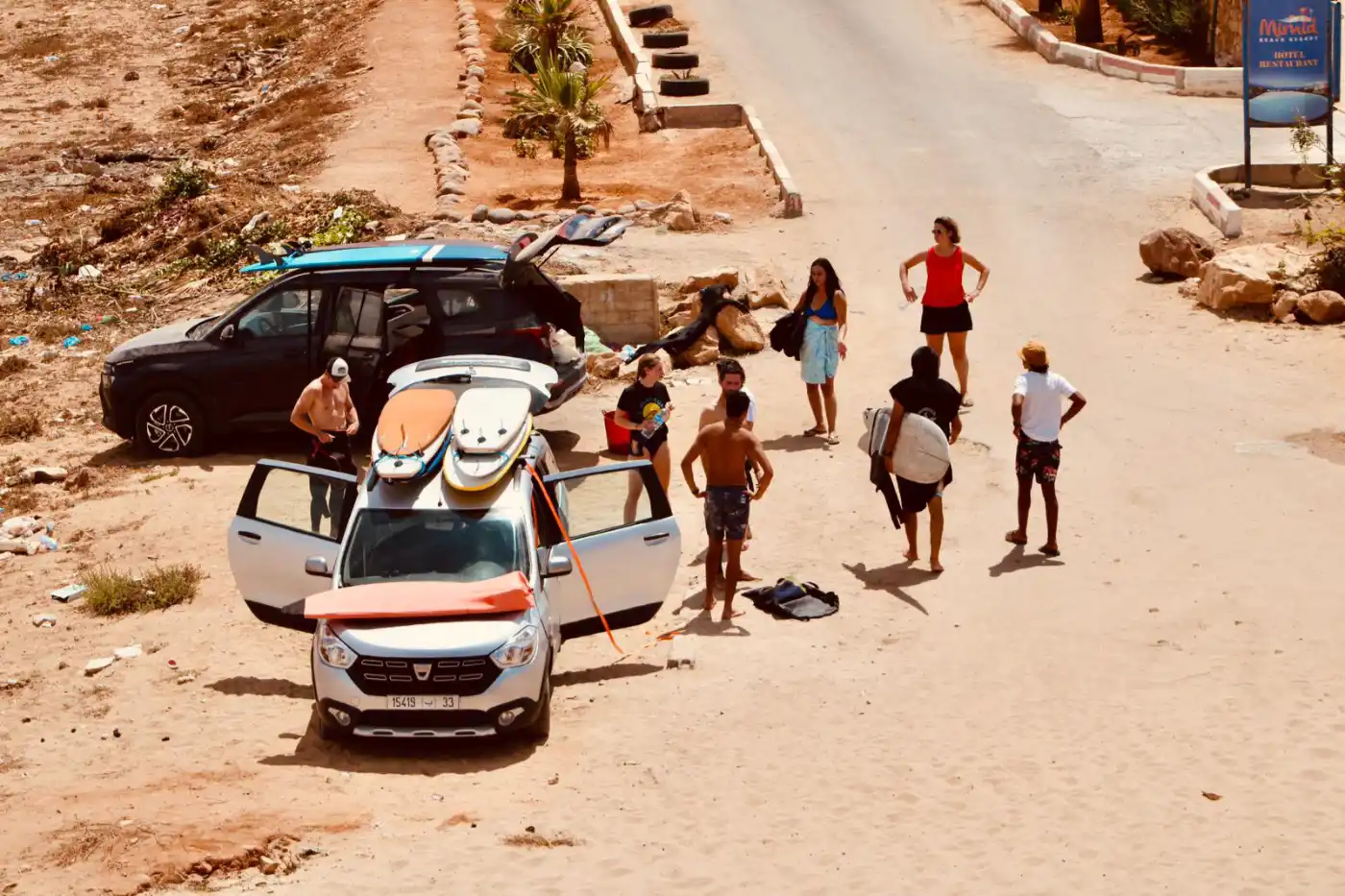
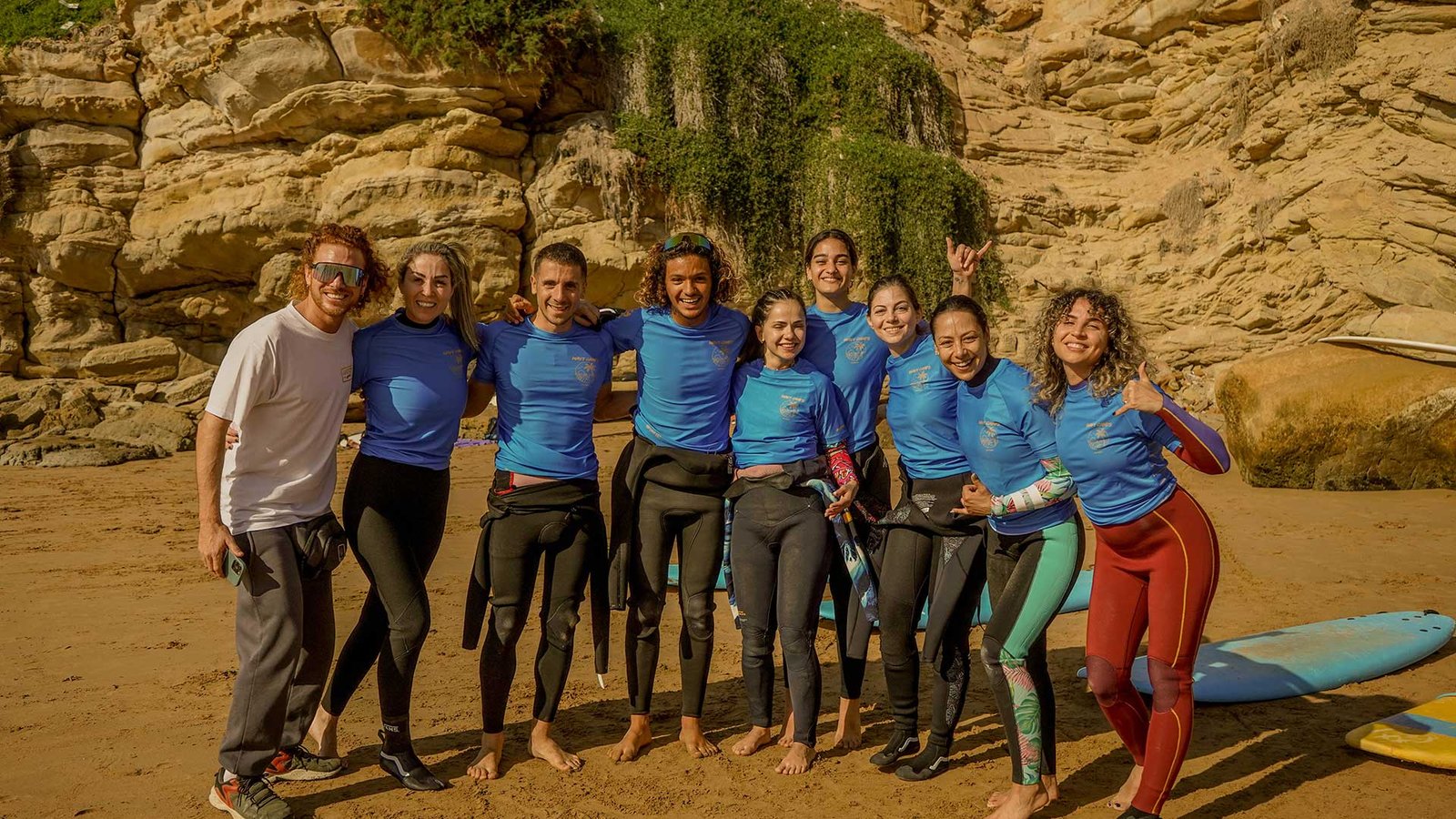
A Moroccan surf camp is a small house — usually 10 to 30 beds — that bundles a bed, three meals, daily surf lessons, and all the gear into one weekly price. The staff usually live there too. You eat with the other guests at a shared table, you get driven to the beach in the morning, you come back for lunch, you get a nap, you surf again if the tide’s right, you eat dinner on the roof.
That’s the template. Morocco does this model better than most countries because labour and food are cheap, the waves are genuinely consistent nine months of the year, and you can still get a proper coached week for a price that in Portugal would get you a decent Airbnb alone.
Two things to know up front. First, “surf camp” in Morocco almost always means full board — three meals a day, Moroccan and international, with real tagine and real couscous, not hotel food. Second, “all-inclusive” means different things at different camps. Some include transfers, some charge extra. Some include every lesson, some cap lessons at five a week. We wrote a separate guide on what all-inclusive actually includes, because we kept seeing people arrive disappointed.
The five surf camp Morocco towns, ranked honestly
Morocco’s surf coast runs from north of Essaouira down to past Agadir — a strip of Atlantic where the swell hits cleanly for most of the year. Along that strip there are five towns where surf camps exist in real numbers. Here they are from most to least obvious.
Taghazout — the default answer
Taghazout is what everyone recommends first. There’s a reason: it has the best concentration of named waves in Morocco. Anchor Point, Killer Point, Panorama, Banana Beach, all within a fifteen-minute drive. If you’re an intermediate or advanced surfer chasing quality waves, Taghazout is genuinely where the waves are.
The catch is that everyone knows this. The lineups on a good swell are packed, the town itself has turned into a surf-bro strip of smoothie bars and CBD shops, and the bigger brand camps — Lapoint, Surf Berbere, Star Surf Camps — push prices up. Star Surf Camps openly advertises weeks in Morocco from £440; Lapoint doesn’t publish prices at all on their Morocco landing page and ask you to fill a quote form. That kind of pricing opacity is a red flag we’ll come back to.
Come to Taghazout if you want to surf the famous right-hand points, you’re OK with crowds, and you don’t mind that the “authentic Moroccan fishing village” marketing line hasn’t been true for a decade.
Tamraght — Taghazout without the queue
Fifteen minutes south of Taghazout, Tamraght is Taghazout’s quieter little brother. Same access to most of the same waves (you drive to them), cheaper rooms, fewer smoothie bars. Banana Beach is on the Tamraght side, and it’s a good beginner-to-intermediate wave on most swells. Shaka Surf Morocco runs here. Most people who’ve surfed both towns prefer staying in Tamraght and driving to Anchor Point on the days when it’s firing.
Come to Tamraght if you want Taghazout’s waves but at 70% of the price and half the crowd in the house.
Agadir / Aourir — the airport, not the destination
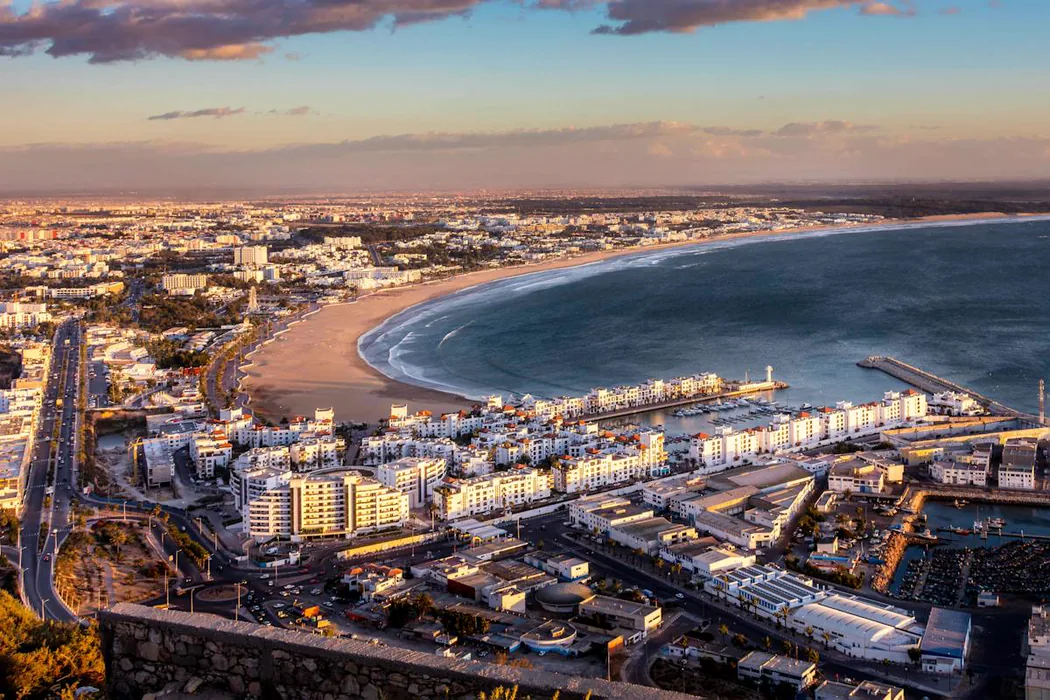
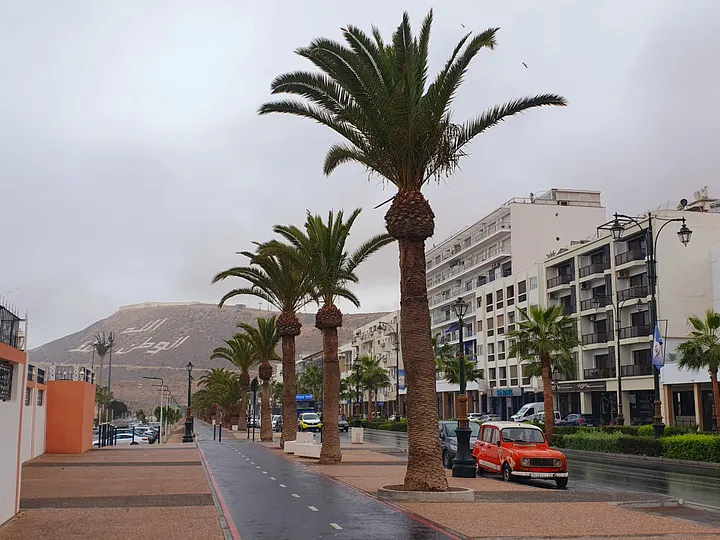
Agadir is where you fly into. It’s Morocco’s fourth city, it has the airport (AGA), and it has a big beachfront, a good-sized Banana Beach area, and a growing cluster of camps in Aourir just north of town (Zen Surf Morocco, Desert Surf Camp, Maroc Surf Camp — all 4.8-5.0-star on Google, all with hundreds of reviews). Most of the three top-rated camps in Morocco’s local search results sit here.
The honest take: Agadir itself is a working city. The surf is fine, the camps are good value, but you’re not there for the town. You’re there because it’s convenient to the airport and cheaper than Taghazout. Come to Agadir if budget matters most, or you’re combining surf with a family trip where not everyone surfs.
Imsouane — where we live, so grain of salt
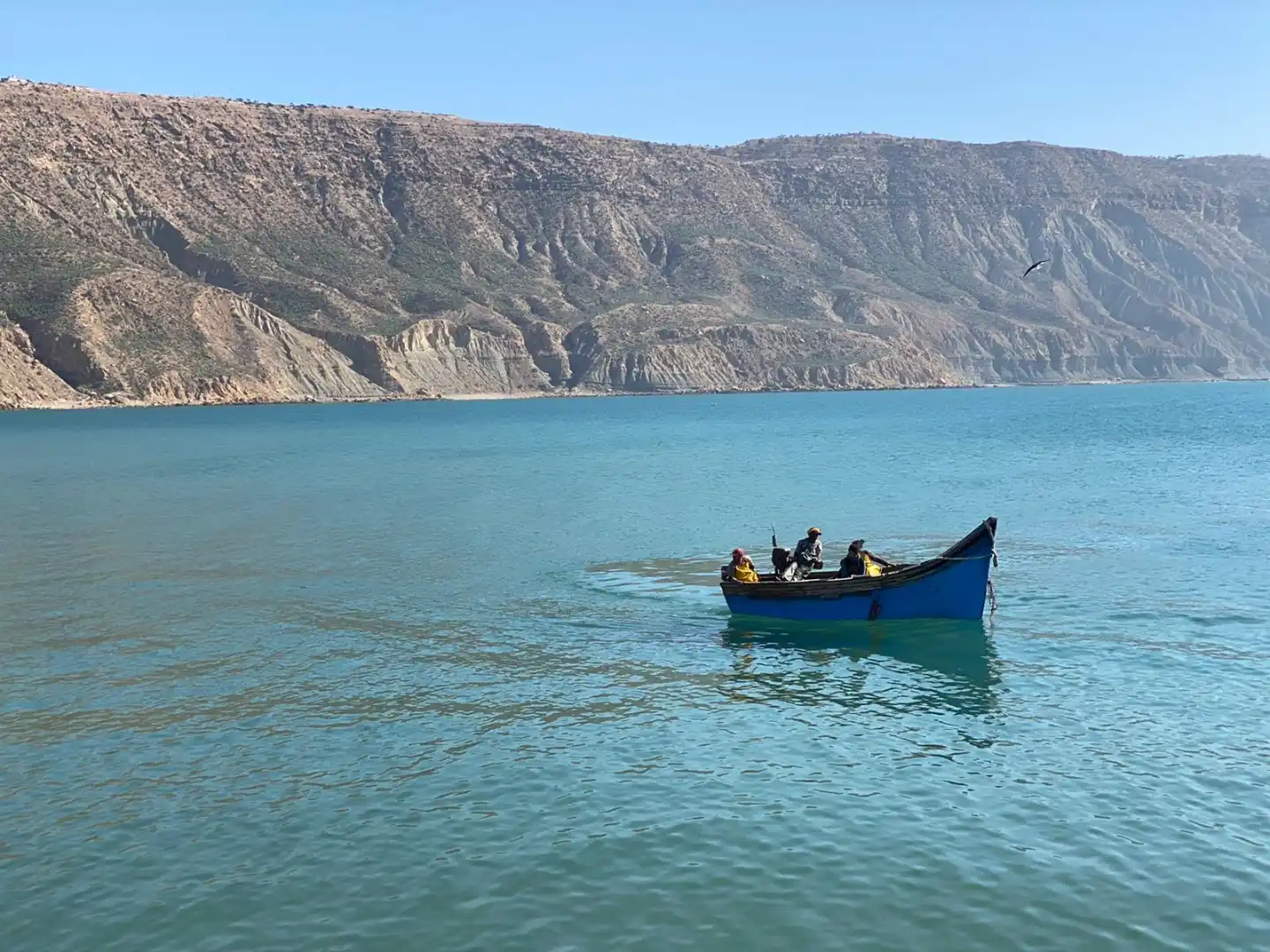
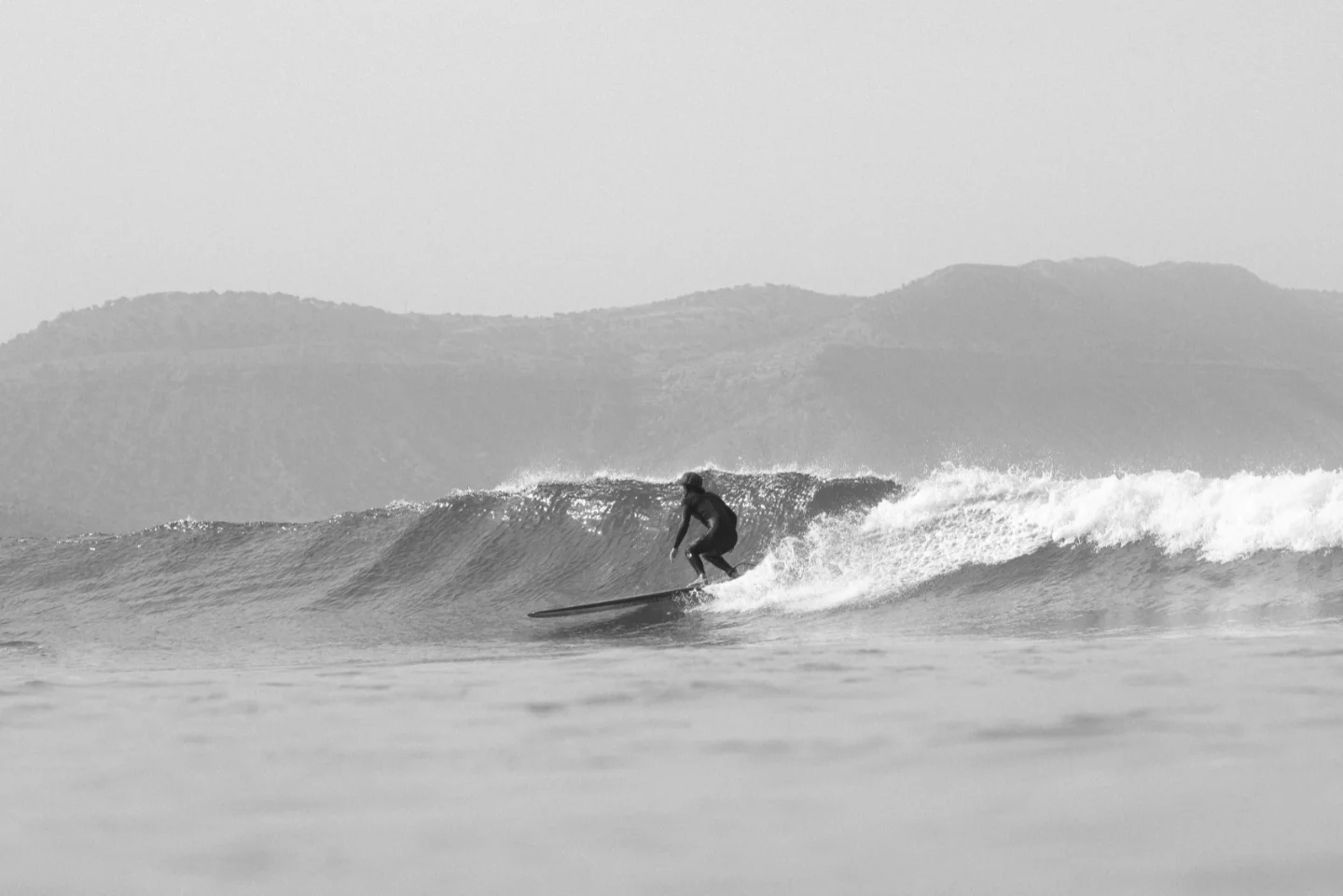
Ninety minutes north of Agadir airport, Imsouane is a working fishing port where the Bay wave runs a long, slow, open-faced right-hander for up to 600 metres when the swell lines up. It’s often called the longest right in Africa. The lineup is friendly because the wave is long enough that nobody’s fighting for the take-off — there’s room for everyone.
Imsouane has maybe 60 beds of surf-camp capacity total across the whole village, against hundreds in Taghazout. That means the camps are smaller, the instructors know your name by day two, and the village itself hasn’t been taken over by surf tourism — the fishermen still run the port, the bread still comes out of the communal oven, and the town closes at ten. It’s a slower trip. Some people find it too slow. Most find it exactly what they didn’t know they wanted.
Come to Imsouane if it’s your first Morocco trip, if you’re a beginner or early intermediate, if you want a longboard wave, or if the Taghazout smoothie-bar strip sounds like your idea of hell. We wrote a full comparison of the two towns that goes deeper.
Essaouira — a wind town first, a surf town second
Two hours north of Imsouane, Essaouira is a UNESCO-listed walled medina with a long beach and reliably strong wind. The strong wind is exactly why it’s a world-class kitesurf and windsurf destination — and exactly why it’s a compromised wave-surf destination. The beach break works, but most afternoons it’s blown out. The old town is beautiful. If you want a trip where you surf in the morning and eat great Moroccan food and wander through a pretty medina in the afternoon, Essaouira delivers. If you want uninterrupted surfing, pick any of the other four.
Who each town actually suits
If you strip the marketing out of all five towns, they break down like this:
Complete beginner, first-ever surf trip: Imsouane or Tamraght. Soft-breaking waves, small camps, instructors with time. Avoid Anchor Point. Skip Essaouira if you can’t handle wind.
Intermediate wanting to progress fast: Taghazout or Tamraght. You need reef access and coaches who surf the points themselves.
Advanced, chasing quality: Taghazout, or Imsouane on a longboard. Don’t book a camp at all — book a surf & stay package and freesurf.
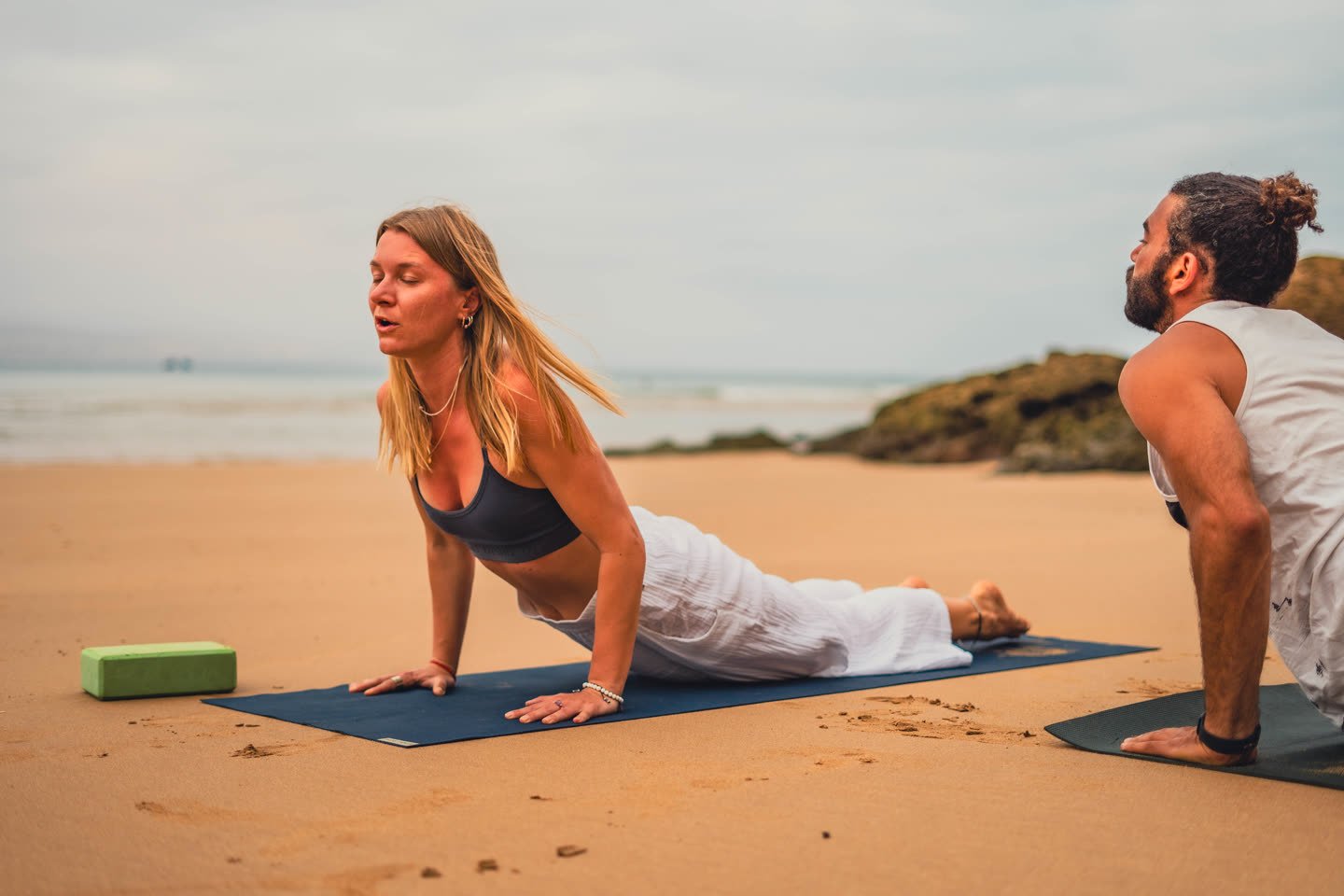
Couple where one surfs and one doesn’t: Essaouira or Imsouane. Essaouira for the old town, Imsouane for the yoga-and-walks-on-the-bay option.
Solo traveller: Imsouane or Agadir. Smaller camps = you actually meet people instead of being lost in a 30-bed hostel. Bigger towns = anonymous.
Family with kids: Tamraght or Imsouane. You want pools of safe whitewater and instructors who’ve taught children before. We wrote a separate guide for family trips covering the age-by-age logistics.
Digital nomad, staying three+ weeks: Imsouane for the quiet, Taghazout for the co-working. Depends on whether you’re here to focus or to scene.
What a surf camp Morocco package actually includes
Packages vary, but the spine is the same. Here’s what to expect as the default, and where camps start cutting corners.
Accommodation tiers
Most camps offer three room types. A shared dorm, usually four to six beds, often available in a mixed dorm and a girls-only dorm. A private room with shared bathroom, which is our most popular mid-tier option. And a private room with a private bathroom, which is what couples usually pick. At the luxury end a few Taghazout camps offer sea-view villas at €200–€500 a night, but that’s a different product.
Meals
Full board is the Moroccan standard. Breakfast is usually eggs, bread, fruit, yoghurt, coffee. Lunch is the big one — tagine, couscous, or grilled fish at a shared table. Dinner is lighter, often soup plus a main. Tagine and couscous are the real thing, not the tourist version, because the families who run kitchens at these camps have been cooking these dishes their whole lives. If the camp’s pulling from a centralised kitchen, the food will be fine. If it’s cooked by someone’s mother, it’ll be extraordinary.
Surf lessons and equipment
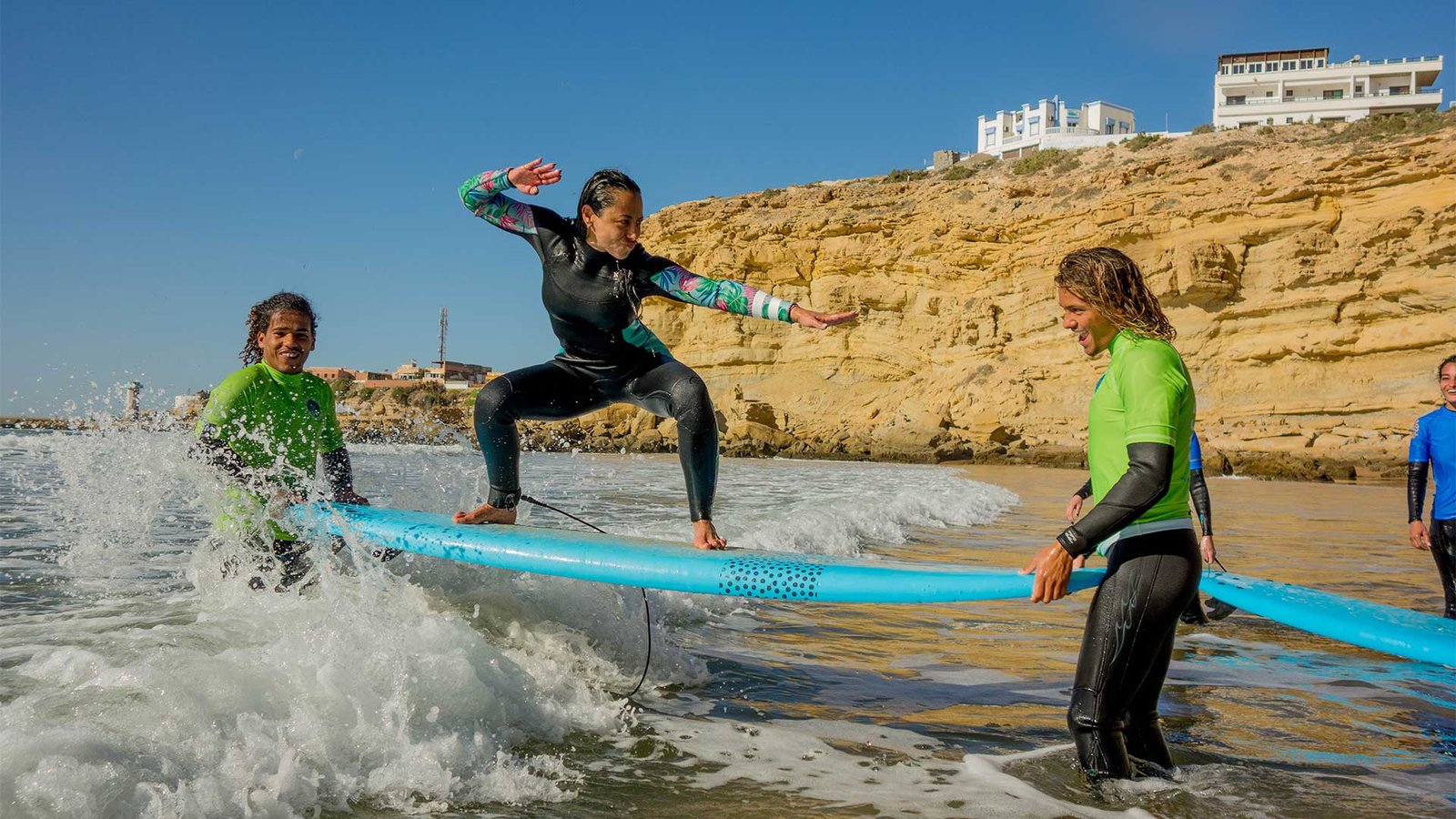
Daily surf lessons — usually two hours in the water, plus beach theory and video analysis on some days — and all the gear (board, leash, wetsuit, rash vest). Group size is the single most important number you’ll compare between camps. Anything above 8 surfers per instructor is too many. Our ratio at Olas is a maximum of 6 per instructor, and we run 2 to 4 instructors on any given week depending on how full the house is.
What’s almost always extra
Airport transfer. Agadir (AGA) to Imsouane is usually €60 per person each way. Marrakech (RAK) to Imsouane, three hours, is around €120. Flights, obviously. Alcohol, where available (Imsouane and Taghazout are generally dry in-village; some camps can arrange). Any guided surf trips to waves outside the standard daily rotation. Personal boards if you want a specific shape.
Surf camp Morocco pricing: the honest ladder
Here’s what a week actually costs in Morocco, across three realistic tiers, for one person.
Budget (€350–€550/week): dorm bed, full board, daily lessons. The low end of this is a dorm at a place like Planet Surf Camps (from €210/week raw, more with meals and lessons added in) or Star Surf Camps (from £440/week). Our own Surf & Stay dorm package is €550 for a full week with lessons and full board. If you see a Morocco surf camp advertising under €300 a week with lessons included, read the small print carefully — usually something big is missing.
Mid (€550–€800/week): private room with shared or private bathroom, full board, daily lessons. This is where most people book. Our own Surf & Stay private-room package is €620 with a shared bathroom, €680 with a private bathroom, for a full week. That’s what we’d call honest mid-tier pricing — no hidden extras, airport transfer is separate and labelled.
Luxury (€1,000+/week): private villa, sea view, smaller ratios, fancier meals. The big brands like Lapoint sit here, though they don’t publish numbers on their landing page — you fill a form and a number comes back. BookSurfCamps, which aggregates Moroccan camps, lists packages all the way up to €3,300 across 2026 and 2027 listings. If you’re paying that, you’re paying for the boutique experience, not the surf — the waves are the same ones the €550 dorm guests are surfing.
For a full pricing breakdown including seasonal discounts and what’s genuinely worth paying more for, our all-inclusive guide goes deeper.
When to come
Morocco works year-round. The peak swell season is October to March, when North Atlantic storms push long-period groundswells down the coast and every spot lights up. January and February are the heaviest months — beginner camps still run, but you’ll be learning in whitewater while the experienced surfers line up at Anchor Point or the Bay. April to June is mellower, smaller, and honestly the nicest combination of warm water, warm air, and beginner-friendly waves. July to September is the smallest swell — fine for complete beginners, but advanced surfers tend to go elsewhere.
Water temperature stays comfortable all year — a 3/2 wetsuit works May to November, a 4/3 from December to April. We wrote a full month-by-month breakdown for people who need to match their travel window to the waves rather than the other way around.
Surf camp Morocco: red flags when you’re picking a camp
Five things that should make you walk.
No prices on the website. If a camp makes you fill a quote form to see a number, they’re price-discriminating based on what country you’re from and how serious you sound. We checked Lapoint’s Morocco landing page on the day we wrote this — there’s a lot of yoga-sunset imagery and no prices anywhere. Compare that to most small independent camps, where the price is on the homepage.
No published group-size limit. If the site doesn’t say how many surfers they put with one instructor, assume the worst. Eight is the ceiling; six is good; four is excellent.
“All-inclusive” with asterisks. Some camps advertise all-inclusive but charge extra for airport transfer, afternoon lessons, wetsuit rental, yoga sessions, or specific beach trips. Read the inclusions page, not the homepage.
Only one-week bookings accepted. A week is the standard, but camps that refuse four-day or ten-day stays are usually running tight turnover schedules designed for their convenience, not yours.
No local instructors on the “team” page. Morocco has generations of real surfers. If a camp’s instructor photos are all European, the local economy loses and the coaching loses. The best Moroccan surf instructors know the swell patterns of their own beach better than any visitor can.
Green flags
The opposite, for completeness.
Prices on the homepage. Group sizes published. Staff page with real names and where they’re from. A written inclusions list, not a sales pitch. Photos of the actual rooms, not just the ocean. A review or two from solo travellers — solo reviewers are the hardest to please, so if they liked it, the place is doing something right. Reddit threads where the camp name comes up unprompted. Camps with 4.8-star-plus ratings on Google with at least 200 reviews — that’s the minimum threshold for a Morocco camp that’s been running long enough to get the details right.
The honest take: why we think Imsouane wins most first trips
If you’ve read this far, you can probably guess our pitch. Imsouane is our home, and we think it’s the best Morocco surf town for a first trip and for most second trips too. Here’s the argument in one paragraph.
The wave at Imsouane’s Bay is long, slow, and forgiving. You can’t really get hurt there. Beginners progress faster on a wave they can ride for 300 metres than on a wave that closes out in ten. The village is small enough that by day three you know the café owners. The camps are small enough — ours runs a maximum of six surfers per instructor — that nobody gets lost. The food is home cooking, not canteen food. Imsouane hasn’t been discovered by the same aggregator sites that price Taghazout up and pack its lineups.
The trade-off is that Imsouane is quiet. There’s no nightlife beyond the rooftop ritual at whichever camp you’re staying at. The Bay has its grumpy days when the wind is wrong and it’s mushy. And advanced surfers looking for reef and power should pick Taghazout instead. But for everyone else — the first-timers, the couples, the solo travellers, the people whose last trip was a stressful week in a busier lineup — Imsouane is the reset button. If you want to see what a week actually looks like at one of Imsouane’s camps, read our walkthrough of a week at Olas. Or jump straight to the Surf & Stay package if you already know what you want.
A final housekeeping note before the FAQs. If you’re booking Morocco for the first time and you’re overwhelmed by options, do the simple thing: pick one town, book one week, fly in. Morocco is small and cheap to move around. Your second trip, you’ll know what you actually want. That’s the real trick nobody tells you — the first trip isn’t the last trip, and you don’t have to get it perfect.
Frequently asked questions
What is the best surf camp in Morocco?
There isn’t a single best. The best Morocco surf camp for you depends on which town fits your trip. For a first trip and beginners, we’d pick Imsouane — smaller camps, forgiving wave, less crowded. For intermediate surfers chasing reef waves, Taghazout or Tamraght. For budget-first trips, Agadir. The town decision matters far more than the camp brand decision.
How much does a surf camp in Morocco cost?
A realistic range for one person, one week, all-inclusive with lessons and full board: €350–€550 for a dorm, €550–€800 for a private room, €1,000+ for a luxury villa stay. Airport transfer is typically extra — €60 from Agadir, €120 from Marrakech. Our own Surf & Stay packages sit at €550 (dorm), €620 (shared bathroom private), and €680 (private bathroom) for a full week.
Is Taghazout or Imsouane better for a surf camp?
Taghazout has more and better-known waves (Anchor Point, Killer, Panorama) but the crowds and prices to match. Imsouane has the Bay — a long, forgiving right-hander — and a much smaller, quieter village. Most first-time surfers in Morocco are better off starting in Imsouane and saving Taghazout for their second trip when they know what they want.
Can a complete beginner go to a Morocco surf camp?
Yes. Most Moroccan surf camps are built around beginner lessons, with soft boards, whitewater progression drills, and instructors used to teaching from zero. Ask two questions before booking: the maximum group size per instructor (under 8 is fine; 6 is ideal), and whether the camp’s main break is beginner-friendly — the Bay at Imsouane and Banana Beach near Tamraght are both good. Anchor Point in Taghazout is not a beginner wave.
What’s included in an all-inclusive Morocco surf camp?
Standard inclusions are accommodation, full board (breakfast, lunch, dinner), daily surf lessons with a qualified instructor, all surf equipment (board, wetsuit, leash), and usually airport pickup details or a contact to arrange it. Optional extras typically cost more: airport transfer itself, yoga sessions, guided surf trips outside the main rotation, personal board rental for a specific shape. Always check the inclusions list, not just the homepage headline.
What’s the best time of year for a Morocco surf camp?
October to March for the biggest, most consistent swells. April to June for the mellowest combination of warm water, warm air, and beginner-friendly waves. July to September is fine for complete beginners but smaller, often flat for advanced surfers. A 3/2 wetsuit works most of the year; 4/3 in deep winter. Booking six to eight weeks ahead for peak season is usually enough.
Do I need a visa to visit Morocco from the UK?
UK passport holders do not need a visa for stays in Morocco up to 90 days. Your passport must have at least six months of validity remaining on the date of entry. Check the UK government’s foreign travel advice for Morocco for the current rules before you book — entry requirements can change.
0 Comments