

By Olas Surf Team — 4 August 2026
The honest answer to what the Imsouane wave height will be during your trip is that nobody knows, because the Atlantic doesn’t take bookings. What we can tell you is exactly what that same week delivered in 2022, 2023, 2024 and 2025 — average size, biggest day, swell period, sea temperature, how often it rained. Four years of archived data for the Atlantic directly off our beach, sitting in the tool below. Pick a week and look.
This page is the numbers. If you want the wave itself explained — how the point works, why it peels so long, where to sit — that’s our guide to Imsouane Bay. If you want the month-by-month planning version in plain prose, read when to surf in Morocco instead.
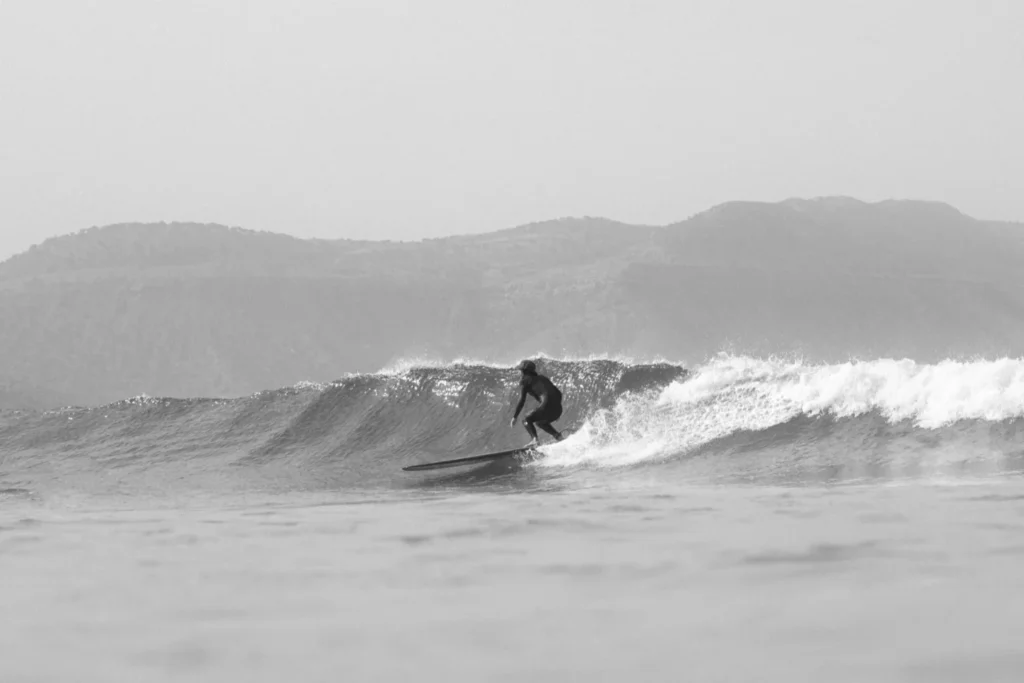
Imsouane swell archive
What the Atlantic off Imsouane Bay actually did, week by week, 2022–2025.
| Year | Avg wave | Biggest day | Period | Sea | Air | Wet days |
|---|
| Day | Wave | Swell | Period | Direction | |
|---|---|---|---|---|---|
| Checking the buoys… | |||||
Modelled for Imsouane Bay, 30.84°N 9.82°W — open-ocean data (ECMWF ERA5 via Open‑Meteo), not a buoy in the bay. The headland drains most of that size before it reaches the point — a 3 m reading is not a 3 m wave in front of you. Four years is a pattern, not a promise.
What the Imsouane wave height numbers actually mean
Here’s the part most forecast sites won’t tell you plainly: that number is not the wave you’ll be riding.
The data comes from a global ocean model — ECMWF’s ERA5 reanalysis, served through Open-Meteo — and it describes the open Atlantic sitting off the coast. Between that open water and your feet there’s a headland. The swell has to wrap around it, and wrapping costs it most of its power.
So a 3 m reading is not a 3 m wave. It’s a 3 m ocean producing something chest-to-head-high and considerably better behaved by the time it reaches the take-off zone. That’s the whole reason the Bay works as a learners’ wave despite sitting on an exposed Atlantic coast — the geography does the filtering for you.
Two numbers matter more than most people realise. Swell period is the seconds between wave crests, and it tells you what kind of energy is arriving. Under 8 seconds is local wind chop: weak, disorganised, closes out. Eleven seconds and up is proper groundswell that has travelled from a storm hundreds of miles away, arriving as clean spaced lines. A 2 m reading at 12 seconds is a far better day than 2.5 m at 7 seconds, every time.
Direction matters nearly as much. Imsouane is a right-hand point that wants swell from the north-west. When the archive shows NNW at a long period, that’s the Bay firing.
Imsouane wave height, month by month
Averaged across 2022 to 2025. Wave figures are open-ocean daily maximums, so read them as relative rather than as the size of the wave in front of you.
| Month | Avg wave | Biggest days | Swell period | Sea | Air high |
|---|---|---|---|---|---|
| January | 2.3 m | 3.0 m | 11.3 s | 18°C | 22°C |
| February | 2.6 m | 3.4 m | 11.9 s | 17°C | 23°C |
| March | 2.9 m | 3.8 m | 11.0 s | 18°C | 22°C |
| April | 2.3 m | 3.0 m | 9.9 s | 19°C | 25°C |
| May | 2.0 m | 2.5 m | 9.0 s | 19°C | 26°C |
| June | 2.0 m | 2.5 m | 8.6 s | 20°C | 27°C |
| July | 2.0 m | 2.4 m | 7.9 s | 20°C | 31°C |
| August | 2.0 m | 2.5 m | 8.4 s | 22°C | 32°C |
| September | 1.9 m | 2.5 m | 9.4 s | 21°C | 28°C |
| October | 2.1 m | 2.8 m | 10.1 s | 21°C | 27°C |
| November | 2.3 m | 3.0 m | 10.9 s | 19°C | 26°C |
| December | 2.5 m | 3.2 m | 11.2 s | 18°C | 22°C |
The sea temperature column is the one to plan your wetsuit around. Seventeen to eighteen degrees from December through April means a 4/3 steamer and you’ll still be glad of a hood on a windy dawn. From May the water sits at nineteen or twenty and a 3/2 is plenty. August and September are the outliers at twenty-one and twenty-two — that’s shorty weather, and the only time of year you’ll see people surfing here in boardshorts without regretting it by the second hour.
Three things the Imsouane wave height data changed our minds about
We’ve run a camp here for years and we still got a couple of these wrong before we went through the numbers properly.
March is the biggest month, not December. This surprised us. December gets the reputation, the flights fill up, and everybody talks about it as peak season. But across four years March averages 2.9 m with the biggest days near 3.8 m, and the single biggest week of the entire year is the middle of March. December is genuinely good — 2.5 m at 11.2 seconds is a strong month by any measure — but if raw size is what you’re chasing, late winter beats it.
Christmas week is quieter than the month around it. The week of 24 to 30 December averages about 1.9 m across four years, noticeably below December’s own 2.5 m average. Four years is a small sample and this may be pure chance, so don’t read a law of nature into it. But it’s a useful thing to know if you’ve been avoiding the festive week on the assumption you’ll be fighting huge surf — historically it’s been one of the friendlier weeks of the winter. What it definitely is, is the busiest week we run. If you want that week, book it early; our December guide to Imsouane covers the practical side.
Summer is astonishingly consistent. Look at May through October: 2.0, 2.0, 2.0, 2.0, 1.9, 2.1. The Atlantic barely moves. Periods drop to eight seconds and the waves get softer and less organised, but the sheer reliability is why we run beginner weeks all summer without much anxiety. Winter is bigger and better and also far more variable — a February week can be magnificent or blown out, and you find out three days ahead.
Which Imsouane wave height suits your level
Reading the archive is only useful if you know what to do with it.
- Never surfed before. Aim for weeks averaging under 2.2 m. Almost anything from May to October qualifies. Warm water, forgiving inside section, and the wave does the work.
- A few sessions in, want to progress. The 2.0–2.6 m band with periods around 10 seconds is the sweet spot — enough push to make the wave run the full point, not enough to punish a late take-off. October, November and April sit here.
- Confident, want length of ride. Long-period winter swell is what you came for. February’s 11.9-second average is the cleanest groundswell of the year. This is also longboard weather in its purest form, which is a subject we’ve gone into at length elsewhere.
- Chasing size. Mid-March. Bring a board you trust and expect the Bay to get fast and sectiony, with the Cathedral on the other side of the headland working properly.
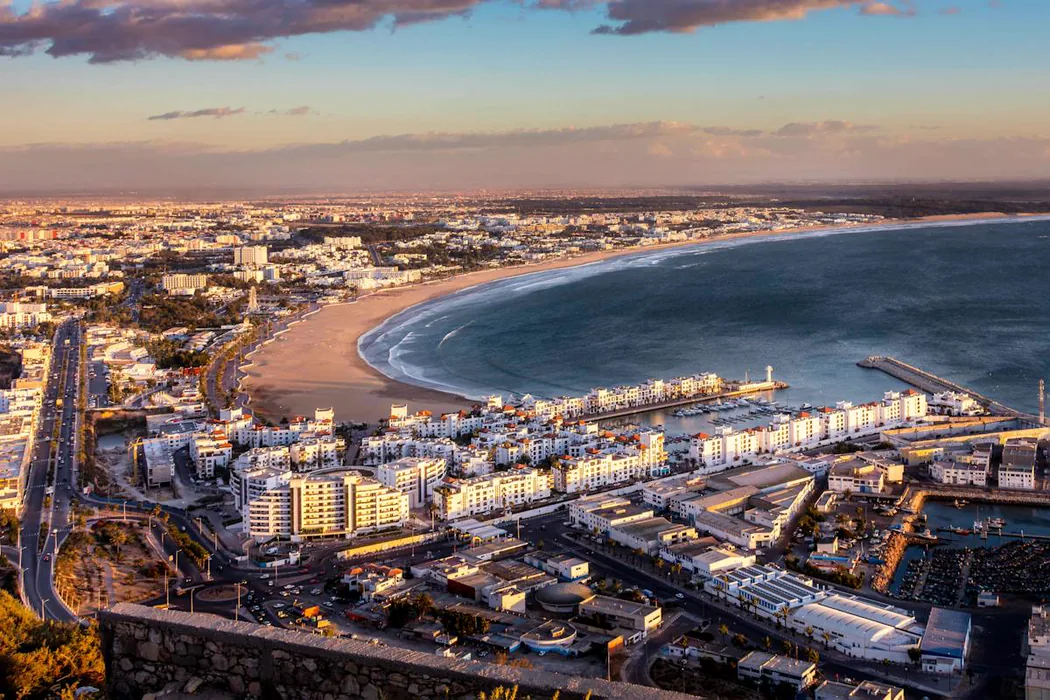
If you’re still deciding whether to base yourself here at all rather than further south, our comparison of Agadir and Imsouane works through that choice, and the reason this wave keeps appearing on lists of the world’s best surf spots becomes fairly obvious once you’ve ridden it once.
We run surf camp weeks a ten-minute walk from the point, year round. If a particular week in the archive looks like your kind of surf, check what we have free — and if you want to know what the days in between the sessions are actually like, we wrote an unusually honest account of a full week here.
What this tool can’t do
Four years is a pattern, not a promise. It tells you what has happened, which is the best available guide to what might, and it is not a forecast of your specific week. Weather doesn’t repeat on a calendar.
The archive also starts in 2022. The marine model’s coverage for this stretch of coast only becomes complete then, and we’d rather show you four solid years than pad it out with a ragged fifth. Sea temperature has full coverage from 2023 — where you see a dash in the table, the model simply had no value for that week.
For your actual trip, check a live forecast in the week before you fly. The seven-day tab above is a good start, and Surfline’s Imsouane report adds tide and wind detail the model here doesn’t cover. Then ask us. We look at the water every morning, which no model does.
Frequently asked questions
What is the average Imsouane wave height?
Across 2022 to 2025 the open-ocean average sits at roughly 2.2 m, ranging from about 1.9 m in September to 2.9 m in March. At the point itself the wave is smaller and cleaner than those figures suggest, because the headland strips most of the power out of the swell as it wraps around.
When is the surf biggest in Imsouane?
March, by a clear margin — averaging 2.9 m with the biggest days near 3.8 m. February and December follow. The single largest week across the four years of data is the middle of March.
Is Imsouane surfable in summer?
Yes, and it’s the most reliable time of year for beginners. May to October holds steady at around 2 m with almost no month-to-month variation. Periods drop to eight or nine seconds, so waves are softer and less organised, but they turn up consistently and the water is at its warmest.
How cold is the water in Imsouane?
Between 17°C and 22°C. Coldest in February, warmest in August and September. A 4/3 wetsuit covers December to April, a 3/2 handles the rest of the year, and in late summer plenty of people surf in a shorty.
Does a bigger wave height mean better surf?
No. Swell period matters more. Two metres at twelve seconds is long-travelled groundswell arriving as clean spaced lines, and it beats two and a half metres at seven seconds — which is local wind chop that shows up weak and messy. Check period before you get excited about height.
Can beginners surf when the wave height is over 3 m?
On the inside section, usually yes, with an instructor. The Bay breaks along a long point, so there’s a gentle whitewater zone well away from where the bigger sets are landing. The outside on those days is for surfers who already know how to handle a fast wall.
Where does this data come from?
ECMWF’s ERA5 marine and weather reanalysis, retrieved through Open-Meteo’s public archive for coordinates 30.84°N, 9.82°W. It’s a global ocean model rather than a buoy in the bay, so treat it as a reliable description of the open water rather than a measurement of the wave at the point.
How often is the archive updated?
The four-year history is fixed and refreshed once a year when a new complete year of data becomes available. The seven-day forecast tab is live and pulls current data each time you open it.






0 Comments