
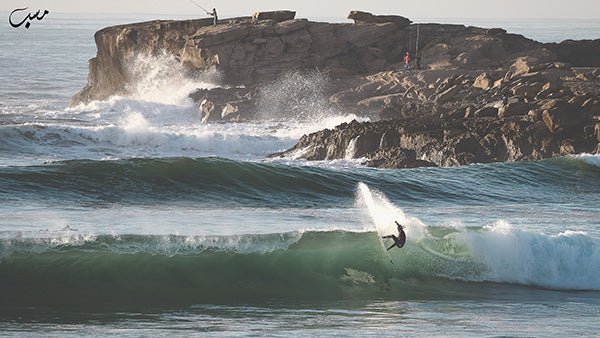
The best places to surf in Morocco stretch along an Atlantic coastline that produces consistent, world-class waves almost every month of the year. From mellow beginner breaks to barrelling point breaks that attract professional surfers — the range here is genuinely impressive for one country. The tricky part is knowing which spot matches your level, your travel style, and your timing.
This guide covers the main surf zones from north to south, with honest notes on who each one is best suited for. No hype, no generic descriptions — just what you’d actually want to know before booking flights.
Why Morocco Works for Surfing
Morocco sits directly in the path of North Atlantic swells, which means consistent surf from September through April — and usable surf even in summer. The coastline is packed with right-hand point breaks (Morocco’s speciality), and the variety covers every skill level from complete beginners to advanced tube riders. Water temperatures run from 16°C in winter to 22°C in summer — cooler than you might expect, but very manageable with the right wetsuit.
The other major selling point: value. You get genuinely world-class surfing in morocco for a fraction of what you’d spend in Bali, Hawaii, or Portugal.
The best places to surf in Morocco, ranked by level
1. Imsouane — The Bay and the Cathedral
Level: Beginner to intermediate | Type: Right-hand point break | Best season: Year-round
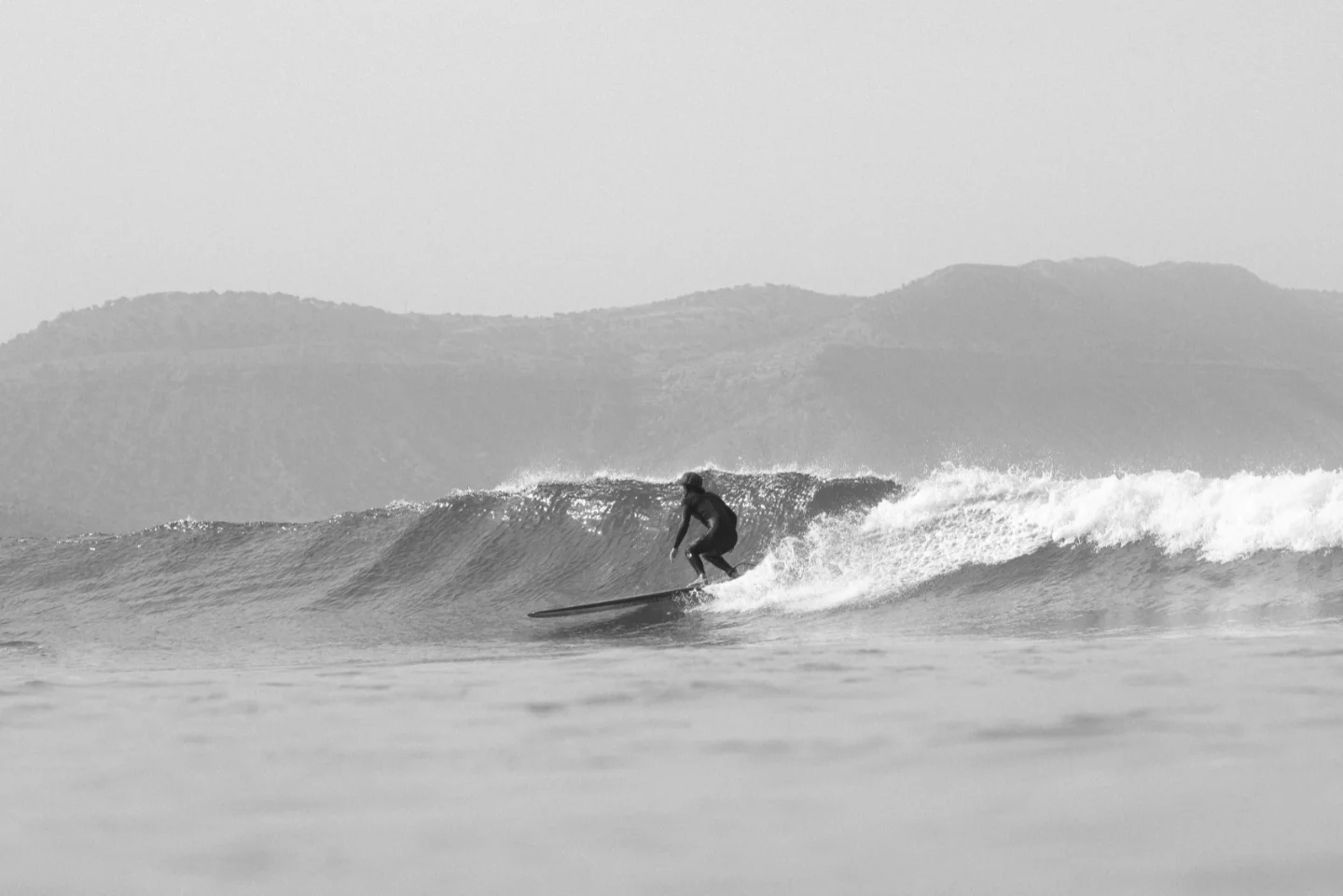
Imsouane is where most people fall in love with surfing in Morocco. The Bay is one of the longest right-hand waves in Africa — a slow, peeling point break that can carry you for 300–500 metres on a solid swell. It’s forgiving enough for first-timers to catch real waves, long enough for experienced surfers to practice turns and style, and mellow enough that the lineup rarely gets hostile.
The Cathedral, just to the north, is a shorter reef break with more power — better for intermediate surfers who want to work on more critical positioning.
The village is small, genuine, and completely walkable from the water. It’s the best place in Morocco for beginners who want to actually progress quickly.
→ Read our full guide to Imsouane surf
2. Anchor Point — Taghazout
Level: Intermediate to advanced | Type: Right-hand point break | Best season: October–March
Anchor Point is Morocco’s most famous wave and one of the best right-hand point breaks in the world. Surfline consistently rates it as a top global destination for a reason — on a solid swell it fires for 400+ metres with multiple critical sections, hollow moments, and serious barrel opportunities.
It’s not a beginner wave. The paddle out can be punishing, the crowd can be competitive, and the consequences of a wipeout aren’t as friendly as Imsouane’s sandy bay. But for surfers who can handle it, Anchor Point delivers some of the most satisfying rides in Morocco — or anywhere in the Atlantic.
3. Killer Point — Taghazout
Level: Advanced | Type: Right-hand point break | Best season: November–February
About 5km south of Anchor Point, Killer Point is more powerful and more hollow. It needs a solid swell to turn on, but when it does, it’s one of the more serious waves on the Morocco coast. The crowd is smaller than Anchor Point — partly because fewer people are comfortable here. If you’re an experienced surfer and Anchor is too crowded, check the forecast for Killers.
4. Tamraght / Banana Point
Level: Beginner to intermediate | Type: Right-hand point break and beach break | Best season: October–April
Tamraght (also called Aourir or Banana Village) sits between Agadir and Taghazout and is one of the most beginner-friendly surf zones in the region. Banana Point is a reliable right-hander that works on most swells without the power or crowd of the Taghazout breaks. The area has plenty of surf schools and surf camps — it’s a solid base if you want proximity to Agadir city with good learning waves nearby.
5. Agadir Beach
Level: Complete beginners | Type: Beach break | Best season: Summer (small swells)
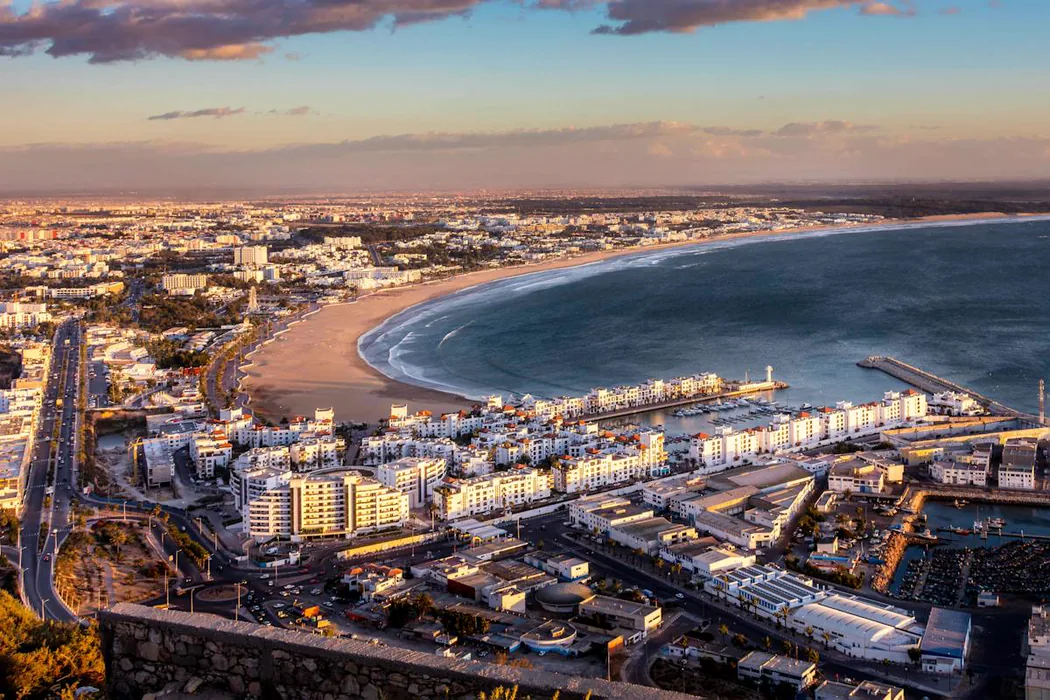
Agadir’s main beach is a wide, sandy stretch with gentle beach break waves. It’s not going to excite experienced surfers, but for complete beginners who want to get comfortable on the board in calm conditions, it works fine. The water is slightly warmer here in summer. Most serious surfers pass through Agadir en route to the point breaks north and south of the city.
6. Essaouira and Sidi Kaouki
Level: Intermediate (strong winds make it tricky for beginners) | Type: Beach break and reef break | Best season: Autumn and spring (summer is very windy)
Essaouira is famous for its wind — which makes it a world-class kitesurfing and windsurfing destination but a more challenging place to surf. The waves can be good, but the onshore wind chops things up quickly. Sidi Kaouki, 25km south of Essaouira, is more sheltered and has a few decent breaks including the Grotte point. Better for intermediates who don’t mind some adversity and want to explore beyond the main surf zone.
7. Safi
Level: Advanced | Type: Right-hand point break | Best season: October–March
Safi is Morocco’s dark horse — less visited than the Taghazout cluster but with a genuine world-class wave when it’s working. The Safi left (and right) can produce long, hollow, powerful walls that attract surfers who’ve already ticked off Anchor Point and want something different. It’s a longer drive from Agadir (about 3 hours), which keeps the crowds manageable. Bring experience.
8. Boilers — Taghazout Area
Level: Intermediate to advanced | Type: Right-hand point break | Best season: October–March
One of the best known of the Taghazout cluster after Anchor Point. Named after old boiler wreckage visible from the lineup, Boilers is a long, walling right-hander with consistent shape. Less punishing than Killers, more interesting than Hash Point. Good option for intermediates who want to step up from Tamraght and start handling faster, more critical waves.
Which Morocco Surf Spot Is Right for You?
- Never surfed before: Imsouane (The Bay) or Tamraght — both have gentle waves and great surf school options
- 1–2 years surfing: Imsouane (The Bay + Cathedral), Tamraght, or Banana Point
- 2–4 years, comfortable in bigger surf: Hash Point, Boilers (Taghazout), or the Cathedral at Imsouane
- Advanced / want the best waves: Anchor Point, Killer Point (Taghazout), or Safi on the right swell
- Longboarder at any level: Imsouane, every time
Best Time to Visit Morocco for Surfing
The sweet spot is October through April. Swells are most consistent, air temperatures are mild (18–24°C), and the crowds are lower than peak European summer. Winter (November–February) brings the biggest swells — ideal for advanced spots like Anchor Point. Spring (March–April) is excellent for intermediates who want solid surf with less wind.
Summer is smaller and warmer — fine for beginners, and Imsouane’s Bay still breaks well even on small swells that would kill the Taghazout point breaks.
Different spots demand different boards. Our surfboard Morocco guide covers what works at each.
FAQ: Best Places to Surf in Morocco
What are the best places to surf in Morocco for beginners?
Imsouane (The Bay) is consistently the top recommendation for beginners. It has one of the longest, most forgiving waves in Africa, a safe sandy bay, and a strong community of qualified surf instructors. Tamraght/Banana Point and Agadir beach are also solid beginner options if you’re staying in the Agadir area.
What is the surf capital of Morocco?
Taghazout is widely considered the surf capital — it’s home to Anchor Point, Morocco’s most famous wave, and has the most concentrated cluster of surf camps and breaks. That said, for beginners and intermediate surfers, Imsouane arguably delivers a better overall experience.
Is Morocco good for beginner surfers?
Yes — Morocco is one of the best places in the world for beginner surfers who want to make real progress. Imsouane’s Bay gives you long ride time on every wave, qualified instructors are easy to find, conditions are consistent, and the cost is low compared to most surf destinations in Europe.
When is the best time to surf in Morocco?
October to April for the most consistent surf. Beginners can come any time of year — Imsouane’s Bay breaks even in summer on small swells. Advanced surfers who want Anchor Point firing should aim for November through February for the biggest Atlantic swells.
Do you need a wetsuit for surfing in Morocco?
Yes — at least in the cooler months. A 4/3mm wetsuit is the call from December to April, with a 3/2mm enough in October, November and May. Water temperatures in winter drop to around 16–17°C — comfortable in a wetsuit, cold without one. In summer (June–September), water reaches 20–22°C and some people surf in boardshorts and a rashguard, though a thin 2mm wetsuit is still useful for longer sessions.
How do the best surf spots in Morocco compare to Portugal or Bali?
Morocco sits somewhere in between. Surfline’s Morocco guide notes that Anchor Point rivals the best point breaks anywhere in the Atlantic. The overall experience is more raw and less developed than Portugal, which some surfers prefer. Costs are lower than both Portugal and Bali. The volume of surf spots isn’t as large as either destination, but the quality of the main breaks is genuinely world-class.
Can you surf in Morocco without a car?
Yes — especially if you base yourself in Imsouane or Taghazout. Both have multiple breaks within walking distance. If you want to explore multiple surf zones (say, Taghazout one day, Imsouane another), a hire car or shared taxi gives you flexibility. Taxis in Morocco are cheap and reliable for point-to-point transfers.
0 Comments