
The best time to surf in Morocco depends on what kind of surfer you are, what kind of trip you want, and which week your calendar lets you escape. Most guides answer the question in six words — winter is best, summer is mellow — which is true at the level of a travel magazine and useless if you’re trying to book a flight. A complete beginner booking a family week in late July needs a totally different Morocco than an intermediate chasing groundswell over Christmas. Both trips are good. They’re just different months.
We run a surf camp in Imsouane. We surf here every morning, we watch the waves change across twelve months, and we book European travellers into the right week for what they actually want. This guide is the month-by-month breakdown we wish existed when we started — real numbers, real trade-offs, and an honest decision tree at the end.
The TL;DR table
If you only read one section, read this one.
| Season | Months | Wave size | Water temp | Wetsuit | Best for | Crowd level |
|---|---|---|---|---|---|---|
| Peak autumn | Oct–Nov | Head-high to double overhead | 19–21°C | 3/2mm | All levels, season-opener | Moderate |
| Heavy winter | Dec–Feb | Overhead+, some days 10ft+ | 16–18°C | 4/3mm, booties in Jan | Advanced surfers | Busy at Taghazout |
| Shoulder spring | Mar–Jun | Chest to head-high, cleanest | 17–20°C | 4/3mm to April, then 3/2mm | Everyone — sweet spot | Quietest |
| Warm summer | Jul–Sep | Waist to chest-high | 21–23°C | Springsuit or 3/2mm | Complete beginners | European families |
The short answer: when is the best time to surf in Morocco?
For most people, the best time to surf in Morocco is either April–June or October–November — the shoulder seasons. You get warm enough water, waves that aren’t punishing, and fewer people in the lineup. If you’re an advanced surfer chasing power, come in January or February. If you’re a complete beginner, May through August is when the Atlantic is gentlest.
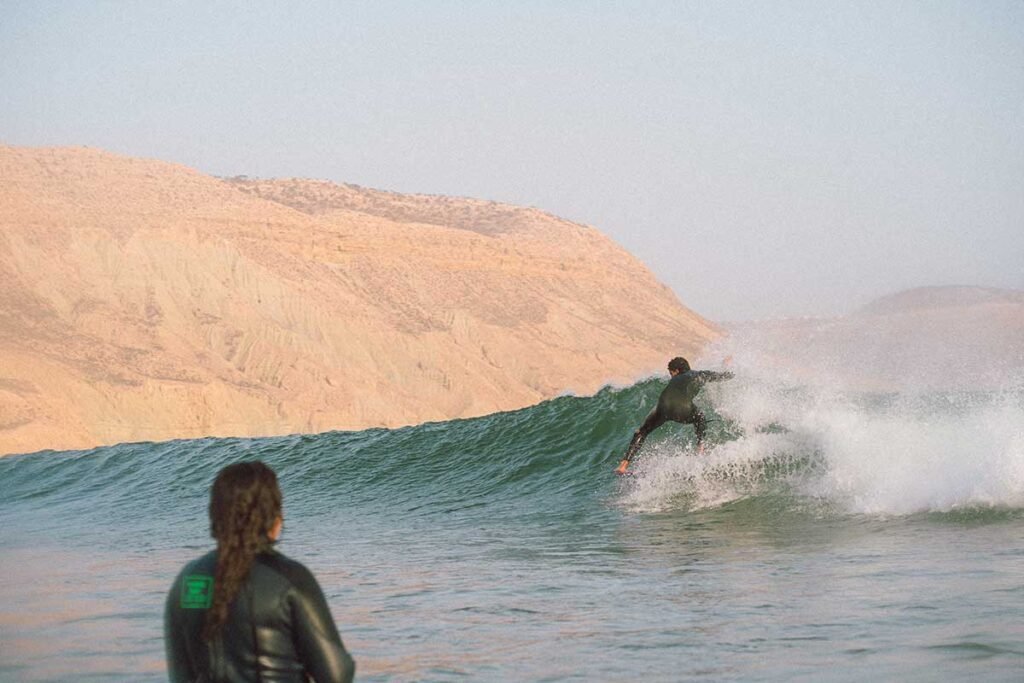
Bias declared: we’re in Imsouane, and the Bay wave here has a friendly temperament for almost every month of the year. The reef bends incoming swell into a long, rideable wall even when Anchor Point up in Taghazout is firing double-overhead, which is why our pick for “first Morocco trip” is usually May or late October, regardless of your surf level. For more on the wave itself, see our Imsouane Bay ride-by-ride guide.
October to December: the swell switches on
October is when Morocco wakes up. The first North Atlantic groundswells of the season start landing around the second week, the sandbanks that got mushed by summer re-form, and the named point breaks between Tamraght and Taghazout — Anchor Point, Killer, Panorama — start to produce the waves everyone flies here for. UK and French travel agencies generally date the Morocco surf season from September through March, and October is the first genuinely reliable month of that window.
Water temperature drops from 22°C at the start of the month to around 19–20°C by late November. A 3/2mm wetsuit is enough — you don’t need gloves or booties yet. Mornings are often offshore, which is the Moroccan coast’s quiet magic: the wind blows from land to sea, holding the waves up into glassy walls. Most of the camps report October as their highest-occupancy month.
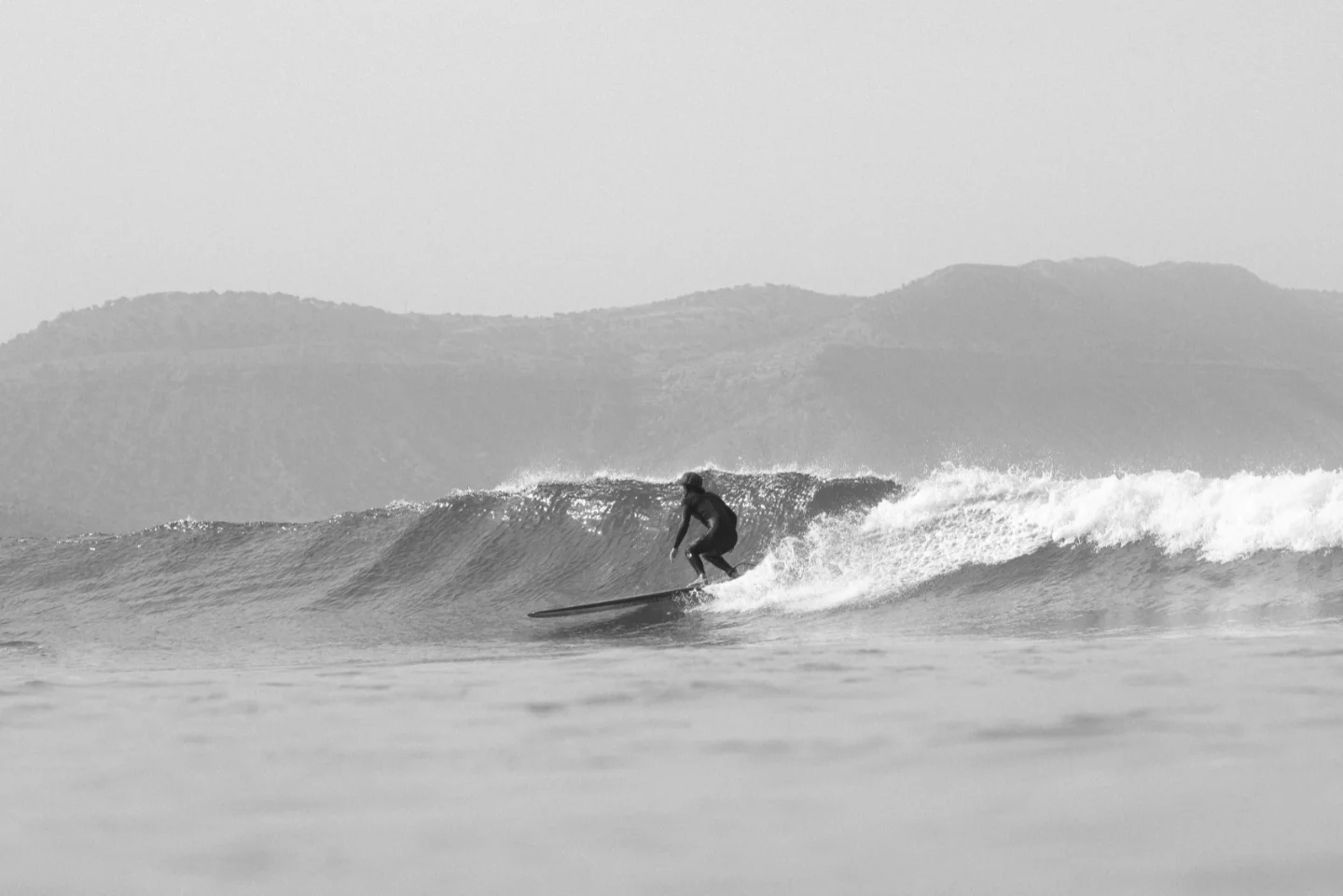
What this means for Imsouane specifically: the Bay starts producing its longer right-hand rides. On an ordinary October day, the wave can run for 300 metres. On a big swell, 600. The Bay is forgiving because it’s a reef point that breaks into a large sheltered bay — the energy unloads over the reef, then the rideable wall rolls calmly across the bay. Even a nervous intermediate can take off on a head-high swell here and survive. You cannot say that about Anchor Point.
December brings the first heavy storms. By mid-month the swells are overhead most days, the nights cool down, and the tourist crowd thins out between the autumn-holiday groups and the Christmas wave. If you can get ten days around the third week of December, you’ll be surfing big clean waves with half the people you’d share them with in October. For the current swell snapshot and forecast detail, Surfline’s Morocco region page is the industry-standard reference.
January to March: the heavy months
This is the window every advanced surfer plans around. January and February produce the most powerful surf of the year — frequent overhead-plus days, long-period groundswells from North Atlantic storms, the sort of clean-lined reef perfection that fills surf magazines. If you’ve ever seen a photograph of Anchor Point absolutely firing, it was probably taken in January.
The water drops to 16–18°C. A 4/3mm wetsuit becomes sensible; in the first two weeks of January, experienced surfers sometimes add booties because the reef spots have cold currents. The air temperature is still pleasant most days — 17–20°C on the coast, warmer inland — but the wind and water chill add up after a four-hour session.
Can beginners still surf in January and February? Yes, at the right spot. The Bay at Imsouane and Banana Beach near Tamraght stay workable for beginners even when the points are heavy, because both breaks have protected whitewater sections where lessons happen. What you don’t want in January is a camp that drives you to Anchor Point for your first-ever surf lesson. Check the camp’s stated teaching break before booking a heavy-season week.
Crowds are concentrated in Taghazout. Lapoint, Surf Berbere, and the other big-name camps are at full capacity. Imsouane, which has a fraction of the surf-camp beds, stays noticeably quieter even at peak. That’s partly why we wrote a full comparison of the two towns — the heavy months are when the town choice matters most.
March is the transition. The swell is still consistent but the water starts warming, though the wetsuit stays a 4/3mm through April, and the crowds ease. By the second half of March, Morocco is back to shoulder-season conditions and pricing.
April to June: the sweet spot for most people
If you ask us when to come for your first Morocco trip, the answer is April, May, or June. We say this against our own commercial interest — these are easier-to-book months, not peak-price months. But the waves suit more surfers than any other part of the year.
April arrives as the shoulder tilt — smaller, cleaner swells, the wind more variable, water warming through 17–18°C into the low twenties by month-end. May is arguably the single best month in the Moroccan calendar for an intermediate surfer. You get long clean glassy mornings, water warm enough for a 3/2mm or even a springsuit on the warmer days, and chest-to-head-high waves that are big enough to feel exciting but forgiving enough to learn fast on.
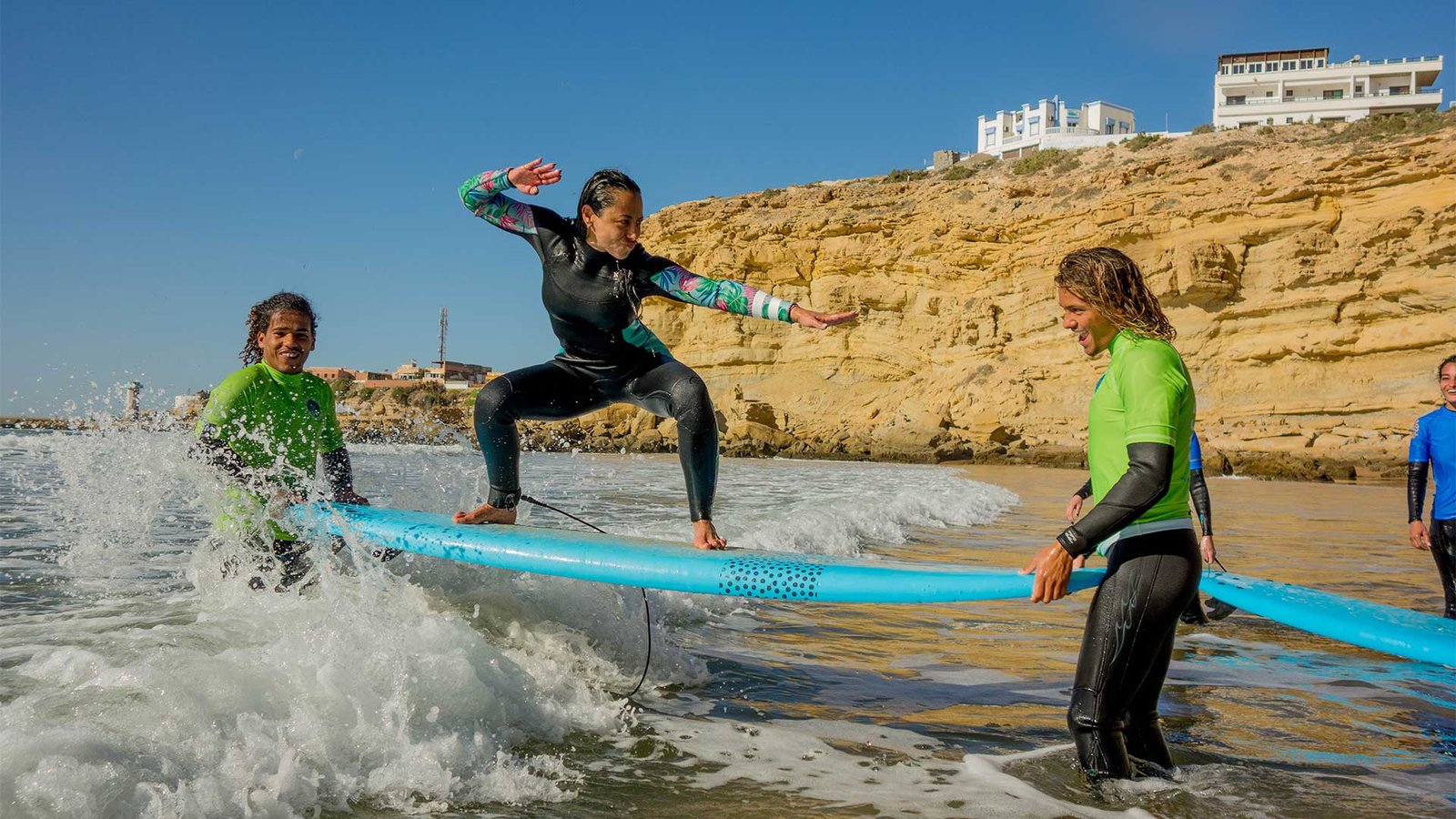
Beginners thrive in May and June. Smaller waves mean more repetitions per session, more time actually standing up, less paddling back out through whitewater. Our beginner’s guide to Moroccan surfing goes through exactly what a typical first-timer week looks like, and most of its day-by-day logic plays out fastest in these months.
April through June is also when European travellers ease off. French, Spanish, and Italian spring half-terms cluster in the first two weeks of April; outside that window, the beach is yours. Imsouane in mid-May on a weekday morning is a village where the surf camp van is the busiest vehicle and the town dog follows you to breakfast. This is when we’d book if we were booking.
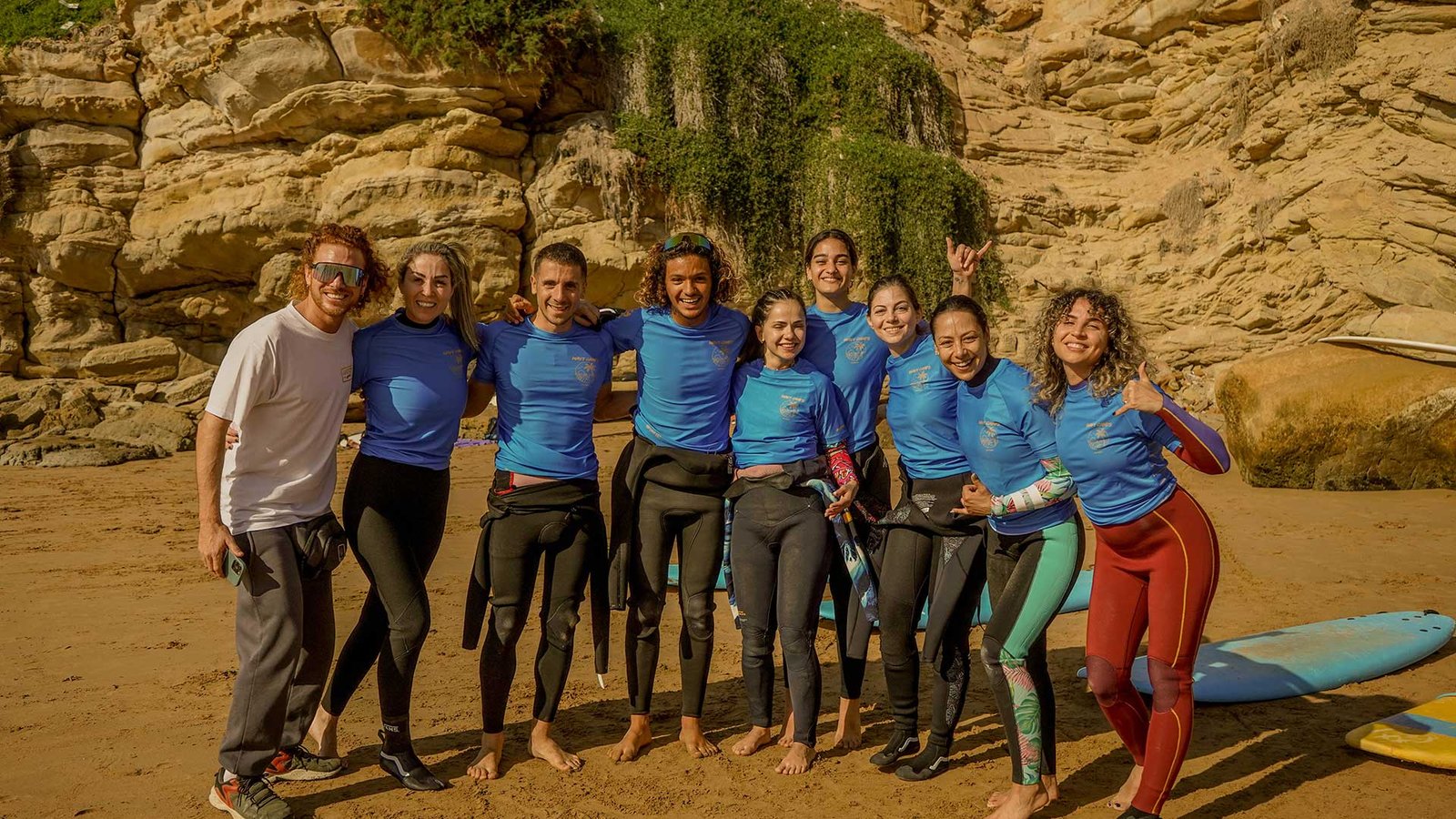
This is the right window for a surf camp week specifically — shoulder season pricing, small groups because the house isn’t full, instructors with time to pull you aside and work on the one thing you keep getting wrong.
July to September: the learner’s months
Summer is Morocco’s gentlest surfing season. Waves drop to waist-to-chest-high on most days, mornings can be flat, the afternoon sea breeze turns the surface choppy by 2pm. This is not the Morocco the photographs sell. It’s also exactly what a complete beginner needs.
Water hits 21–23°C — a springsuit is enough most days, a 3/2mm is luxury. Air temperature on the coast stays moderate (22–27°C) because the Atlantic keeps things cool; go thirty kilometres inland and you’re in the high thirties. Families who want to combine surf lessons with beach holidays come in July and August in big numbers — French and Italian school summer breaks, Dutch summer, the German Sommerferien. The main beaches at Banana Beach and the Tamraght stretch can get crowded on weekends.
Advanced surfers tend to leave Morocco in July and August. The swell is too small to make the trip worthwhile, and they go north to Portugal or Spain’s Atlantic coast instead. That’s fine for us — it means the camps in Imsouane are running at beginner-camp density: mostly first-timers, mostly people in their first year of surfing, lots of lesson progression rather than freesurfing. If you’re a learner, these are the months that’ll move you fastest.
September is the pivot. Swell starts building again from the second week, water is still warm, the summer crowds thin out after the last week of August. It’s a second shoulder window and an underrated booking choice.
Best time to surf in Morocco by water temperature and wetsuit
The Moroccan Atlantic never gets tropical, even in August. The cold Canary Current keeps water fresh year-round.
| Month | Water temp | Wetsuit |
|---|---|---|
| January | 16–17°C | 4/3mm, booties if cold-sensitive |
| February | 16–17°C | 4/3mm |
| March | 17–18°C | 4/3mm |
| April | 17–19°C | 4/3mm |
| May | 18–20°C | 3/2mm or springsuit |
| June | 19–21°C | 3/2mm or springsuit |
| July | 21–22°C | Springsuit |
| August | 22–23°C | Springsuit |
| September | 21–22°C | Springsuit or 3/2mm |
| October | 20–22°C | 3/2mm |
| November | 19–20°C | 3/2mm |
| December | 17–19°C | 4/3mm |
Most camps — including ours — provide the wetsuit thickness appropriate for the month you book, so you don’t need to pack one from home. The exception is serious cold-water surfers who want a specific-brand 5mm for January — those people bring their own. For everyone else, the camp’s rental kit is enough.
When European travellers actually book and fly
European surf travel is shaped more by school holiday calendars than by wave forecasts. Here’s how the year breaks down across the major source countries — useful if you care about crowd levels, pricing, or availability.
October half-term (UK, late October). A ten-day spike in UK bookings. Morocco’s weather is still warm, the first swells are landing, families with teenagers combine surf lessons with their autumn break. Camps fill up 6–8 weeks in advance.
French Toussaint (late October to early November). French school holidays overlap partially with the UK half-term and extend a week later. The Imsouane village has heard more French than Arabic by early November in recent years — it’s the single biggest booking spike of the autumn.
Christmas / New Year. A ten-day European-wide spike from around 22 December to 2 January. Prices at the bigger Taghazout camps rise noticeably. Smaller Imsouane camps hold steady. This is a good week for couples and solo travellers; less good for families who’ll find older-teen-friendly accommodation tight.
February half-term (UK, mid-February). A second UK spike. Also coincides with the French Hiver zone holidays (which rotate across three zones, each taking a different two weeks). The waves are heaviest, the water coldest, but UK and French travellers who want winter-escape surf still come in numbers.
Semana Santa (Spanish and Italian Easter, late March to mid-April). A week-long Spanish and Italian spike. Water is warming, shoulder season fully on. This is the best shoulder week for Spanish speakers wanting to combine surf with spring warmth.
May half-term (UK, late May). A quieter booking spike. European mainland hasn’t broken up for summer yet, so May half-term feels spacious. Honestly our pick for UK-based first-timers.
Summer (mid-July to end of August). Peak European family travel. French, German, Dutch, and Italian school summer holidays all overlap. Camps that take kids fill up 3–4 months ahead. Waves at their smallest — advanced surfers skip, beginners benefit.
Autumn break (Dutch, early October; German varies by Land). Small but meaningful bookings, especially from Amsterdam and Berlin. Usually ties in with start of the swell season.
For planning a trip at Olas or any other Moroccan camp, our planning guide covers the logistics side — flights, transfers, visas, the order you should book things. For general Morocco travel context beyond surfing, Lonely Planet’s Morocco hub is a solid starting point.
Which month is the best time to surf in Morocco for YOU?
A quick decision tree based on the type of surfer and type of trip you’re planning.
Complete beginner, first-ever surf trip: May, June, or September. Smallest safest waves, warm water, least crowded. Skip peak winter entirely.
Early intermediate wanting to progress: April or October. Shoulder season balance — enough wave to make you commit, not enough to scare you.
Solid intermediate / advanced chasing quality: November, December, or March. You want clean overhead swell without the full January crowds.
Advanced surfer on a mission for the photographs: January or February. Commit to the cold water, book a specific swell window, target Anchor Point and reef spots. A longer stay helps because heavy months also have flat windows between storms.
Couple where one surfs and one doesn’t: April, May, or October. Warm enough to enjoy the non-surf side of the trip — the medina, the souks, the hiking in the Atlas — without committing to a pure-surf mindset.
Family with kids: July or August. Mellow waves, warm water, stable weather. Book four months out for school-summer weeks.
Digital nomad staying 3+ weeks: Anywhere between October and April. Long enough that you’ll see multiple swell cycles and a mix of conditions, which is the point of a longer stay.
Budget-first traveller: Early December or mid-February — the shoulders around the Christmas and half-term spikes. Camps discount, flights are cheaper, waves are still solid.
If none of those profiles fit you, the generic safe answer is late May or late October. You will not regret either.
For where to surf each season: see our best places to surf in Morocco guide for spot-by-spot recommendations.
Frequently asked questions
What is the best time to surf in Morocco?
If you’re intermediate or advanced, January or February give you the biggest cleanest waves of the year. If you’re a beginner or an early intermediate, May or late October give you the best combination of warm water, smaller waves, and fewer crowds. For a first-ever Morocco trip regardless of level, we’d pick May.
Can beginners surf in Morocco in winter?
Yes — at the right spot. Winter waves are heavier at the named point breaks (Anchor Point, Killer, Panorama) but stay friendly at protected beach breaks and at Imsouane’s Bay. Ask any camp you’re considering: where exactly do beginner lessons happen on a big-swell day? If the answer is “we find a sheltered spot” without a name, book elsewhere.
What wetsuit do I need in Morocco?
A 3/2mm wetsuit works for eight to nine months of the year. You’ll want a 4/3mm from December through April, and a springsuit or shorty is enough from July through early September. Most surf camps provide wetsuits in the package, so you don’t need to pack one unless you’re particular about fit.
Is Morocco surf consistent all year round?
Yes, but the size and quality vary enormously. From October through March the Atlantic delivers consistent groundswells, often overhead, frequently with offshore morning winds. From April to June the swells taper but stay consistent and clean. July and August are the smallest months — waves are there but they’re small, and advanced surfers often skip Morocco for Portugal in those weeks.
When is it cheapest to book a Morocco surf trip?
Late November and early December before the Christmas wave, and the first two weeks of February after the half-term crowd leaves but before the Easter lead-up. Avoid booking within the four major European holiday spikes — UK half-terms, French Toussaint, Christmas, and Semana Santa — and you’ll save 15–30% on camp rates and flights.
What’s the water temperature in Morocco?
Around 16°C at the January low and 23°C at the August high. Shoulder seasons sit in the 18–21°C range. The Canary Current keeps the Atlantic here permanently cool compared to Mediterranean water at the same latitude — a springsuit or 3/2mm is enough most months, a 4/3mm only for deep winter.
Is March a good time to surf in Morocco?
Yes — March is underrated. You still get the winter swell on most weeks but the water starts warming and the crowds ease. Intermediate surfers especially benefit because the power is still there without January’s cold or February’s busy lineups. The second half of March is usually the sweet spot.
If you already know your window — pick the month, then check availability at Olas in Imsouane. Shoulder-season weeks go fast, and the popular winter weeks often sell out eight to twelve weeks ahead. Message us with your dates and we’ll tell you honestly whether it’s a good match for the level you’re at.
0 Comments