
The best surf spots in the world don’t come from glossy surf-travel aggregators — they come from surfers who’ve been to more than one of them and have an opinion. This list is the honest one: five waves that genuinely deserve a spot in any serious surfer’s travel plan, ranked by wave quality, accessibility, and what it’s like to actually spend a week there. Full disclosure, one of them is Imsouane, where we run a small surf camp. We’ll argue its case honestly and let you judge.
1. Uluwatu, Bali — the world’s best left-hand reef break
Uluwatu sits on the Bukit Peninsula at the southern tip of Bali, below a cliff-top 11th-century temple. The wave is a fast, long, reef-bottomed left that runs across four named sections: The Peak (the main takeoff), Racetrack (the long wall), Outside Corner (big-day outside section) and Temples (the inside reform). On a solid south swell in May–September, you can get 300-metre rides across multiple sections on the same wave. The lineup is often crowded — Uluwatu’s global reputation means every travelling surfer wants a shot — but the reef is forgiving enough that intermediates hold their own there. Water temperature never drops below 26°C; a pair of boardshorts is your wetsuit. The best surf seasons run April through October (dry season, offshore trade winds).
Why it’s on this list: it’s a genuine world-class wave that you can actually surf as an intermediate, in warm water, in a country with solid travel infrastructure. For deep SERP-level context, Surfline’s Uluwatu report is the industry-standard reference.
2. Pipeline, Hawaii — the benchmark of the best surf spots in the world
Pipeline, or Banzai Pipeline, breaks on Oahu’s North Shore over a shallow lava-reef bottom that rises from 30ft to 3ft in the space of 15 metres. That’s what makes the wave so hollow — the swell’s energy hits the shelf and throws straight up into a barrel that’s wider than it is tall. From November to February the wave holds 8–15ft faces, and the competition circuit (Pipe Masters, Billabong Pro) treats this as the closing stage of the world tour for a reason.
Is Pipeline a realistic travel destination for the average surfer? Honestly, no. It’s an expert-only wave where mistakes end careers. What it earns on this list is its role as the standard every other hollow reef is measured against. You visit the North Shore to watch it, to surf smaller adjacent breaks (Rocky Point, Sunset Beach on a medium day), and to feel the weight of what serious surfing looks like. Water sits at 24-26°C year-round; airfare is the main cost.
3. Imsouane, Morocco — one of the longest right-handers among the world’s best surf spots
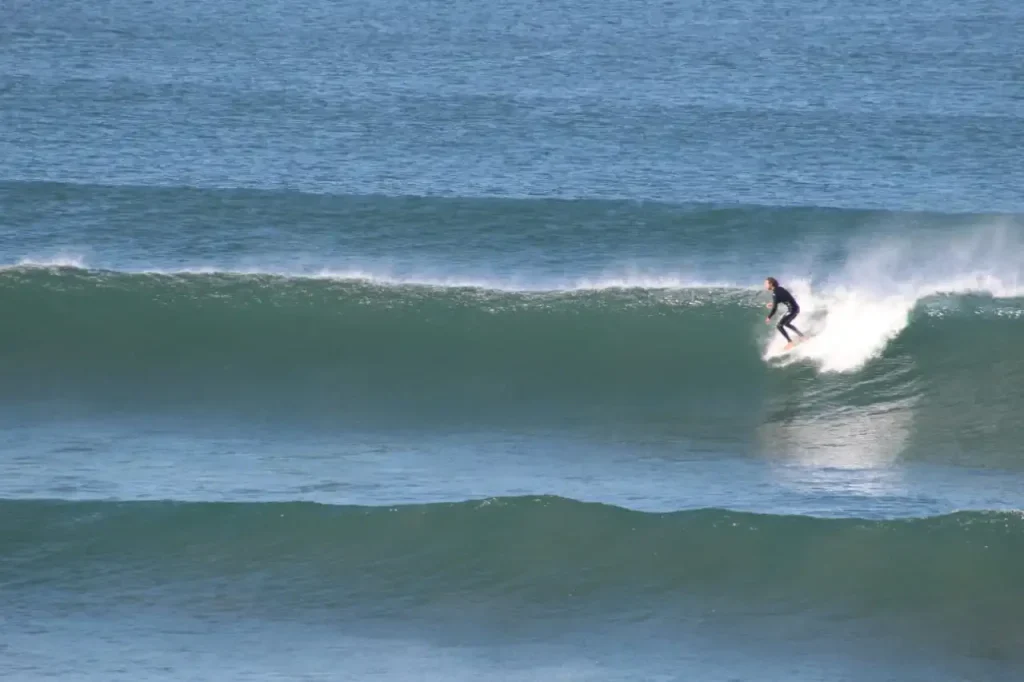
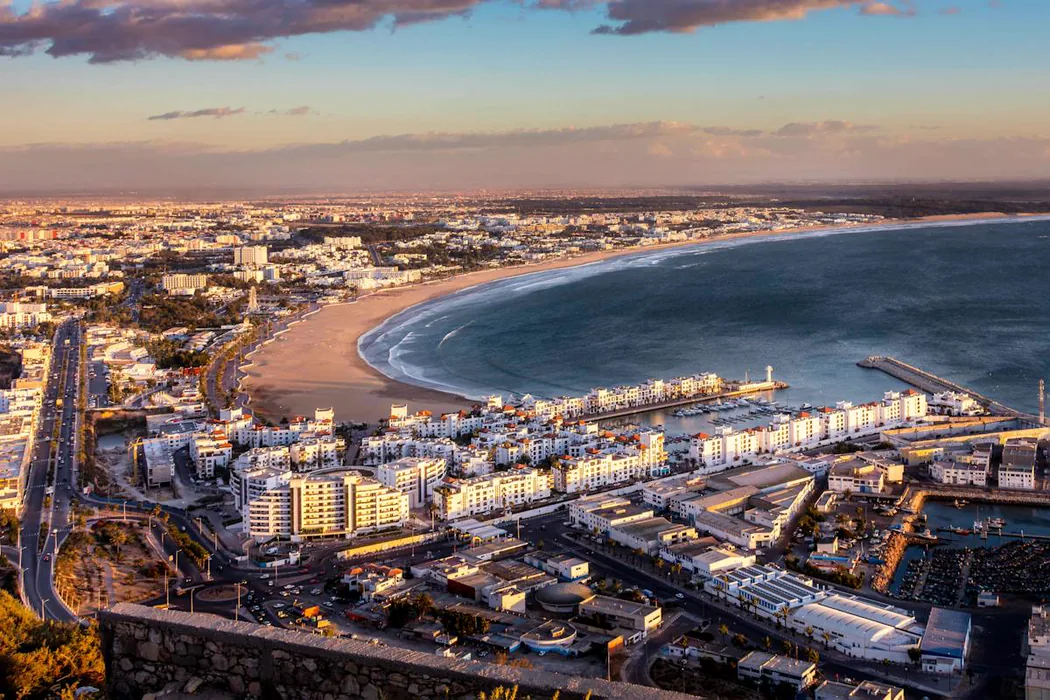
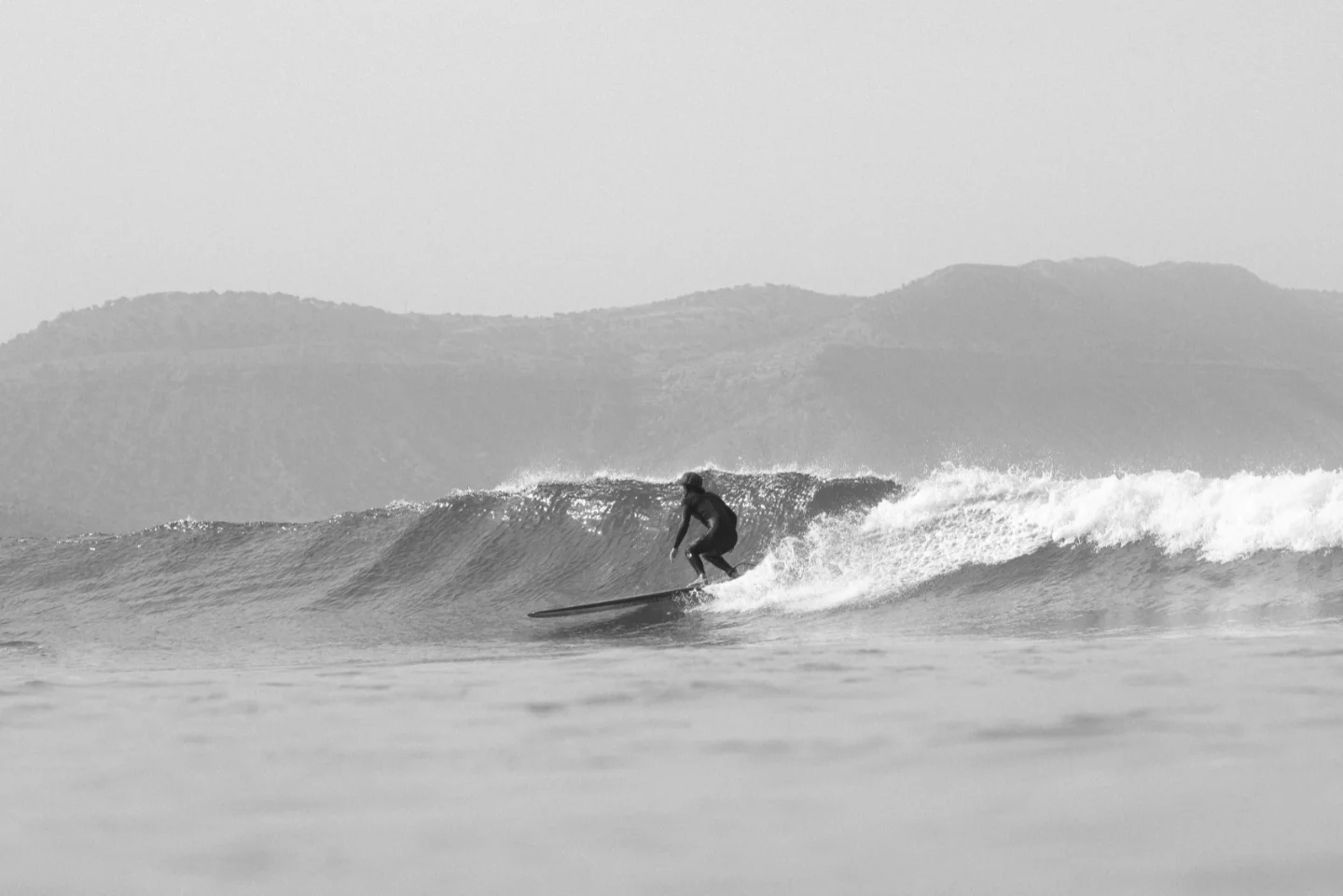
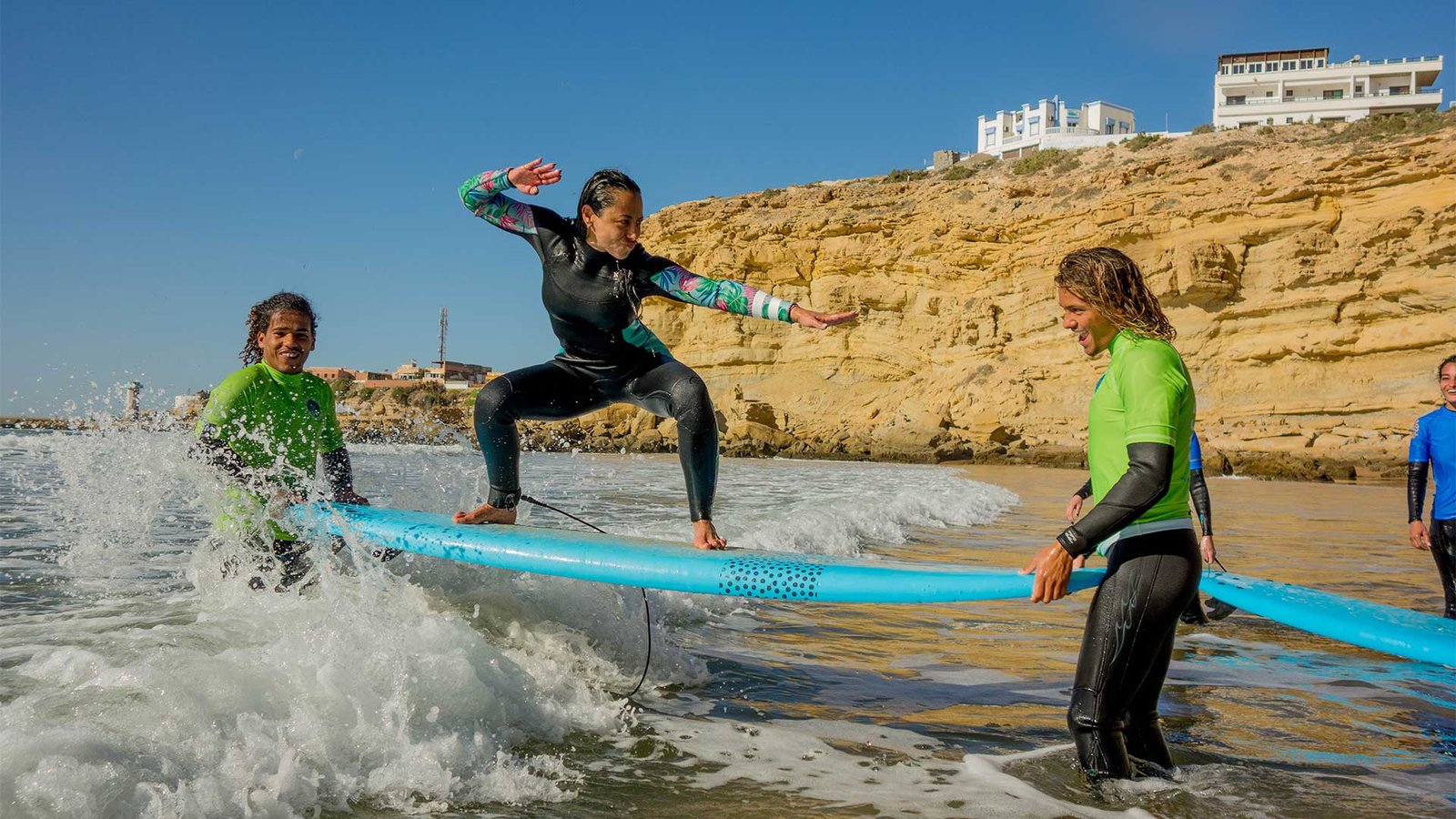
Our home wave, and biased obvious, but hear us out. Imsouane Bay is a right-hand point break that wraps around a sheltered headland on Morocco’s Atlantic coast, 150km north of Agadir. On a clean N to NW swell, the wave peels for 300–500 metres — the kind of ride length most surfers experience maybe a handful of times across a whole surfing life. And crucially: it does this at a mellow enough speed that even a second-week beginner can ride the wave end to end. That’s the thing no other break on this list can claim. The best surf spots in the world are usually expert-only; Imsouane is world-class and accessible.
The second wave in the village — the Cathedral — is shorter, faster, reef-influenced, and more demanding. Most guests surf the Bay in the morning and graduate to the Cathedral once the coach sees they’re ready. Our Imsouane Bay surf guide has the wave mechanics. Water sits 17–23°C across the year (3/2mm wetsuit most of the time), flights to Agadir from most European hubs are cheap and direct, and a full surf-camp week costs roughly what a weekend in Lisbon does. Season runs year-round; peak swell is October-March.
4. Jeffreys Bay, South Africa — the speed machine of the world’s surf
Supertubes at Jeffreys Bay on South Africa’s Eastern Cape is a right-hand point that breaks across half a dozen named sections (Boneyards, Supertubes itself, Impossibles, Tubes, Point, Albatross). The wave is fast, long, and mechanical — on a classic southwest groundswell, a competent rider can link Boneyards through Supertubes to Tubes in a single 60-second ride, with multiple barrel sections along the way. J-Bay is where the WSL championship tour tests the world’s best on a right-hand point, which is about as strong an endorsement as any wave gets.
Season is May to September. Water is cool (14–17°C) — a 3/2mm or even 4/3mm wetsuit is the call. Crowds are manageable outside the contest weeks. The wave rewards solid paddling fitness and confident takeoffs; true beginners will be overmatched. Supertubes isn’t always ranked in the top 5 public-facing lists but among travelling surfers with skin in the game, it almost always is.
5. Raglan, New Zealand — the world’s best left-hand point for long rides
Manu Bay at Raglan, on the west coast of New Zealand’s North Island, is the left-handed mirror of what Imsouane does for right-handers. Three connecting point sections — Manu Bay, Whale Bay, Indicators — can link up on the biggest clean days to produce rides of 1-2 kilometres. It’s one of the longest rideable waves on the planet, and because it’s left-handed it’s the natural-footer’s dream equivalent to a goofy-footer’s Uluwatu.
Season is March to October (southern-hemisphere autumn and winter). Water is cold (12–16°C) — a 4/3mm wetsuit with hood and booties is common in peak winter. The town of Raglan is small, friendly, and built around the wave; there’s a laid-back surf culture that hasn’t been ruined by overdevelopment. Getting there is the main cost: New Zealand is a long flight from most of the world, and the best surf season corresponds with European summer — so timing a trip means planning 6-12 months out.
Why this list doesn’t include Nazaré, Teahupoo or Pipeline big days
You’ll notice we’ve left off the heavy-water breaks that appear on most “best surf spots in the world” lists written by non-surfers. Nazaré, Teahupoo, Jaws, Pipeline on a 20ft day — these are the best big-wave spots in the world, but they’re not places you can surf in any meaningful sense unless you’re in the top 0.01% of professional surfers with safety crews and PWC support. A list of the best surf spots in the world should be useful to surfers who might actually travel to them. That’s the filter.
Honourable mentions that nearly made the cut: Nias (Indonesia), Puerto Escondido (Mexico), Mavericks (California, winter), Cloudbreak (Fiji), Hossegor (France in October), and Trestles (California). All world-class. All arguably top-5 depending on what you value most.
Why Morocco should be your next trip among the best surf spots in the world
If this list made you want to book a trip, here’s the practical advice. Of the five, Morocco is the most accessible from Europe: a 3-4 hour flight, a two-hour transfer, a consistent wave at Imsouane that works across all levels, and a full surf-camp week that runs €500–€1,200 all-in. You don’t need to be an expert surfer to enjoy it. You don’t need to pack heavy neoprene. You don’t need to plan 12 months ahead. And you can actually ride the wave, not just visit the country that has it.
For more on what a trip actually looks like, our Morocco surf holidays guide covers the week-by-week reality, and the beginner’s guide to surfing in Morocco covers the first-timer side. The best surf spots in Morocco post breaks down the country itself in more detail.
FAQ: best surf spots in the world
What is the best surf spot in the world?
There’s no single answer — “best” depends on what you value. Uluwatu (Bali) is often called the best for warm-water performance surfing. Pipeline (Hawaii) for expert tube riding. Jeffreys Bay (South Africa) for long right-hand point breaks. Imsouane (Morocco) for one of the longest accessible right-handers on the planet. Raglan (New Zealand) for left-hand point breaks. The best surf spot for you specifically is the one that matches your level, your available travel window, and your budget.
What are the top 5 surf spots in the world for intermediate surfers?
For intermediate surfers specifically: Uluwatu (Bali), Imsouane (Morocco), Jeffreys Bay’s inside sections (South Africa), Hossegor (France), and Canggu (Bali). Pipeline and heavy reef spots like Teahupoo are expert-only. Intermediate-friendly “best” waves prioritise a forgiving takeoff zone over wave power.
Is Imsouane one of the best surf spots in the world?
Yes, by the measure of ride length and accessibility. Imsouane Bay is widely described as one of the longest right-hand point breaks in Africa, with rides of 300–500 metres common on a clean swell. It’s also one of the few world-class waves that genuinely accepts beginners — most top-5 spots are expert-only. For those two reasons it earns a place on most serious surfers’ lifetime lists.
Which world surf spot is best for beginners?
Of the major global surf destinations, Imsouane (Morocco) and Canggu (Bali) are the two most beginner-friendly. Both have sheltered, mellow waves, warm water, and surf-school infrastructure. Of those two, Imsouane edges it on wave length — a beginner’s first proper ride in Imsouane is usually 10-15 times longer than the same ride at a typical Bali beach break.
What’s the longest wave among the best surf spots in the world?
Chicama in Peru is often cited as the world’s longest rideable wave (up to 2km on the rare perfect day). Among waves that break consistently and accessibly, Imsouane Bay (Morocco) at 300-500m and Raglan (New Zealand) at up to 2km on big linked days are the two major contenders. Pavones (Costa Rica) is a left-hand point that also holds long rides.
What time of year to visit the best surf spots in the world?
Depends on the hemisphere. Uluwatu and Canggu (Bali): May-October. Pipeline and Hawaii’s North Shore: November-February. Imsouane (Morocco): October-March peak, surfable year-round. Jeffreys Bay (South Africa): May-September. Raglan (New Zealand): March-October. Roughly, southern-hemisphere spots want winter southern swell, northern-hemisphere spots want winter northern swell, and tropical spots straddle both.
If Imsouane is where you want to start, our booking page is the shortest route in.

0 Comments