
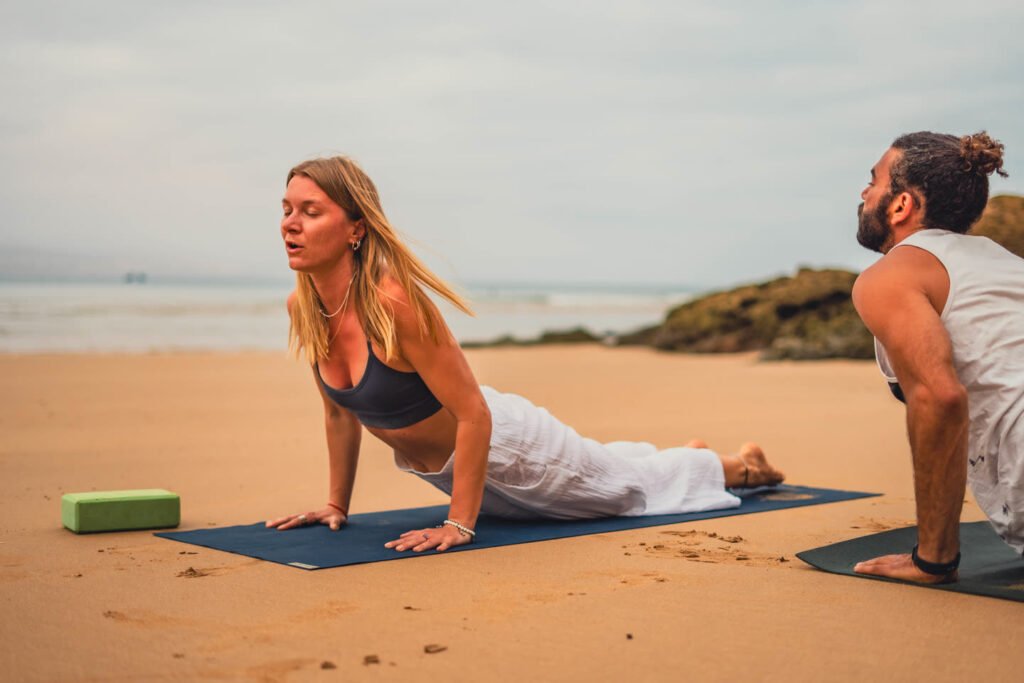
A surf and yoga retreat Morocco week is what you get when you cross two genuinely complementary physical practices with a country that’s built the infrastructure to deliver both at reasonable prices. “Retreat” has become a marketing word — somewhere between the Goop era and the pandemic, every small hotel with a stretch mat in the corner started calling itself one — so most of what you find on page one of Google promises “soul healing” and “transformation” in the same paragraph as the pricing table. This isn’t that post. We run a small surf camp in Imsouane with an optional yoga integration, so we have an opinion — but before we get to ours, here’s what a Moroccan surf and yoga retreat actually is: physically, practically, honestly.
The short version: combining daily surf sessions with a yoga practice works, and it works for a real physiological reason, not a spiritual one. The longer version needs a proper explanation of what yoga styles you will actually see on the mat, where in Morocco you should do it, who this kind of trip suits, and what it should cost. If you want the category-wide view on Moroccan surf camps first, our complete Morocco surf camp guide is the pillar. This post is the lifestyle cousin — same country, same ocean, different rhythm.
Why a surf and yoga retreat Morocco actually works (physiology, not woo)
Paddling a surfboard is one of the most shoulder-dominant movements in sport. You spend roughly 60% of a surf session lying face-down on a board pulling water past you — which hammers the anterior deltoids, pectorals, lats, and the rotator cuff. The lower back is held in a mild hyperextension the entire time. By day three of a surf week, most first-timers wake up with shoulders that feel welded to their ears and a back that creaks when they sit up.
Yoga is the closest thing to a targeted antidote. The standard postures you will meet in a retreat setting — downward dog, puppy pose, thread-the-needle, child’s pose, reclined twists, pigeon — open exactly the tissue that paddling shortens. A 45-minute flow at the end of a surf day does more for how your body feels the next morning than any amount of ibuprofen and stretching on the floor of your room.
The less obvious benefit is nervous system. Surfing, especially as a beginner, keeps you in a low-grade sympathetic state for hours — hypervigilance, elevated heart rate, a quiet cortisol drip. You come in from a session buzzing and then you cannot sleep properly. An evening yin or restorative session — long, passive holds, almost-sleep breathing — flips you into parasympathetic dominance. You down-regulate. You eat dinner calmer. You sleep like you have been sedated. This is not “soul healing”. It is the autonomic nervous system doing what it is designed to do when you give it the right inputs.
A typical day at a surf and yoga retreat in Morocco
Most Moroccan surf-and-yoga camps run one of two rhythms. The most common is morning yoga, surf in the late morning, lunch, rest, afternoon surf or afternoon restorative session, dinner. A minority flip it: early surf at first light, yoga mid-morning as a post-session unwind. Both work; which you prefer depends on whether you wake up bendy or stiff.
A standard day looks roughly like this:
- 7:00am — Yoga session, 60–75 minutes. Usually vinyasa flow (see below) to wake the body up.
- 8:30am — Breakfast. Moroccan style — eggs, bread, honey, olives, yoghurt, fresh fruit, coffee or mint tea.
- 9:30am — Forecast briefing. Surf coach reads the swell and wind, splits groups by level, loads the boards.
- 10am–12:30pm — Surf session. Two to two-and-a-half hours on the water.
- 1:30pm — Lunch. Tagine, salad, bread, often a small dessert.
- Afternoon — Rest, beach walk, nap, rooftop time. Some camps run a second optional surf session; others keep afternoons quiet.
- 5:30pm — Optional evening yoga — yin, restorative, or a slow hatha. Roughly 45–60 minutes. Designed to undo the shoulders.
- 7:30pm — Dinner. Long table, strangers who by day three are not strangers.
- 10pm — In bed, reading, very asleep.
This is not a boot camp. Nothing is mandatory except the thing you came for. If you skip morning yoga and sleep in, nobody raises an eyebrow. If you skip the afternoon surf because your arms are noodles, nobody raises an eyebrow. The whole structure exists to be opted into, not endured.
What yoga styles you will actually find
Most camp websites just say “daily yoga” without explaining what that means — which is a problem, because “yoga” covers a pretty wide range of things, from almost-napping to almost-CrossFit. Here are the five styles you will actually see on the schedule at a Moroccan surf and yoga retreat, using the industry-standard definitions from Yoga Alliance:
Hatha. Foundational, slower-paced, generally held postures. The word “hatha” technically covers almost all physical yoga, but when it appears on a schedule in a retreat setting it usually means a slower, more alignment-focused class with longer holds. Good for beginners. Good as an evening session.
Vinyasa (flow). Breath-linked movement. You move from pose to pose in time with your inhale and exhale, building a continuous sequence. This is the most common morning yoga style at surf retreats because it warms the body up properly for a surf session. Medium pace, accessible to beginners if the teacher is any good, more physically demanding than hatha.
Yin. Long-held passive poses, usually on the floor, usually supported by props. Each pose is held for three to five minutes — long enough that you stop fighting it and the connective tissue actually releases. Yin is the single best recovery tool for surf-sore shoulders and tight hips. If a camp offers yin in the evening, go.
Ashtanga. A fixed, physically demanding sequence of postures, repeated daily. Rare at surf retreats because the time commitment and intensity clash with the surf schedule, but some yoga-forward camps offer a shorter primary series. Skip it on a surf day unless you are an experienced practitioner — you will fry yourself before you paddle out.
Restorative. Heavily supported poses held for five to twenty minutes with bolsters and blankets. Almost sleep. The closest yoga comes to a nap. Ideal as a post-surf wind-down on a day you thrashed yourself on the water.
A good week will run vinyasa in the mornings and mix in yin or restorative in the evenings. That is the combination most surf-retreat camps in Morocco settle on, and it is what we run at Olas. If a camp only offers one style, and it is the wrong one for your body, the “yoga” part of the retreat quickly becomes noise. Ask before you book.
Where to book a surf and yoga retreat in Morocco
There are three regions where a surf and yoga retreat makes sense. They are different enough that the decision matters.
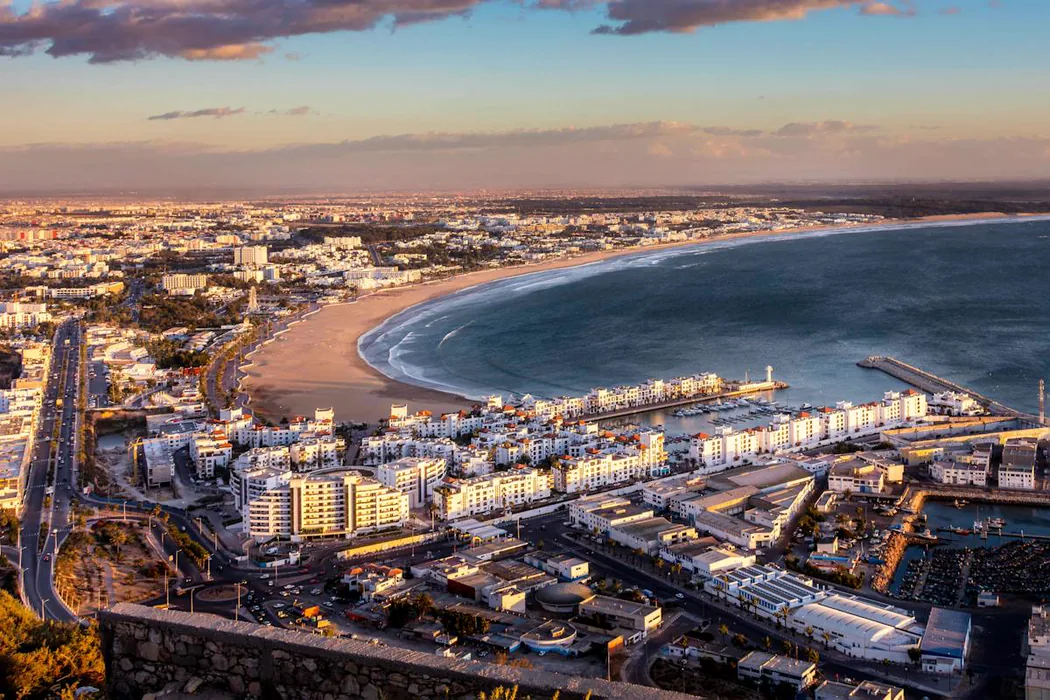
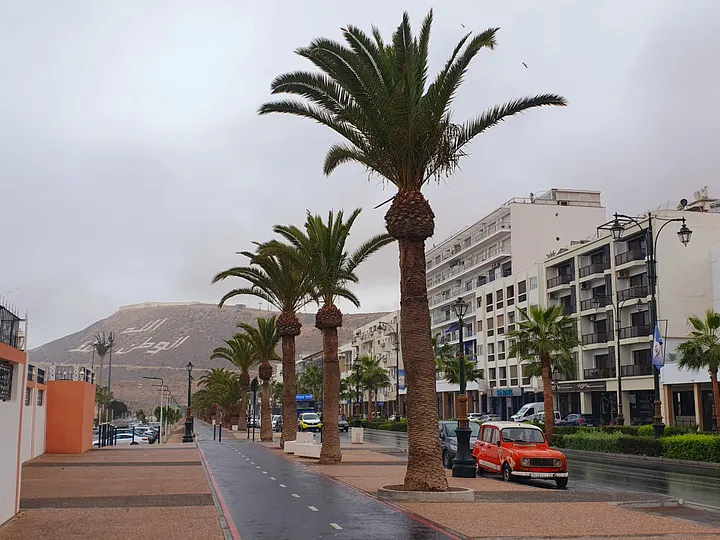
Taghazout and Tamraght. The retreat capital of Morocco. A fifteen-minute drive north of Agadir airport, a cluster of small surf towns turned into what is essentially a retreat economy. More camps, more dedicated yoga studios, more options for walk-in classes, more restaurants, more nightlife. The waves — Anchor Point, Panorama, Killer Point, Banana Beach — are world-class but crowded. If you want choice and social energy, this is the region. If you want quiet, this is not the region.
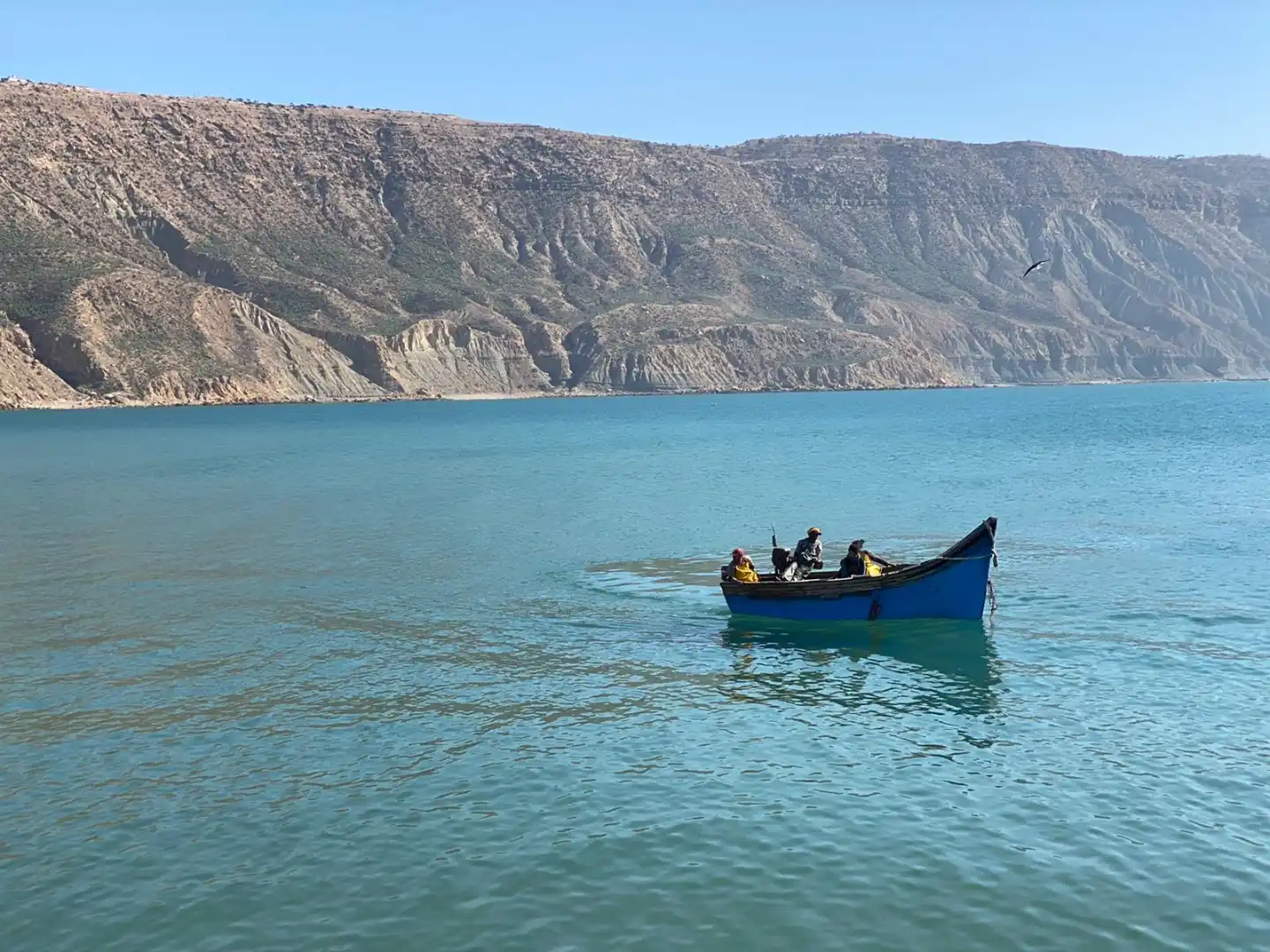
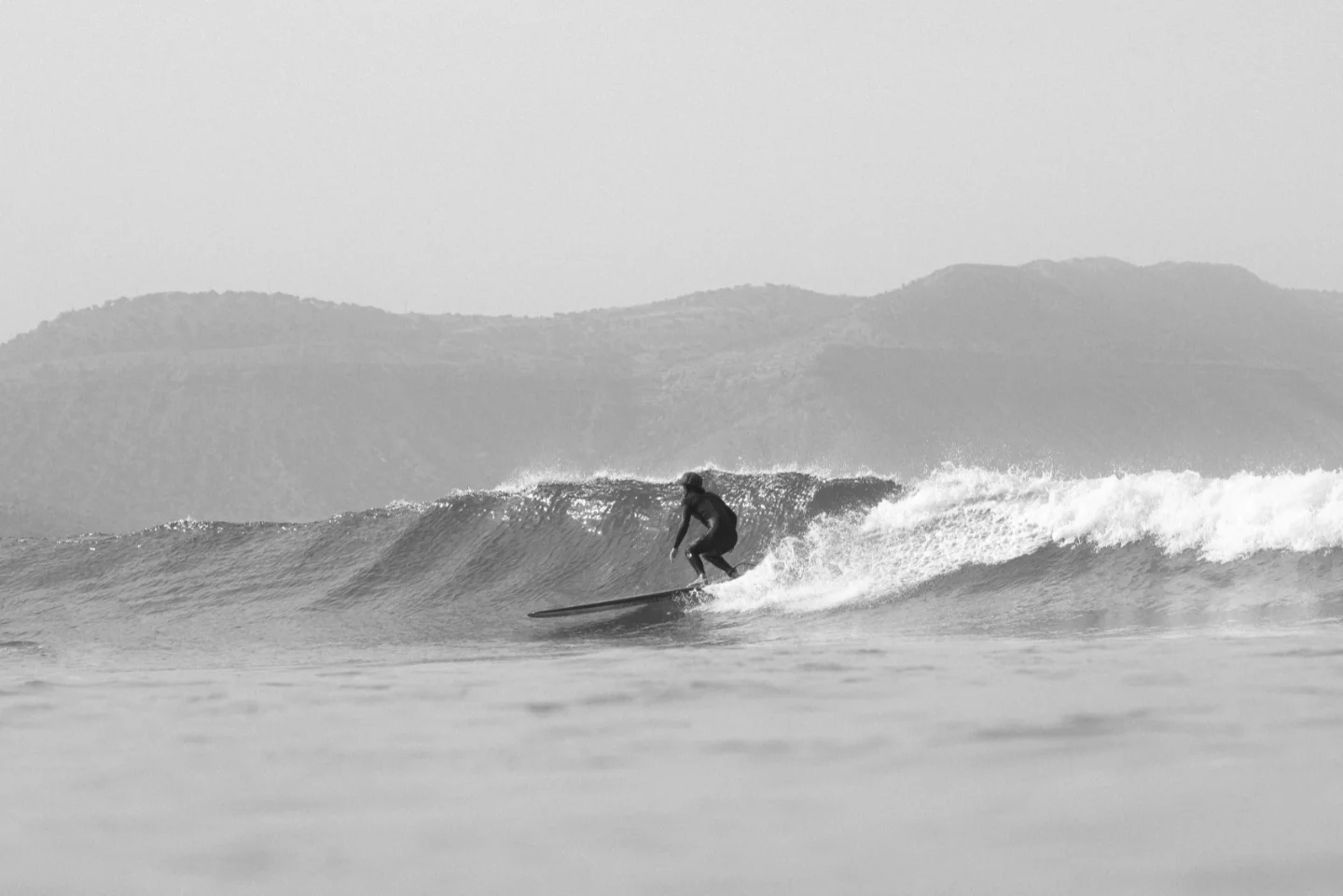
Imsouane. Two hours north of Agadir up a mountain road. Smaller village, quieter rhythm, far fewer retreats. The Bay is one of the longest, most forgiving right-hand point breaks in Africa — which changes the whole retreat dynamic, because beginners can take a full 30-second ride on their second day here when in Taghazout they would still be in the whitewater. Fewer yoga studios (basically, the ones inside the camps), smaller groups, less nightlife, less choice. If you want a low-key surf-and-yoga week with the volume turned down, Imsouane is the answer. Our Imsouane vs Taghazout comparison goes into this in depth.
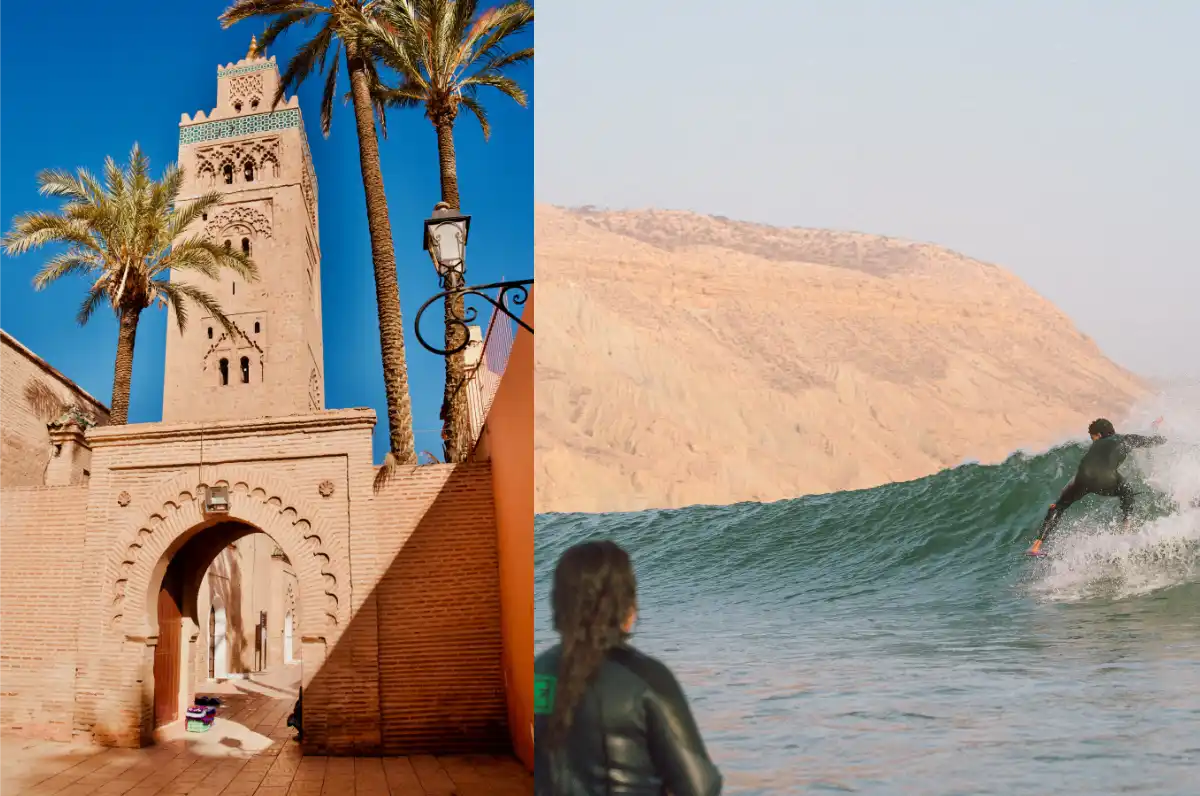
Essaouira. Further north still. A walled medina on the Atlantic, windsurf and kitesurf rather than surf because of the strong trade winds, more cultural-urban than surf-village. Some yoga retreats operate here but it is a different kind of trip — city-adjacent, windswept, lower surf priority. Good if “yoga holiday with some surfing thrown in” describes you better than “surf trip with yoga to recover”.
For most first-time surf-and-yoga buyers, Taghazout is the obvious choice and Imsouane is the better one. The reason is simple: a retreat only works if you can actually rest. In a quieter village with smaller groups and a forgiving wave, you rest. In a busy retreat strip with a bigger crowd, you socialise — which is great, but it is not rest.
Who a Moroccan surf and yoga retreat is actually for
This kind of trip suits a specific profile. Being honest about that is more useful than the “it’s for everyone!” line you see on every camp homepage.
It is a good fit if:
- You want a physically active holiday but not a punishing one. Daily surf is tiring; yoga keeps the body functional.
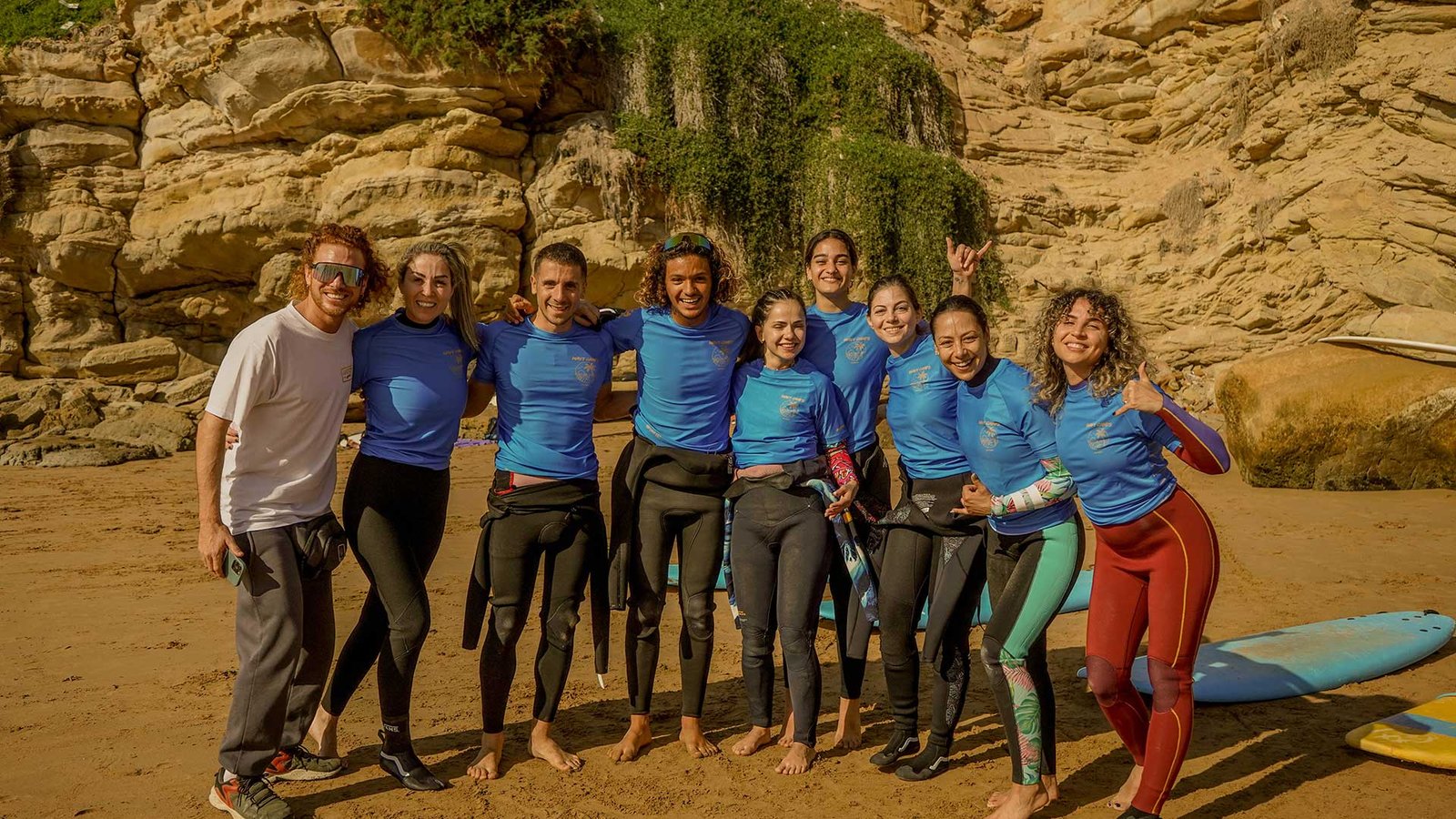
- You are a solo traveller and do not want to eat dinner alone for seven nights. Shared tables, shared sessions, shared schedule — you are folded into a small group within 24 hours.
- You are coming out of a stressful work period and the “turn the volume down” framing is what you actually need, not another city-break that leaves you more tired.
- You are a couple looking for a shared-activity holiday where neither of you has to do the thing the other one hates. The optionality is the point.
- You already do some yoga and want to add a sport — or already surf and want to add a recovery practice.
It is a bad fit if:
- You are a serious surfer chasing proper waves and would treat morning yoga as an interruption. Book a surf-only camp.
- You have never done any yoga and the word puts you off — a week of it is not the introduction you want. Start with a single class at home first.
- You expect luxury villa standards with private spa treatments. Most Moroccan surf-and-yoga camps are mid-range and communal by design. The luxury end exists but is a small minority of the market.
- You want silence. This is not a silent retreat. Mealtimes are long and chatty; evenings are social.
If this sounds like you, the lifestyle side of a Moroccan surf-and-yoga week is worth reading about too — our digital nomad surfing in Morocco post covers the overlap for people who work remotely and want to do this for longer than a week.
What a real surf and yoga retreat Morocco week costs
The Moroccan surf-and-yoga market runs wider than most people realise. Aggregators currently list roughly 38 yoga-and-surf retreats in the Agadir region alone, and the price range on those listings runs from around €170 at the cheapest end (dorm bed, shared meals, short stay) to €5,000+ at the high-end villa end (private suite, full-board, private instruction, airport transfer, spa). Most actual bookings cluster in the €600–€1,400 range for a standard seven-night, full-board, shared-room setup with daily surf and daily yoga included.
What drives the price:
- Accommodation standard. Dorm vs shared twin vs private room vs private suite. The biggest single price lever.
- Instructor-to-guest ratio. A camp running 4:1 in the water costs more than one running 8:1 for a reason.
- Inclusions. All-inclusive camps include airport transfer, breakfast, lunch, dinner, surf, yoga, boards and wetsuits. Stripped-back ones include only surf and breakfast and charge everything else à la carte.
- Location. Taghazout/Tamraght retreat-capital pricing tends to sit slightly higher than Imsouane or Essaouira for comparable standards, purely on demand.
- Season. October–March peak, April–June shoulder, July–September low — price can move 20–30% between peak and low season.
If you want the full cost breakdown by tier, our Morocco surf holidays guide has the proper table. Most of that applies to surf-and-yoga too, with roughly a €100–€200 premium for the yoga integration depending on how many sessions are included.
Food and dietary needs
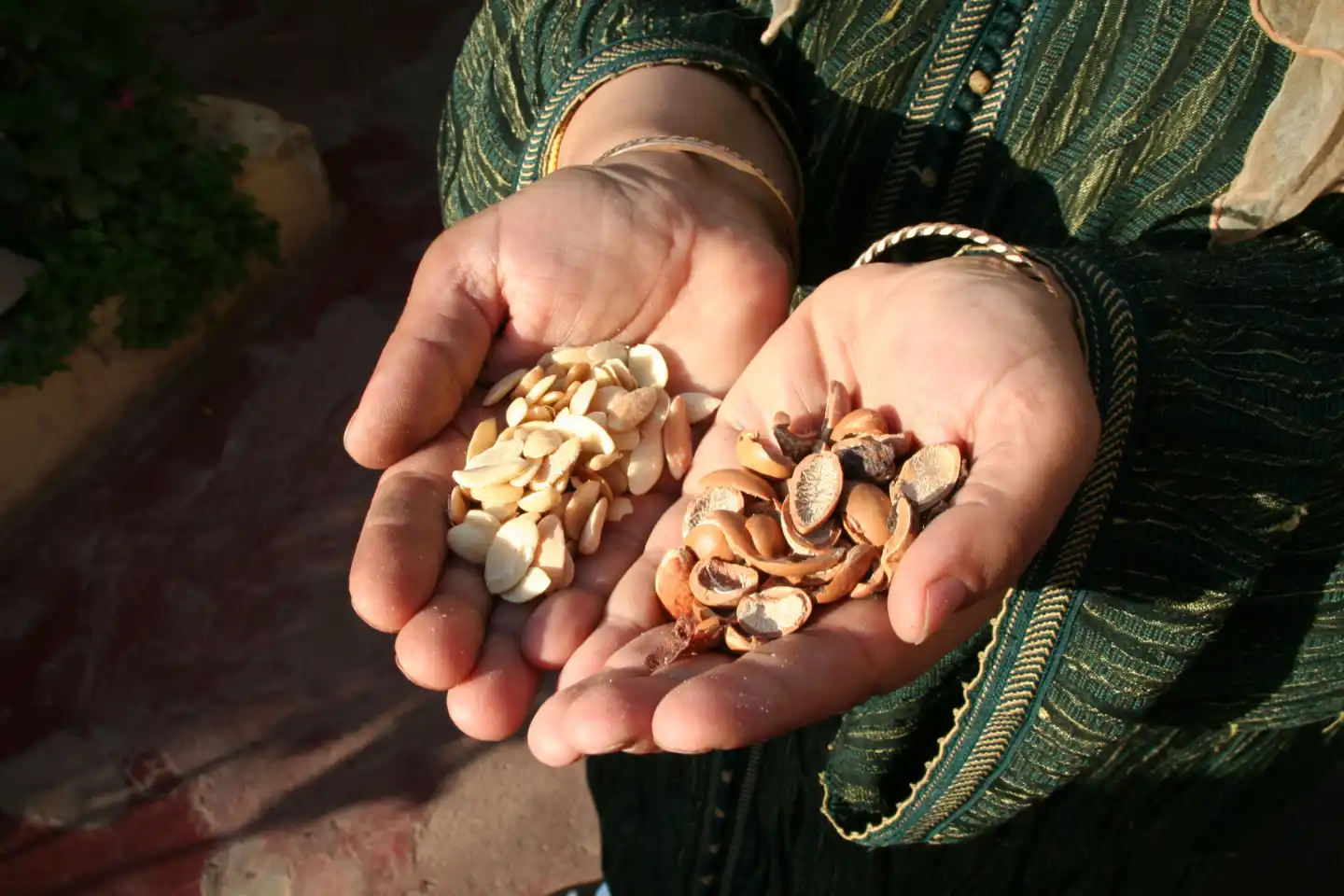
Moroccan home-cooked food is unusually well suited to retreat diets. The staple dishes — tagine, couscous, salads, grilled fish, bread, olives, almonds, dates — lean vegetable-heavy by default and can be adapted to vegetarian, vegan, pescatarian, gluten-free, and dairy-free without much effort from the kitchen. Halal is the default everywhere, which matters if your diet requires it — simply a practical note, not a cultural one.
If you have a specific dietary requirement, tell the camp at booking time, not on arrival. Moroccan kitchens buy groceries daily from the local souk, so a week’s worth of vegan ingredients needs a day or two of notice. Once they know, they will feed you well. The food is, for many guests, the surprise highlight of the week.
What a Surf and Yoga week looks like at Olas, plainly
We run a small setup in Imsouane. It is not a luxury villa, it is not a silent retreat, and we are honest about that. Our yoga programme runs as a vinyasa flow in the morning, roughly 7am for an hour, and an optional slower session — usually yin or restorative — in the late afternoon a few times a week. The morning session is in-house. Guest teachers pass through occasionally, especially in the spring and autumn months, and we flag those weeks on the booking page.
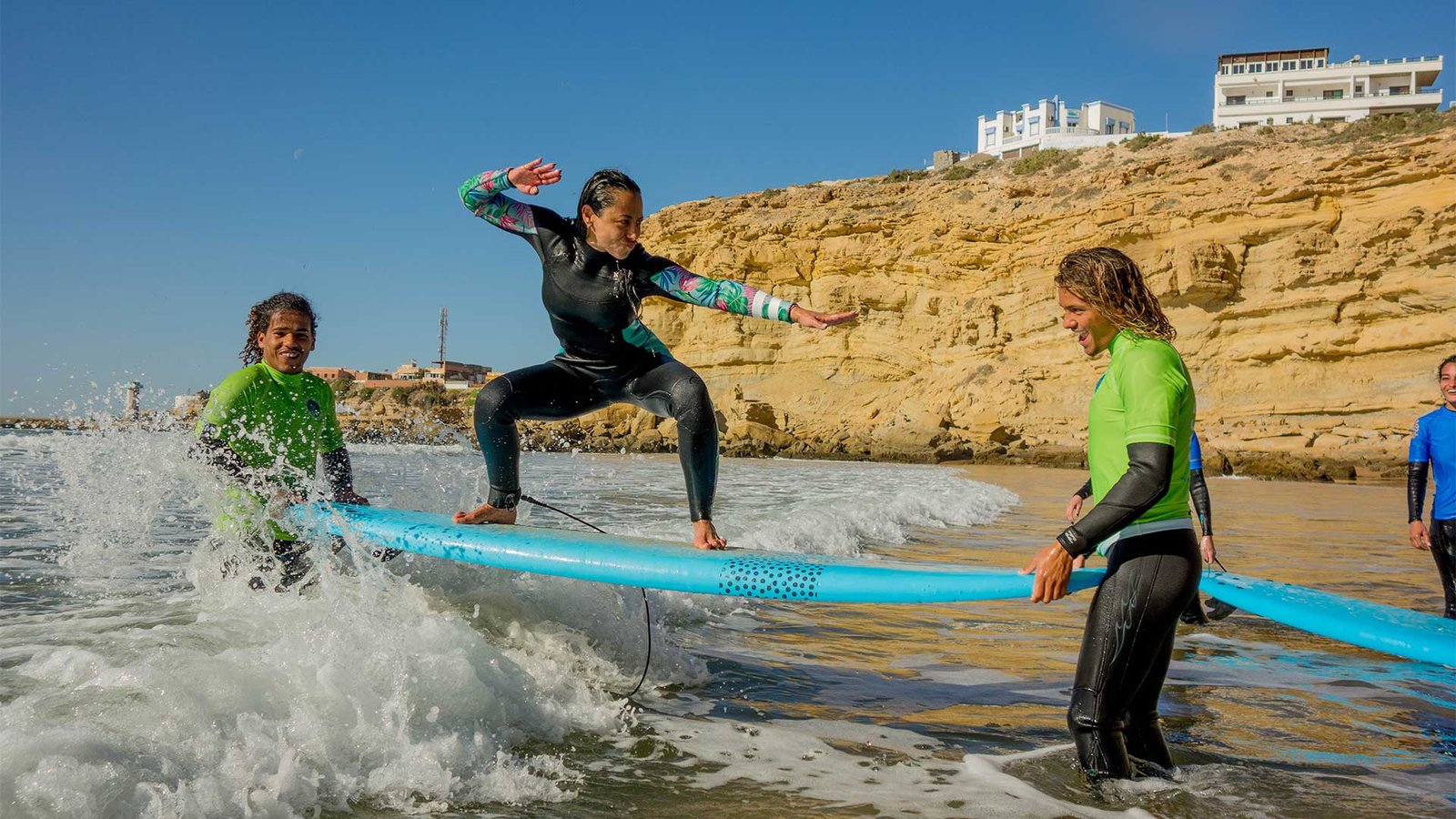
The surf side is our core — three instructors in the water with you, group sizes we cap firmly rather than average out, the Bay wave that gives beginners the longest forgiving rides in Morocco. If you want the full picture, our surf-and-stay setup page and our surf and yoga package page cover the logistics. If you want the closer “what is it actually like to stay with Olas” view from other guests’ perspective, our Olas Surf Camp in Imsouane post is the place.
What we don’t do: sell transformation. You will leave fitter, bendier, more rested, and probably with a better pop-up. Whether you leave “changed” depends on you, not on us. We can only promise the surf, the yoga, the food, and the rooftop.
FAQ
What’s the difference between a surf and yoga camp and a surf-only camp?
A surf-only camp runs one activity, usually twice a day, with social time around it. A surf and yoga camp adds a yoga practice — typically a morning flow and sometimes an evening restorative session — as part of the daily schedule. The yoga is there to keep your body functional through a full week of surfing, which is where most first-timers injure themselves by over-using shoulders that have never paddled before. It is also a softer rhythm — more downtime, more rest, more recovery built in. If you want maximum time in the water, go surf-only. If you want to still be walking comfortably on day five, go surf and yoga.
Do I need yoga experience to join a surf and yoga retreat in Morocco?
No. Most retreats run mixed-level classes with modifications offered for every pose, and the morning vinyasa or hatha flow is structured to be accessible to anyone who can kneel and breathe. If you have never done yoga at all, the first session will feel awkward — expect that. By the third session your body will know what is happening. Tell the teacher before class that you are a complete beginner; a decent one will keep an eye on you.
What style of yoga is usually taught at Moroccan surf and yoga camps?
The most common combination is vinyasa flow in the morning (breath-linked movement, medium pace) and yin or restorative in the late afternoon (long-held passive poses, much slower). Some camps offer hatha instead of vinyasa in the morning if the group is more beginner-heavy. Ashtanga is rare. Hot yoga is virtually non-existent in the Moroccan retreat scene — the climate does not need it.
Is Morocco a good destination for a first surf and yoga retreat?
Yes, and arguably the best in Europe’s reach. The waves are beginner-forgiving especially in the Bay at Imsouane, the water is mild year-round — a 3/2 wetsuit from May to November, a 4/3 from December to April, flights from most European hubs are three to four hours, the food suits retreat diets, and the prices are well below Bali or Costa Rica. The main tradeoff is the retreat scene is still smaller than Bali’s — fewer boutique options, less choice at the luxury end — but for a first-timer that is often a feature, not a bug.
Can I go solo to a surf and yoga retreat in Morocco?
Most retreat guests are solo travellers. The shared-table, shared-schedule structure means you are inside a small group within 24 hours of arrival, with people who are there for the same reason you are. It is one of the easiest solo trips you can book. Most camps offer a single-supplement option if you want a private room, or a shared twin/dorm bed if you want to keep costs down and are comfortable with it.
When is the best time for a surf and yoga retreat in Morocco?
October to March is peak surf season — bigger, more consistent swell, water still warm. April to June is the sweet spot for retreat buyers who want smaller, mellower waves and the most settled weather. July to September is the low season: the smallest waves of the year, hot weather, quieter camps, cheaper prices. For a full month-by-month breakdown, our best time to surf in Morocco guide has the detail.
The honest ending
A good surf and yoga week in Morocco is not a transformation. It is a reset. You arrive tired, you spend seven days moving your body in useful ways, eating well, sleeping hard, and talking to people who are doing the same. You leave fitter, looser, tanned, and usually with one or two phone numbers saved in your contacts. That is enough. Nobody needs to sell you more than that — and if a camp homepage is promising more than that, be a little suspicious.
When you’re ready to look at specific weeks, our all-inclusive retreat weeks are laid out with dates and prices, and the booking page has availability, and if you want to talk through whether Imsouane or Taghazout suits your profile better we are reachable there too. No pressure — most of our bookings come from people who read three or four of these posts first, and that is the right way to do it.

0 Comments