
Surf holidays Morocco pages are, almost without exception, written by a camp selling you a bed in that camp. Fair enough — that’s the business. But if you’re sitting at a kitchen table in Berlin or Lyon or Manchester trying to picture what a week actually feels like, none of those pages help. They show you a brochure. They don’t tell you what 7am looks like, how the second day feels in your shoulders, or what you do on a flat afternoon when the swell drops.
This is that page. We run a small surf house in Imsouane, so yes, we are biased — Imsouane is the slow town on the Atlantic coast, about two hours north of Agadir, and most of what you’ll read below leans that way. But the honest bits hold whether you pick us or a camp in Taghazout or Tamraght: a surf holiday in Morocco follows the same rhythm almost everywhere, and understanding that rhythm before you book is more useful than reading another “5 star amenities” bullet list.
If you want the wider category context first, our full surf camp Morocco buyer’s guide covers pricing tiers, town choice, and operator red flags in more depth. This page is focused on one question only: what does the week feel like.
What surf holidays in Morocco actually include
The model is simple. You book a seven-night package (or a shorter one — we’ll come back to that). You arrive at a surf house, a villa, a lodge, or something between. The package usually includes your bed, three meals a day, a surfboard and a wetsuit you don’t have to carry through an airport, and two surf sessions most days with a coach who reads the conditions for you. Transport to the beach is sorted. Yoga is often available as an add-on. You share meals with the other guests. Everything except your flight, your travel insurance, and your drinks is arranged.
European surfers have been coming here since the 1960s — the Atlantic coastline runs 2,500 kilometres from Tangier to the Saharan south, and roughly 150 kilometres of it between Essaouira and Taghazout is where almost every surf camp is based. The package formula hasn’t changed much in forty years because it works: you land, you’re fed, you sleep, you surf, you meet people, you leave with better paddling fitness and a tan.
What has changed is the range. The cheapest end of the market now sits around €400 a week in a dorm in Tamraght; the premium end runs past €1,400 a week in a boutique villa in Taghazout Bay. There’s no “standard” Morocco surf holiday anymore. Our all-inclusive surf camp guide has the full breakdown of what’s included at each tier — worth reading alongside this piece if you’re comparing packages.
The five towns you can base yourself in
Almost every surf holiday in Morocco happens in one of five places. They are genuinely different from each other, and picking the wrong one is the most common thing first-timers regret.
Imsouane
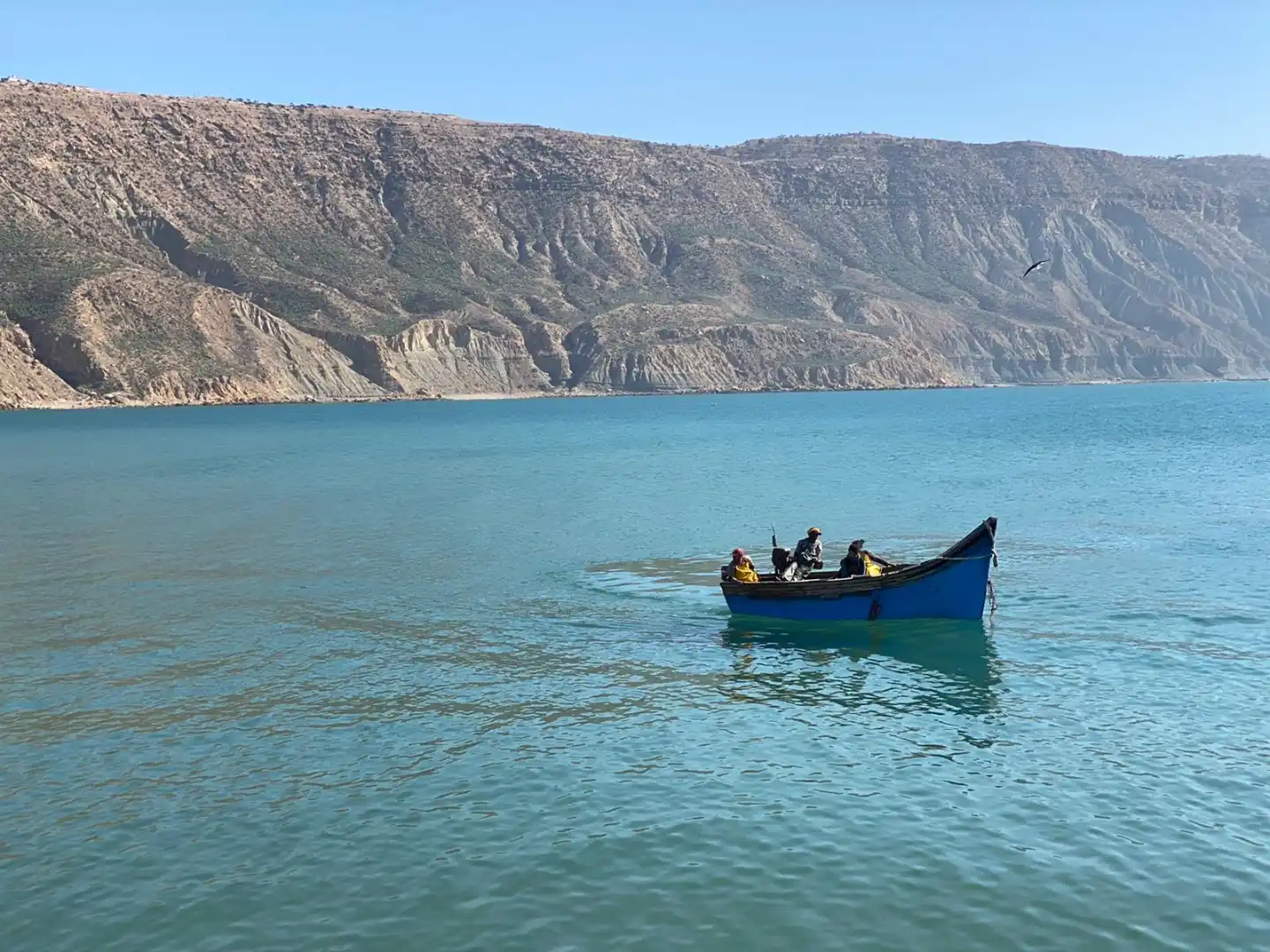
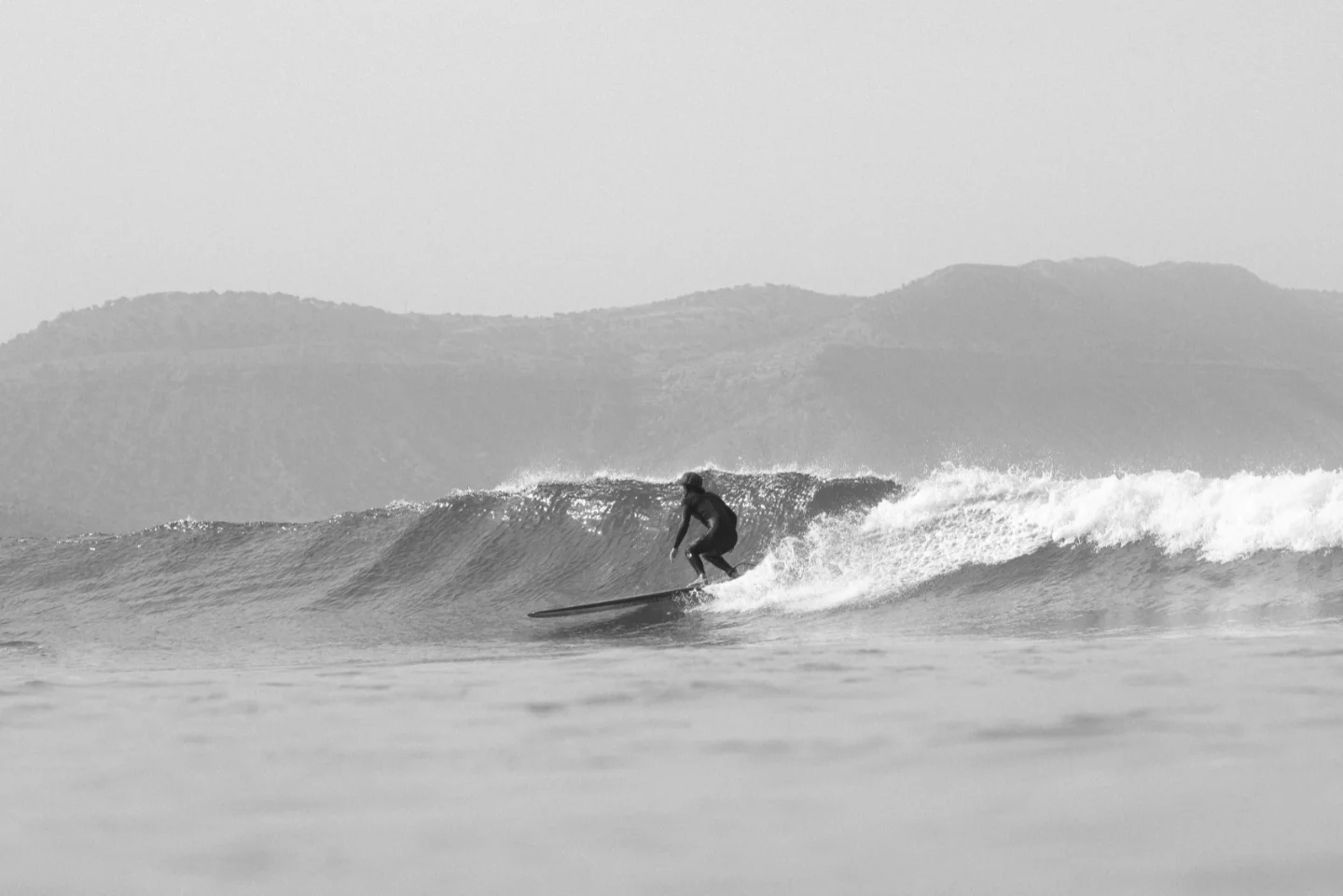
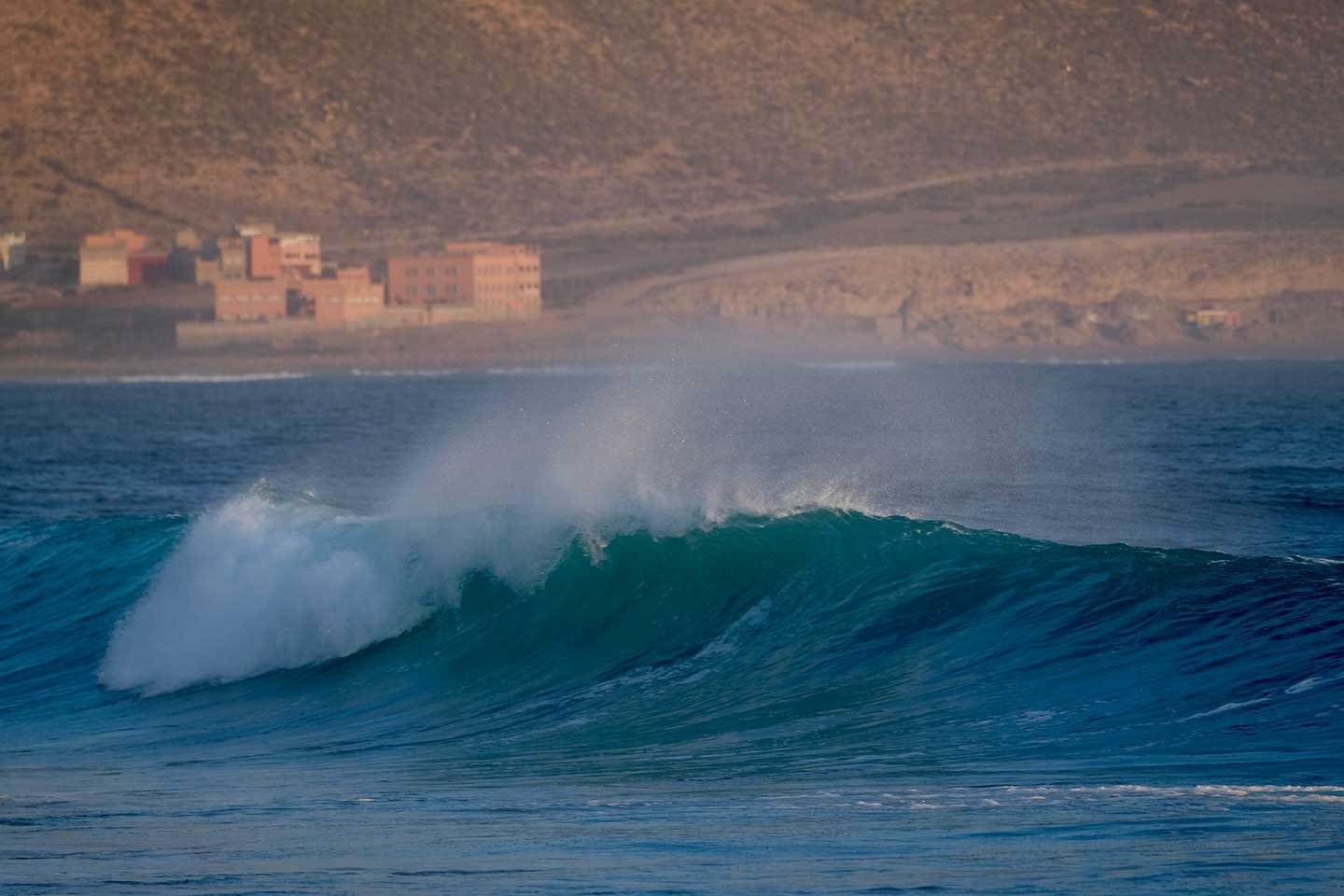
A fishing village of about 1,500 people tucked behind a headland two hours north of Agadir. Famous for The Bay — one of the longest right-hand waves in Africa, often breaking for 300 to 500 metres on the right swell. The Bay is mellow enough for a second-day beginner to take a proper ride down, which makes Imsouane an unusual thing: a world-class wave that’s also the safest place in Morocco to learn. The town is slow. Two coffee shops, a handful of restaurants, a port that smells of fresh sardines at dawn. No nightlife to speak of. Camps here include Olas (us), Surf and Sound, Olo Surf Camp, Dreamsea Imsouane, Pro Surf Imsouane, Mystery Surf Camp, and a scattering of family guesthouses.
Taghazout
The loudest town on the coast and Morocco’s surf capital. Forty minutes north of Agadir airport. Six famous breaks inside a 20-minute walk: Anchor Point, Mysteries, Killer, Panorama, La Source, Hash Point. The lineup can get crowded — especially in January and February — and the town itself is a mix of old fishing-village alleys and a strip of cafés, juice bars, and surf shops. Nightlife exists but is modest. Surf Maroc and Surf Berbere are the biggest camp operators here.
Tamraght
Fifteen minutes south of Taghazout, ten minutes north of Agadir. Quieter than Taghazout, noticeably cheaper, and the go-to base for budget camps. Beach breaks like Banana Point and Devil’s Rock are nearby and friendly for beginners. Most of the big package operators — Solid Surf House, Planet Surf Camps, Star Surf Camps, Shaka Surf Morocco — are based here. If you want Taghazout access without Taghazout prices, this is where you stay.
Agadir
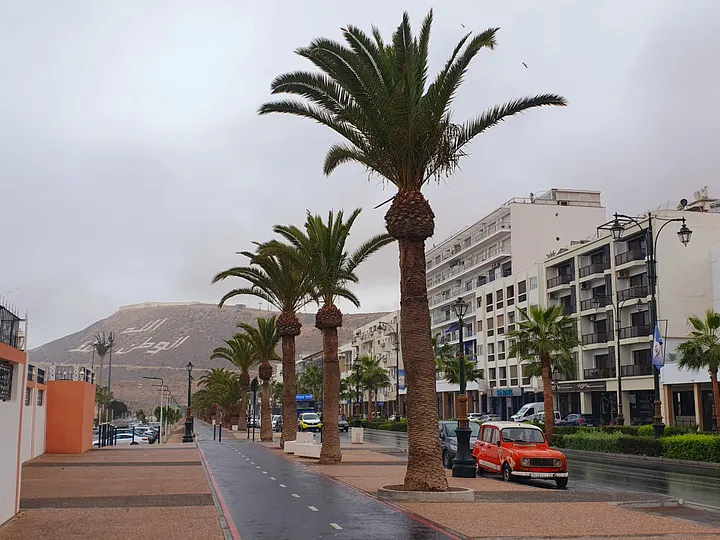
The big resort city. Useful for one reason: the airport (AGA) is here. Some surf schools operate out of Agadir itself, and the beach is long and flat — fine for beginners, uninspiring for anyone else. Agadir is a city, not a surf town. Most people pass through it on the airport transfer and don’t stop.
Essaouira
The cultural outlier. A walled medina, Portuguese ramparts, art galleries, a windswept beach. Surf conditions are inconsistent and windy compared to the coast further south, so this is where people go when they want a cultural trip with some surf rather than a surf trip with some culture. Summer can be pleasant; winter is cold and exposed.
For a deeper comparison of the two main contenders, our Imsouane vs Taghazout breakdown goes through both towns in detail — which one suits you depends on what kind of week you’re after.
A typical week, hour by hour
Here’s what the rhythm actually looks like. Times are from our Imsouane schedule but almost every camp on the coast follows a version of this.
Day 1 — arrival
You land at Agadir somewhere between morning and late afternoon. A pre-booked transfer picks you up — about two hours to Imsouane, 25–40 minutes to the Taghazout and Tamraght camps. You arrive, drop your bags, meet whoever’s on the sofa, eat dinner with the rest of the guests. No surfing today. Most camps run a short orientation in the evening: where to find towels, how the Wi-Fi works, what’s happening in the morning. Sleep early. You’re going to be tired sooner than you think.
Days 2 through 6 — the rhythm
7:30am. The light through the window does most of the alarm-clock work — that and the roosters down by the fishing port. Coffee on the rooftop by 8am, a proper breakfast around 8:30 — bread, eggs, olives, local honey, Moroccan pancakes called msemen, tea.
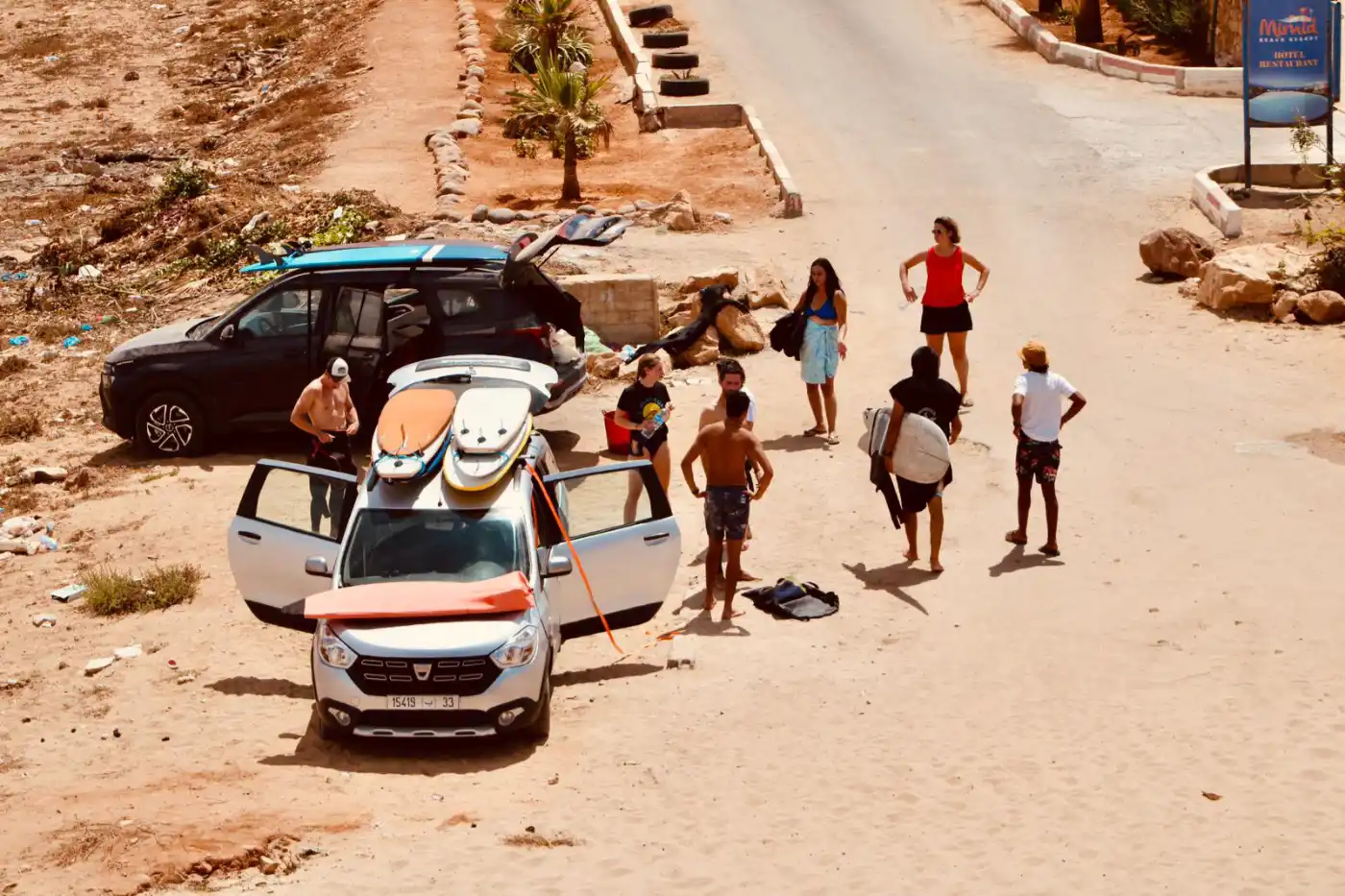
9:30am. The coach reads the forecast out loud and tells you where you’re surfing and why. Sometimes it’s the closest spot, sometimes the van goes forty minutes up or down the coast for a cleaner wave. Board and wetsuit check. In the van by 9:45.
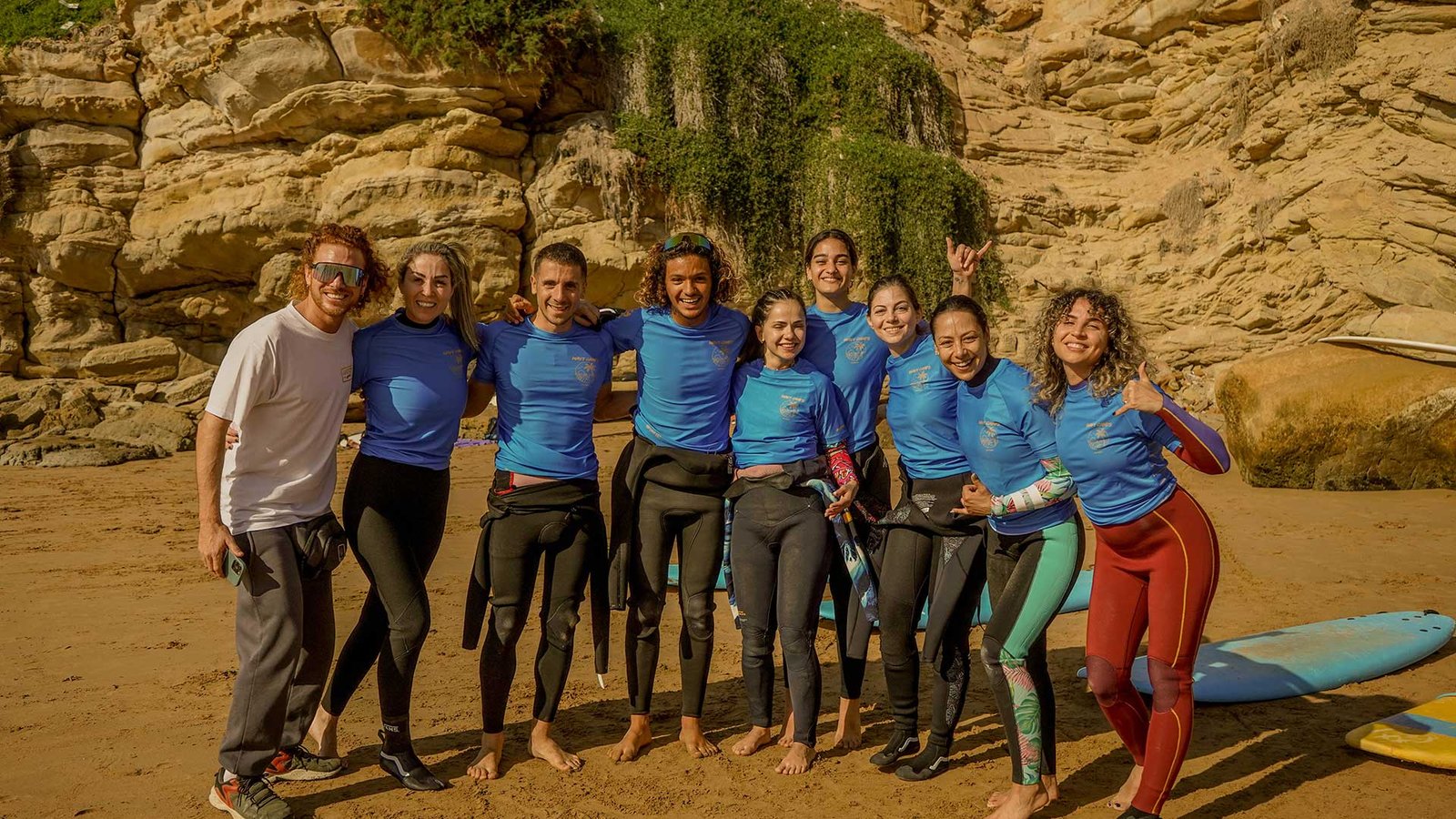
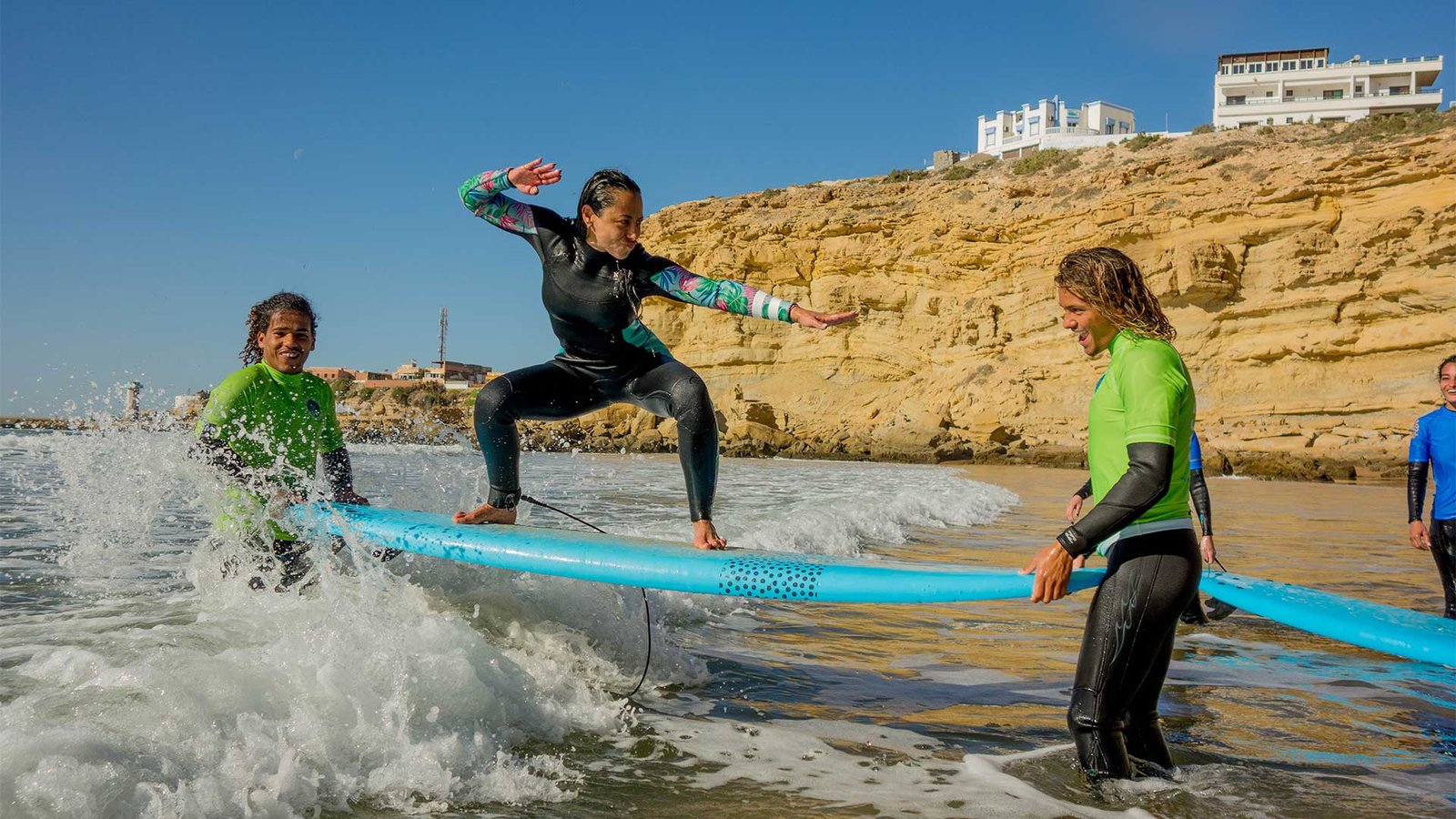
10am to 12:30pm. First session. If you’re learning, you’ll spend the first 45 minutes on sand — pop-up drills, safety, how to read a wave. Then in the water. A six-guest group with one instructor (that’s our ratio — ask whoever you’re booking with if you want a comparable one). You won’t stand up on day one. You will on day two or three. The moment you ride your first real wave is the reason everyone on this coast is addicted.
1pm. Back to the house, showered, ravenous. Lunch is the biggest meal of the day. Tagine, couscous, a fresh fish from that morning’s port, bread, salads, fruit. Expect to eat a lot more than you think you need. Surfing burns far more than you’d guess.
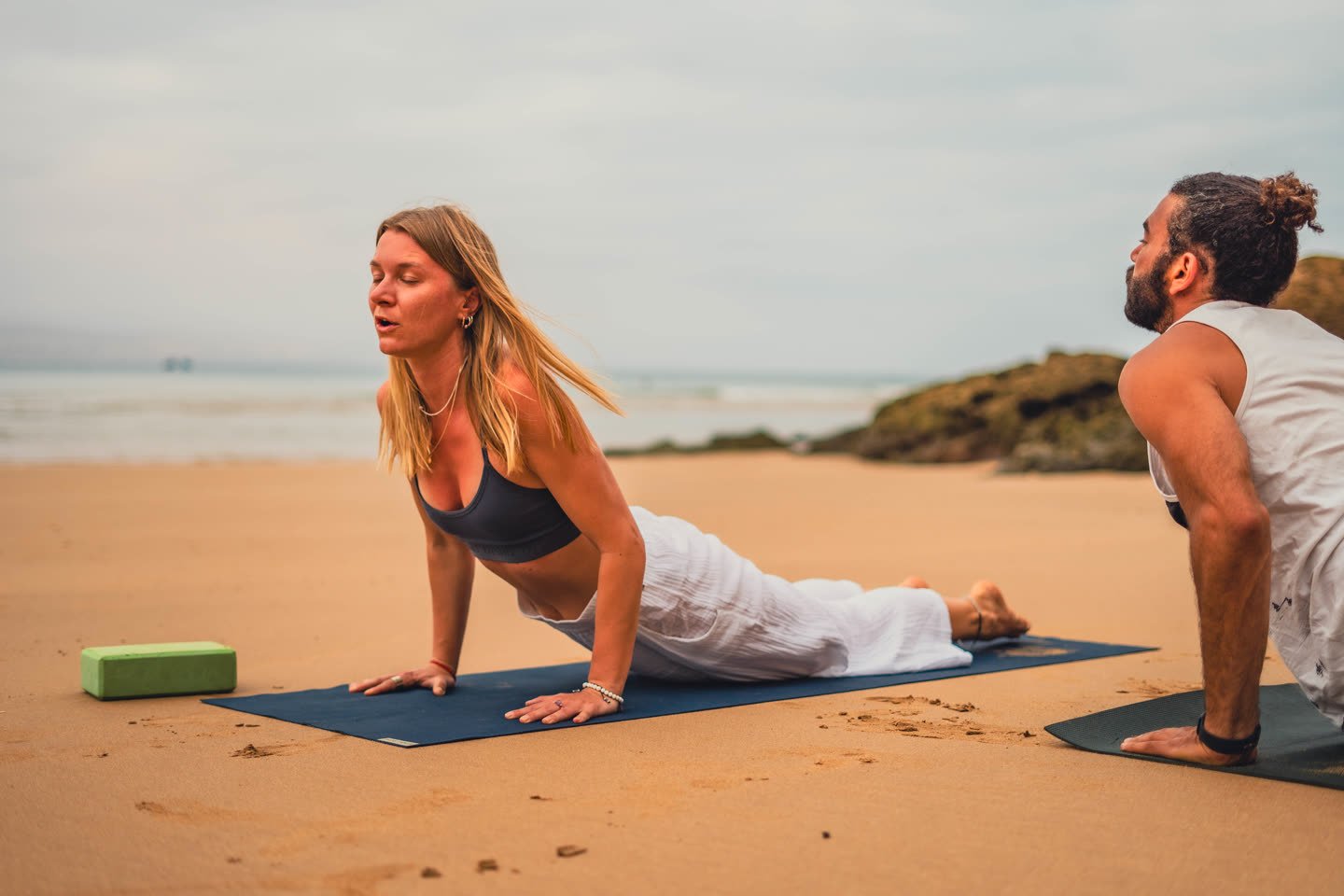
2pm to 4pm. Free time. People nap. Some go for a walk to the port. Some read on the rooftop. Some do a video review with the coach if the session was filmed — one of the fastest ways to fix an ugly pop-up is to watch yourself do it badly. Afternoon yoga is an option at many camps; at Olas our yoga package is a separate add-on rather than bundled into the surf stay.
4pm to 6pm. Second surf session for anyone who wants one. On smaller days it’s a longer learning session; on bigger days it’s a guided session at whichever spot the coach rates for that tide. Not compulsory. Plenty of guests skip day two’s afternoon because their arms are already wrecked.
6pm to 7:30pm. Shower, rooftop, the sky goes pink and then orange and then dark. Sunset in Imsouane over the bay is the unpaid bonus that nobody warned you about.
7:30pm. Dinner at a long shared table. Someone starts a card game afterwards. Someone else has already gone to bed. By ten the house is quiet.
Day 7 — departure
One last morning session if your flight allows. Breakfast, transfer, airport. The week has felt like three and also like a month. Almost everyone we host tells us they didn’t expect to sleep as well as they did.
Shorter stays work too — our surf & stay page lists daily surf lessons as well as weekly packages, so a four-night trip is completely doable if you can’t get a whole week off.
Who surf holidays Morocco actually suit
Being honest about this is the thing competitors underplay.
First-time surfers. Morocco is excellent. The water is warm, the waves are consistent, and most camps are set up to teach. Pick a camp with a protected beach break or a gentle point (Imsouane, Banana Point, Tamraght beach) and you’ll leave standing up on small green waves.
Our beginner’s guide to surfing in Morocco has the fuller first-timer breakdown.
Intermediate surfers. The sweet spot. You can work on your pop-up at Banana, surf Anchor Point on a clean day, ride The Bay in Imsouane for five-hundred-metre lines on a longboard. No other destination in Europe-ish distance offers this range.
Advanced surfers. Winter. Taghazout or Tamraght. Early starts, Anchor Point on a north-west groundswell, surf Mysteries when the wind goes offshore. Summer is too small for you — most advanced surfers go to Portugal in July and August.
Solo travellers. Morocco is one of the easiest surf destinations in the world to go alone. Camps are built around shared dinners, group lessons, and communal living. You’ll have friends by day three.
Couples. Easy. Pick a camp with private rooms rather than a dorm-heavy setup, and you get the group dinners without sharing a bedroom with strangers.
Families with kids. Workable but camp-specific. Some places are explicitly kid-friendly, some are not. Ask before you book. Our families-at-a-surf-camp piece covers who’s set up for this and what to look for.
Who should go elsewhere. If you want a pool, a spa, and white linen — Morocco’s surf coast isn’t that. You’re better off at a beach resort. If you want big nightlife and late-night bars — also no; the coast is quiet, and anything that looks like a club is usually a restaurant that’s playing music late. And if you’re an expert surfer chasing Mentawai-style perfection, Morocco has moments, but consistency isn’t its selling point — go to Portugal, France, or somewhere warmer.
Flights, airports, and getting to your camp
Two airports matter: Agadir (AGA) and Marrakech (RAK).
Agadir is the surf airport. Ryanair, easyJet, Transavia, Tui, and Royal Air Maroc fly there direct from most European hubs — London, Paris, Brussels, Amsterdam, Madrid, Barcelona, Milan, Berlin, Frankfurt, Zurich, Geneva, Düsseldorf, Manchester, Bristol, Dublin. Flight time is three to four hours from most of Western Europe. Fares run low in November and early December (€80–€150 return on the budget airlines) and spike around Christmas, February half-term, and Easter.
Marrakech is the cultural airport. It makes sense if you want to spend a night or two in Marrakech before the coast, or if direct-to-Agadir flights aren’t available from your home city on the right dates. Transfer time from Marrakech is longer — about three hours to Imsouane, two and a half to Essaouira.
Transfer times from Agadir airport:
- Tamraght — 25 minutes
- Taghazout — 40 minutes
- Imsouane — 2 hours
- Essaouira — 2 hours 15 minutes
Most camps arrange transfers for a fixed fee. At Olas we charge €60 for Agadir pickup and €120 from Marrakech — pricing is similar across the coast. Shared taxis exist but are rarely worth the hassle unless you’re a confident budget traveller.
For the wider logistics picture — what to pack, visa rules, what to book in which order — our Morocco surf trip planning guide covers it. For Morocco entry requirements by nationality, check the UK Foreign Office’s Morocco entry requirements page — it’s updated whenever visa rules change.
Surf holidays Morocco: when to come
The short version: October to April for swell, May and June for warmth and mellow waves, July and August for small-wave beginners only. Our month-by-month guide has the detail including wetsuit thickness by month and which European holidays create booking spikes. For picking a single window, May or late October are the safe answers regardless of your level.
Surf holidays Morocco: red flags when picking a camp
Six things to check before booking. Asking these by email is always welcome — any camp that dodges answering them is telling you something.
Instructor-to-guest ratio. One coach to six guests is reasonable. One to eight is fine for an advanced group but questionable for beginners. One to ten is too many.
Beach versus point break for beginners. Ask where beginner lessons actually happen on a big-swell day. If the answer is vague, be cautious — you want a protected beach or a sheltered bay, not a point break in a 6-foot swell.
Level matching. Do they split groups by ability? If everyone from zero-experience to intermediate is in one group, nobody progresses.
What’s included vs what’s extra. Confirm in writing: transfers, lessons, boards, wetsuits, meals, yoga, Wi-Fi. “All-inclusive” means different things in different camps.
Board damage policy. Some camps charge hundreds of euros for a minor ding. Others absorb reasonable wear. Ask.
Reviews from the last 12 months, not cherry-picked testimonials. Google reviews and Tripadvisor filtered by “recent” tell you what the camp is like now, not how it was three years ago.
The Olas angle — why we run things in Imsouane
Our bias, stated plainly. We’re in Imsouane because the wave is forgiving on beginners and long enough to bore an intermediate for weeks. We’re not a luxury villa — the rooms are comfortable, not boutique-hotel plush. We’re not silent in low season — when the house is full of twenty-somethings who’ve just met each other, things get loud on the rooftop. In peak season, with more couples and families booked, it’s calmer.
We offer 7-night surf-and-stay packages as the core, with shorter daily-lesson stays available for people who can’t get a full week off. Yoga is separate via our surf and yoga page. The coaching ratio is six guests per instructor, with two to four instructors working each week depending on the house size.
If you want to see the accommodation, the food, the rooftop, and the vibe rather than read about it, the camp page has the photos.
Frequently asked questions
What’s included in a surf holiday in Morocco?
Most Morocco surf-holiday packages include seven nights accommodation, three meals a day, surfboard and wetsuit rental, two to three surf sessions per day with a coach, and transport to and from the beach. What’s usually extra: airport transfers (€60 from Agadir, €120 from Marrakech at most camps), yoga classes as an add-on, drinks, souvenirs, and optional day trips. Always confirm in writing before booking.
How long should a Morocco surf holiday be?
Seven nights is the standard and the right answer for most first-timers — you need four days in the water before the pop-up actually clicks. Ten to fourteen days is ideal if you can get the time off, because the jump from “standing up” to “reading the wave” needs volume. Short-stay options (three to five nights) exist at some camps including ours, but a long weekend barely scratches the surface.
Do I need to bring my own surfboard to Morocco?
No. Every surf camp on the coast includes boards and wetsuits in the package. Only bring your own board if you’re advanced and particular about specific dimensions, or if you have a favourite gun you want to ride at Anchor Point. Board rental outside a package runs about 100 to 250 dirhams per day depending on the board type.
Is a Morocco surf holiday suitable for complete beginners?
Yes — it’s one of the best destinations in the world for learning. Warm water, consistent waves, protected beginner spots, low prices, lots of teaching infrastructure. Pick a camp in Imsouane, Tamraght, or the Taghazout Bay area, go in May, June, late September, or October for smaller waves, and insist the camp splits lessons by level.
Which airport is best for a Morocco surf holiday?
Agadir (AGA) for almost everyone. It’s the closest airport to every surf town on the coast and has direct flights from most European cities on Ryanair, easyJet, Transavia, Tui, and Royal Air Maroc. Marrakech (RAK) only makes sense if you’re combining the trip with a few days in the medina, or if AGA doesn’t have flights from your home city on the dates you want.
When should I book a Morocco surf holiday?
For peak winter weeks (late December through February), book eight to twelve weeks ahead — these sell out. For shoulder-season weeks (May, June, October, November), four to six weeks is usually enough. For summer (July, August), three weeks ahead if you have flexible dates. Flights are almost always the bigger booking-window concern than the camp itself.
If you’re ready to pick a week, check availability at Olas and send us your dates — we’ll tell you honestly whether the conditions that week match the level you’re at, and whether the house is going to be calm or loud. No pressure, just a real answer.
0 Comments