
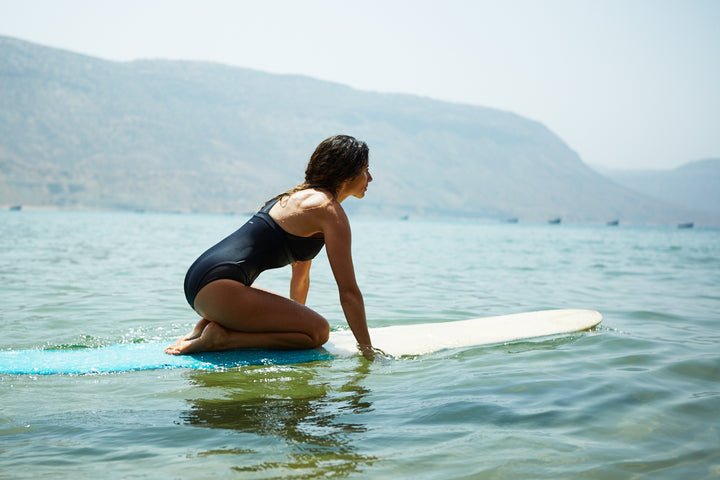
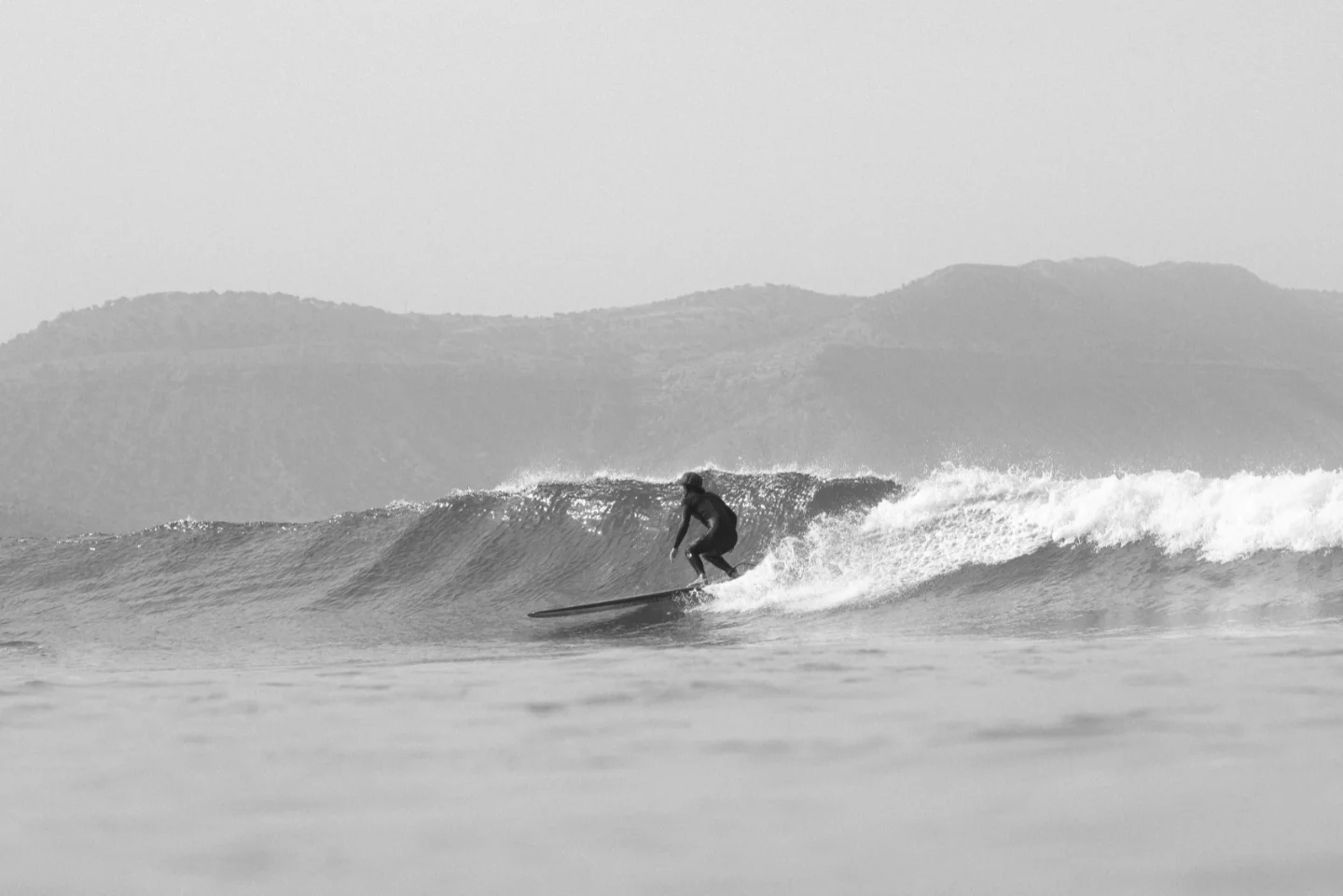
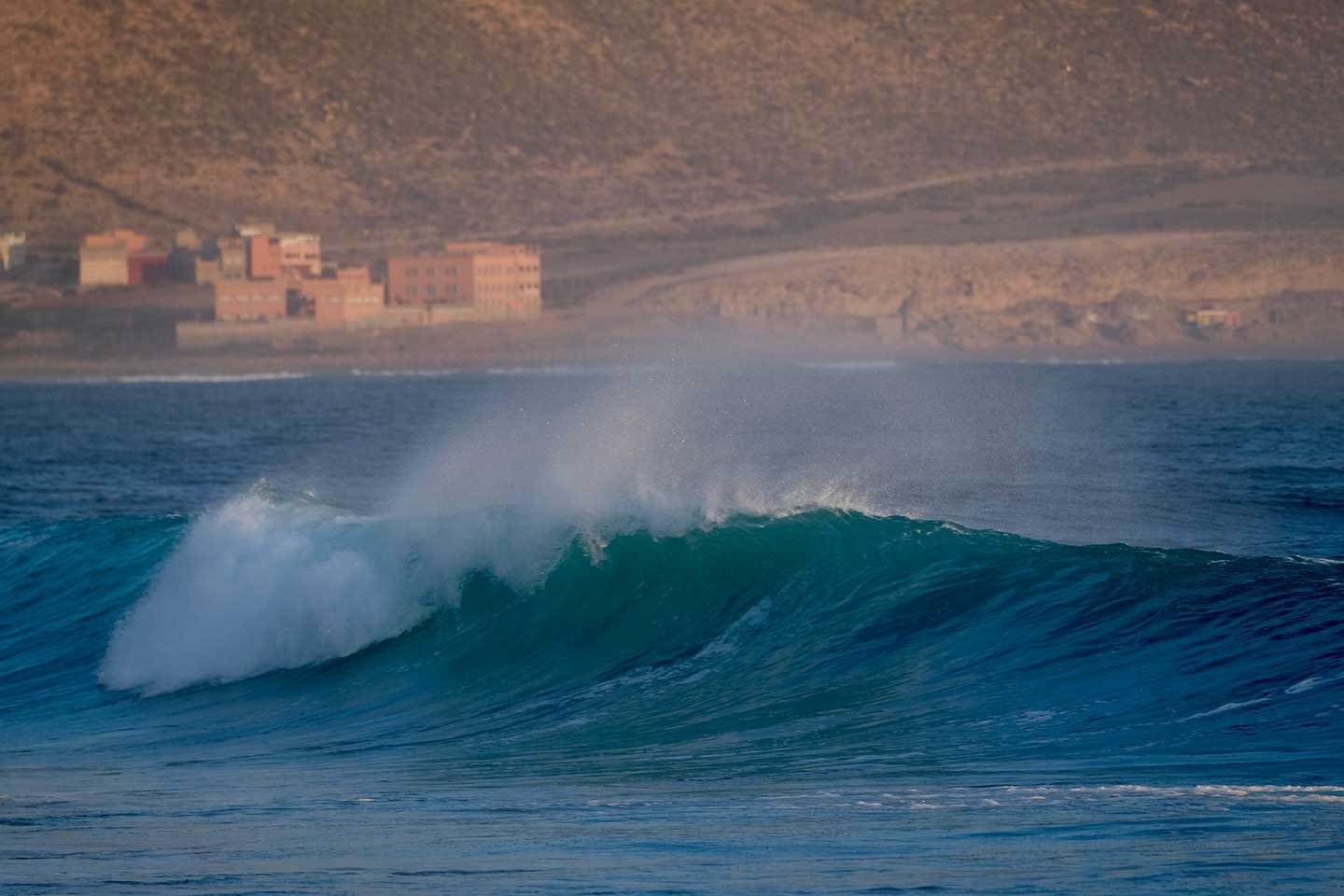
Imsouane longboard surfing is one of those things that people talk about before they arrive and then can’t stop talking about after they leave. The Bay — Imsouane’s main break — is a slow, peeling right-hander that holds its shape for 300–500 metres on a decent swell. It’s not a punchy wave that rewards aggression. It rewards style. It rewards patience. It rewards the kind of surfing that longboarding was built around.
Which is exactly why surfers who ride longer boards love it here so much.
What makes Imsouane longboard waves so special
Most waves are either too fast, too short, or too inconsistent for meaningful longboarding. The Bay at Imsouane is different.
It’s a right-hand point break that peels off a rocky headland into a sheltered bay. The swell wraps around the point and creates a long, even wall that moves at a pace that lets you actually do things — walk up to the nose, hang five, cross-step back, set a smooth line, glide. The sections are predictable enough that you can read them a few rides in, which lets you start setting up for manoeuvres rather than just surviving.
On a solid swell, rides of 2–4 minutes are normal. You’re not just standing up for five seconds and kicking out — you’re surfing the whole thing, making decisions, reading the wave, enjoying every section. It’s the closest thing to the traditional Malibu or Noosa longboard experience that you’ll find on the African Atlantic coast.
Imsouane Longboard for Beginners
You don’t need to already be a longboarder to enjoy this wave. If anything, Imsouane’s Bay is one of the best places in Morocco to try a longboard for the first time.
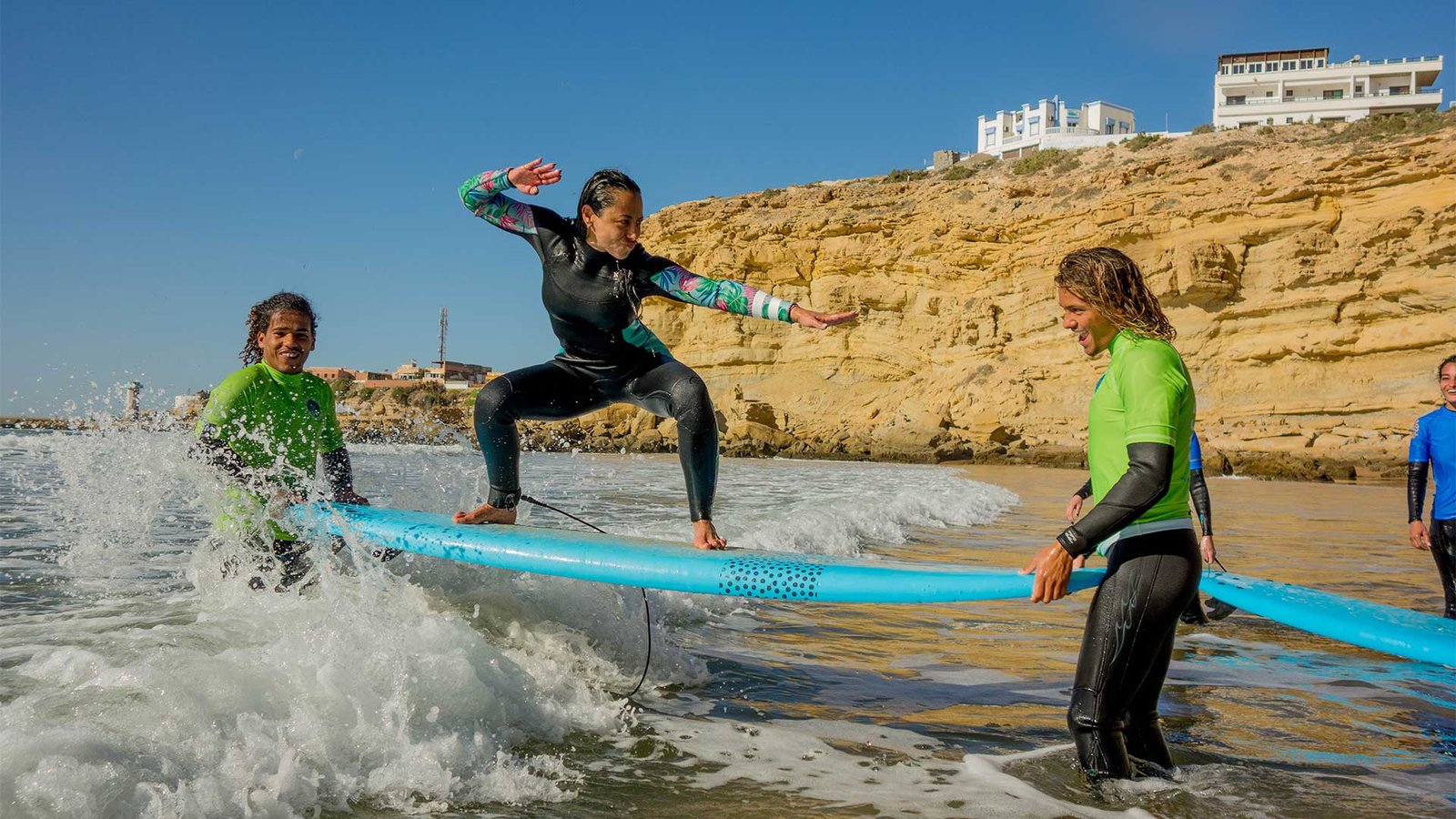
The slow, rolling wave gives beginners time to actually get to their feet properly — none of the panicked pop-up energy of shorter, faster waves. The bay is wide enough that even 15–20 people in the lineup have room to spread out. And the long rides mean more time on your feet per session, which means faster progression.
Most people who try a longboard at Imsouane and have never ridden one before are surprised by how quickly it starts to make sense. The wave does a lot of the teaching for you.
The Cathedral: When You Want Something More Challenging
Just north of the Bay sits the Cathedral — a shorter, steeper reef break that attracts surfers who want a bit more punch. It’s better suited to shortboards or performance-style midlengths, but experienced longboarders who want to work on more critical positioning will enjoy it too.
The standard imsouane surf routine for many people: start at the Bay for the morning session (best conditions, less wind), check the Cathedral in the afternoon if you want a change of pace. Two very different waves within a 5-minute walk of each other.
What Board to Ride
For the Bay: a classic longboard (9’0″–10’0″) is the obvious choice. The wave rewards noseriding, so single-fin or 2+1 setups work beautifully. If you’re not sure, a 9’6″ all-round longboard handles everything the Bay throws at you.
Intermediates who want more manoeuvrability might prefer a midlength (7’0″–8’6″) — you still get good glide on the slower sections but more response when the wave steepens. Shortboards work on the Bay but feel undergunned — you’ll spend a lot of time waiting and paddling for waves that don’t really suit the board.
Renting a Longboard in Imsouane
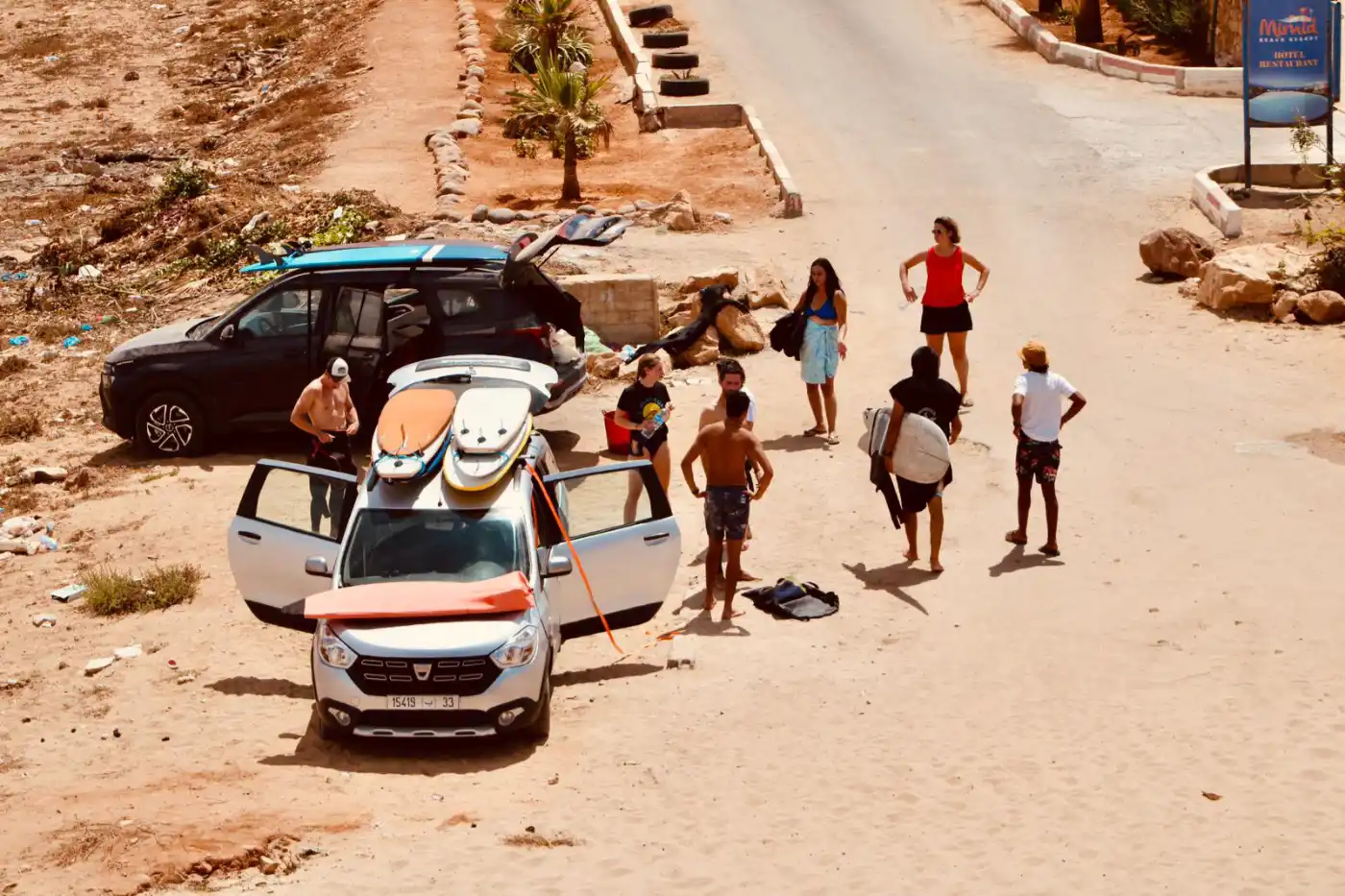
You don’t need to travel with a longboard — they’re available to hire locally. Most surf camps and board hire spots in Imsouane have a selection of longboards ranging from basic learner boards to better-quality gliders. Prices typically run €10–20/day depending on the board and the hire shop.
If you’re staying at a place like Olas Surf House, board access is usually included or arranged through the camp — one less thing to organise.
Best conditions for an Imsouane longboard session
The Bay works on almost any swell — which is one of its great strengths. That said, the best imsouane longboard conditions are:
- Swell size: 1–2m (waist to head-high). Enough power to create a long peeling wall without getting too fast or closing out.
- Wind: Light offshore or no wind. The morning is usually best before any sea breeze kicks in.
- Swell direction: NW to W swells wrap best into the bay and create the longest, most consistent rides.
- Tide: Mid-tide to incoming is generally favoured — the wave gets slightly hollower and more defined.
In practice, the Bay is surfable most days of the year — which is why Imsouane works so well as a surf destination even in summer when bigger spots around Taghazout go quiet.
Best Time of Year for Imsouane Longboarding
The sweet spot for longboarding at Imsouane is October–April, when Atlantic swells are at their most consistent and the wave is peeling regularly. That said:
- November–February: Biggest and most consistent swells. Can get fast and powerful — still longboardable but the wave has more energy.
- October, March–April: Ideal — moderate-sized, well-shaped waves, mild weather, fewer people. Best months to book if longboarding is your priority.
- May–September: Smaller swells, warmer water. Still works for longboarding — the Bay’s mellow character actually suits low-swell summer conditions better than most other spots in Morocco.
Ready to longboard one of the best waves in Africa? Check out our surf packages at Olas Surf House — we’re right on the Bay, boards available, and the surf community here is the kind of thing that keeps people coming back.
FAQ: Longboarding at Imsouane
Is Imsouane the best longboard wave in Morocco?
Yes, by most accounts. The Bay is consistently cited as the best right-hand longboard wave in Morocco — and one of the best in Africa. Surf Atlas describes it as “arguably the best right-hand longboard wave in Morocco” — long, consistent, and with the kind of shape that rewards style and flow. Nowhere else on the Morocco coast offers the same combination of length, consistency, and predictability.
Can complete beginners try longboarding at Imsouane?
Yes — it’s actually one of the best places in Morocco to start longboarding from scratch. The Bay’s slow, peeling wave gives you time to find your feet and develop your balance without the panic of faster, shorter waves. Most people who’ve never tried a longboard before are riding it comfortably within a couple of lessons.
How does Imsouane’s Bay compare to Malibu or Noosa for longboarding?
The Bay is longer than Malibu’s main break and arguably more consistent than Noosa on an average day. It lacks the performance demand of Malibu and the competitive intensity of Noosa’s famous surf culture — which many longboarders see as a plus. Imsouane is more mellow, more welcoming, and significantly cheaper to reach from Europe.
What size longboard is best for the Bay?
A 9’0″–10’0″ classic longboard. Single-fin or 2+1 setups work beautifully with the wave’s mellow character. If you prefer more modern performance longboarding, a high-performance noserider in the 9’0″–9’6″ range is the classic choice. Midlengths (7’6″–8’6″) also work well if you want to mix nose work with more dynamic surfing.
Can you watch good surfers at Imsouane to learn from?
Absolutely. The Bay attracts experienced longboarders from across Europe and Morocco, especially in peak season. Watching from the beach (or sitting in the lineup between waves) and observing how people read the wave and position themselves is genuinely one of the best learning tools you can use. The longboard community at Imsouane is generally relaxed and happy to share tips.
Do I need a surfboard bag to fly to Morocco with a longboard?
Yes — a padded surfboard bag is essential. Budget airlines like Ryanair and easyJet charge €40–80 per board each way into Agadir. For a 9’6″+ longboard, a double-ended bag that can fit two boards is worth the investment if you travel with boards regularly. Alternatively, hire a quality longboard locally and save yourself the hassle — boards in Imsouane are available and the selection at good camps is decent.
0 Comments