

By Olas Surf Team — 4 August 2026
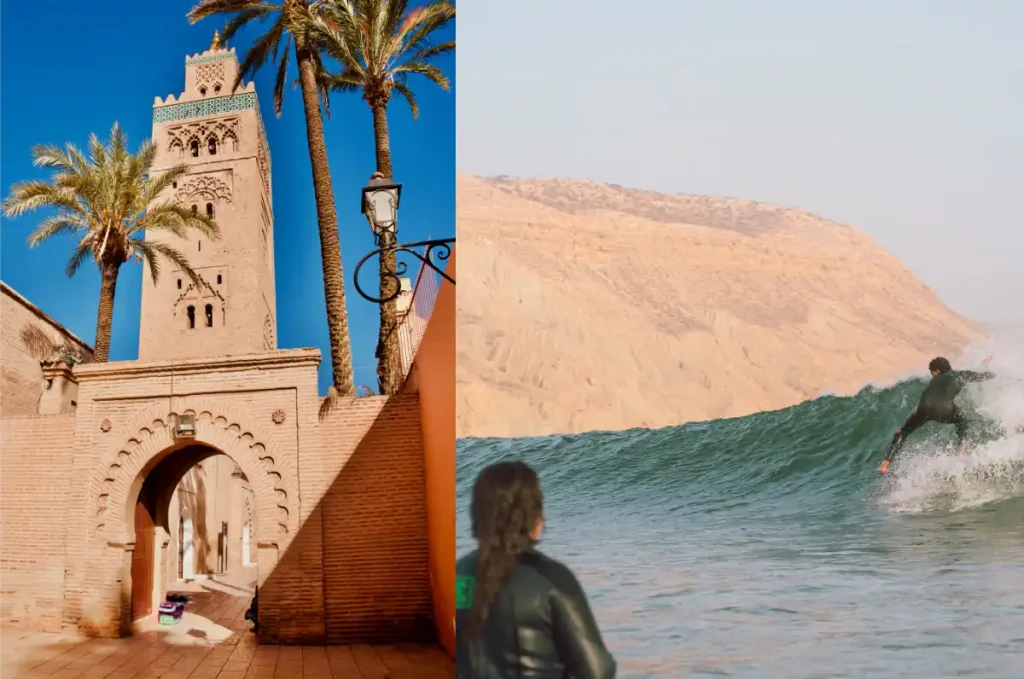
Almost everyone who works out how to get from Marrakech to the coast does so for the same reason: three days in the medina is exhilarating and then it’s enough. The souks are relentless, the square is loud, and by day four most people want to hear the sea. The good news is that the Atlantic is close. The less good news is that the three obvious coastal options are genuinely different trips, and picking the wrong one wastes half your week in a car.
We’re at the far end of one of those roads, so we see the people who chose well and the ones who didn’t.
The three coasts, honestly compared
| Destination | Drive from Marrakech | Character | Best for |
|---|---|---|---|
| Essaouira | 2.5–3 hrs | Walled UNESCO medina, fishing port, windy | A short break, culture, seafood |
| Agadir | 3–3.5 hrs | Modern resort city, big beach, hotels | Flights out, families, resort comfort |
| Imsouane / Taghazout | 3.5–4.5 hrs | Fishing villages, surf | Surfing, quiet, longer stays |
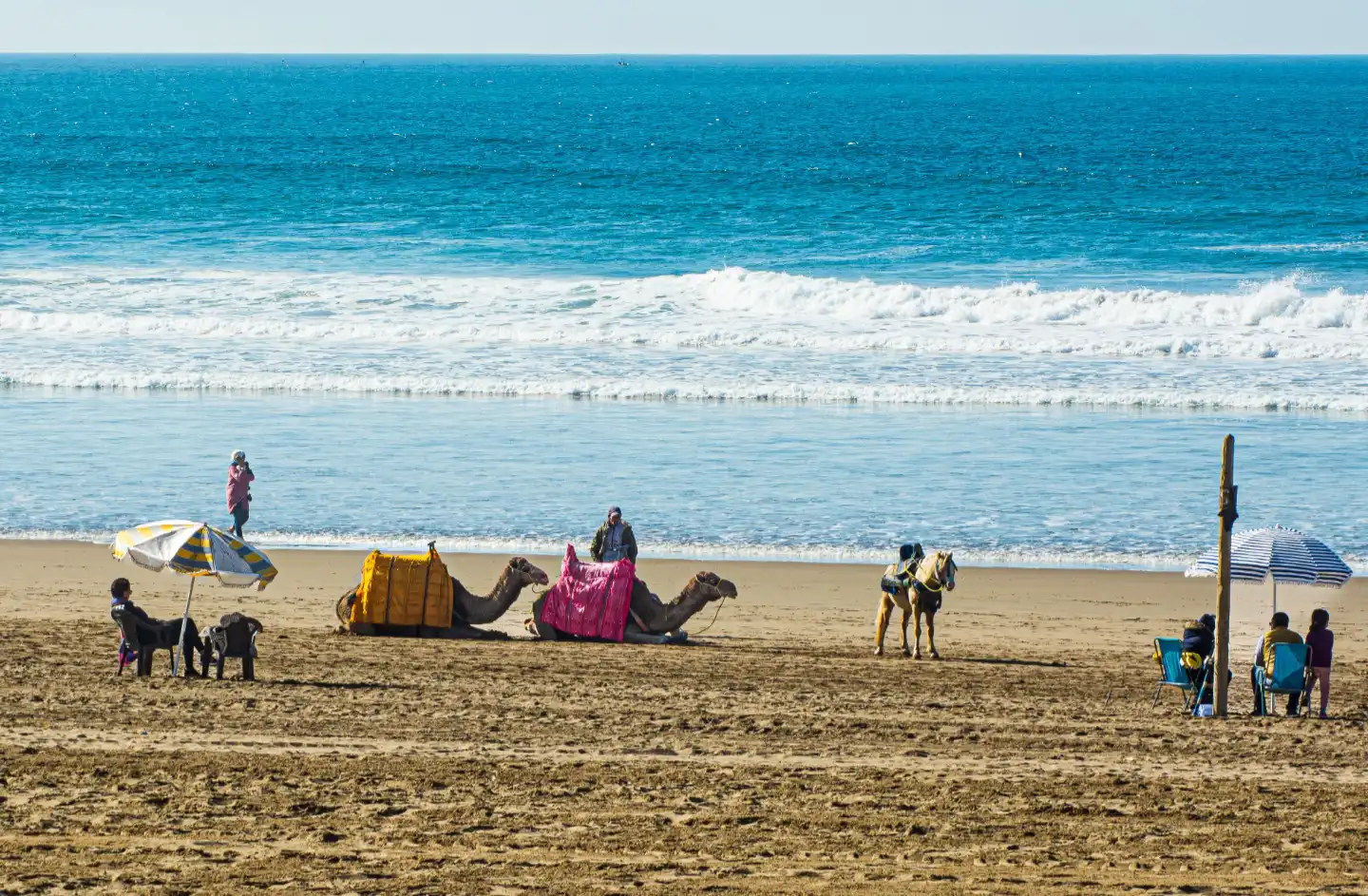
Essaouira is the obvious choice and often the right one. The medina is UNESCO-listed, compact and far less intense than Marrakech’s. The Portuguese-built ramparts sit right on the Atlantic. The fish grills at the port are among the best cheap eating in Morocco. The catch is the wind — Essaouira is famous for it, which is why it’s a kitesurfing town and why lying on the beach there can be an exercise in sandblasting. It’s a lovely place that isn’t really a beach holiday.
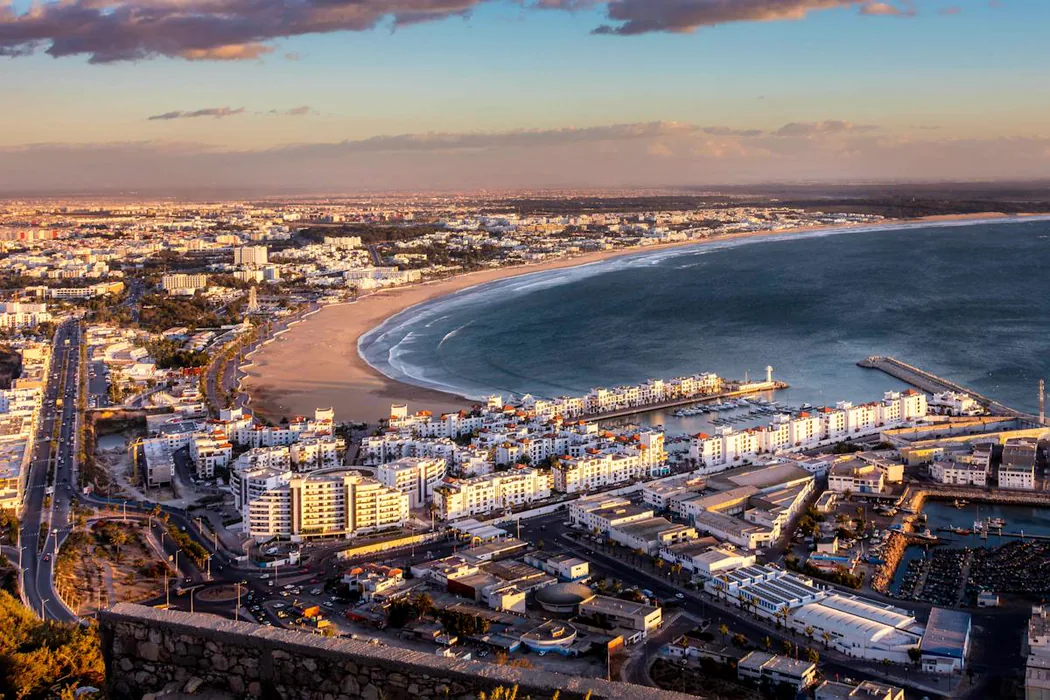
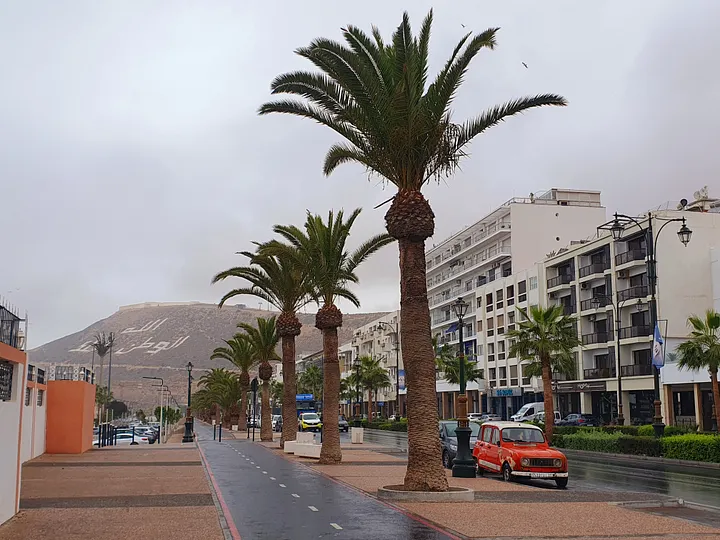
Agadir is the pragmatic choice. It was flattened by an earthquake in 1960 and rebuilt as a modern city, so it has no old medina and doesn’t try to. What it has is a long sheltered beach, proper hotels, and an airport with direct flights across Europe — which is the real argument for it. If you’re flying home from the coast rather than back through Marrakech, Agadir makes the whole trip simpler.
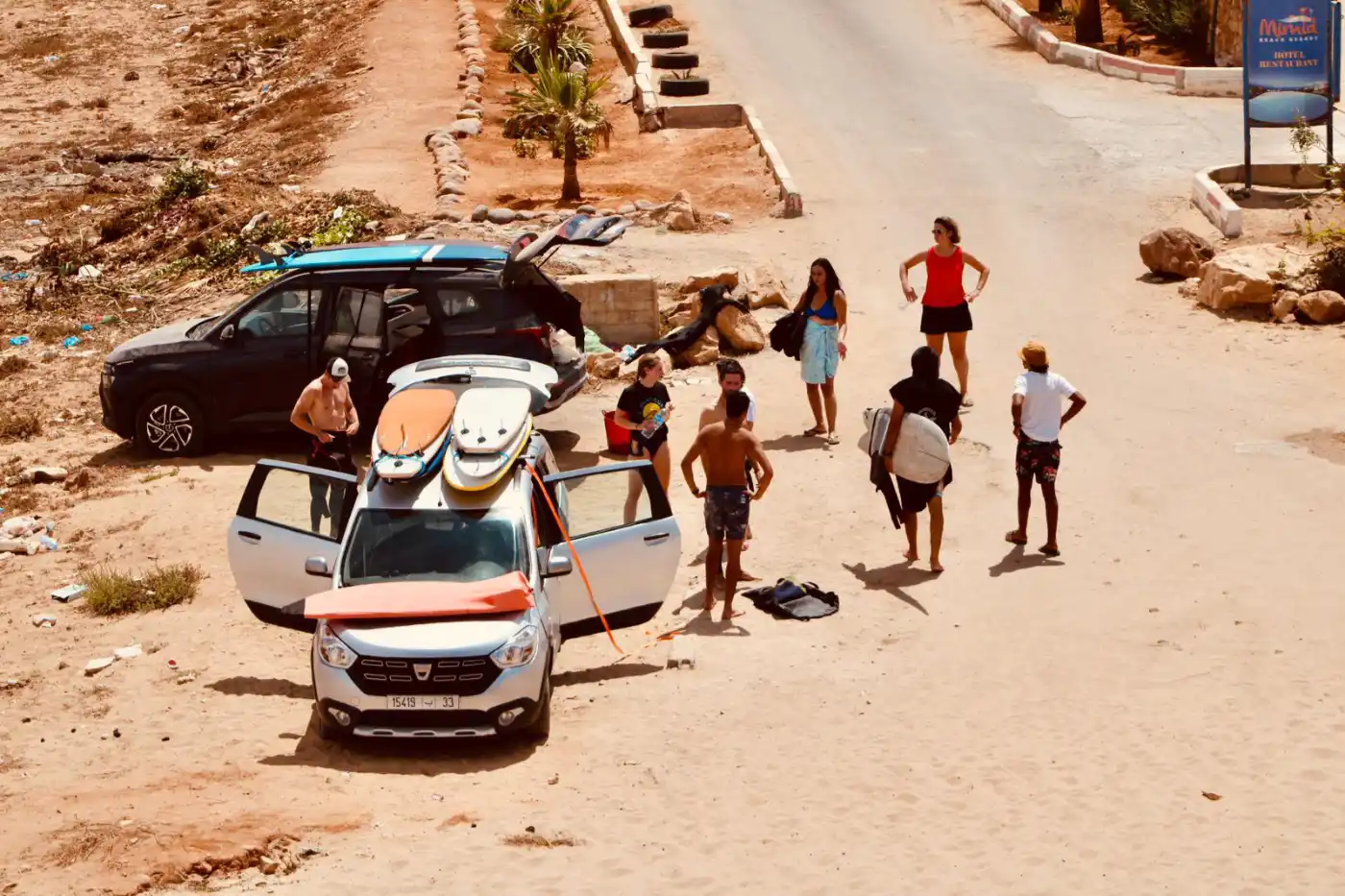
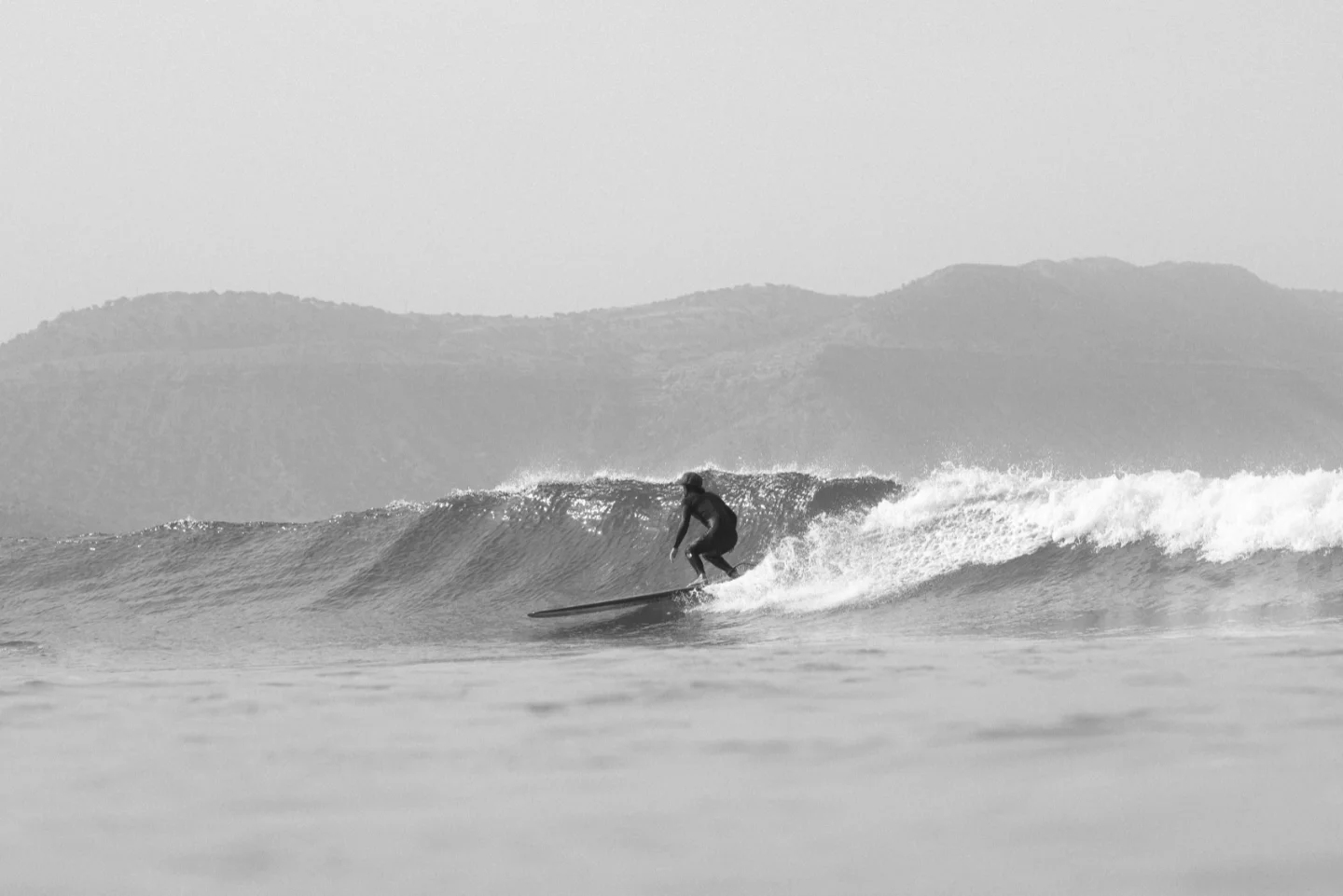
The surf villages — Taghazout, Tamraght, Imsouane — are the furthest and the quietest. This is where you go if the point of the coast is to be in the water rather than beside it. The trade-off is the drive, and the fact that there’s very little to do in the evening beyond eat and watch the sun go down, which is either the appeal or the problem depending on who you are. We went through that choice properly in our Imsouane and Taghazout comparison.
Getting from Marrakech to the coast: the options
Supratours and CTM buses. The cheapest sane option. Supratours runs from beside Marrakech train station to Essaouira in about three hours for roughly 100 MAD, and to Agadir in three and a half for a little more. Comfortable, air-conditioned, reliable, and bookable online. For Essaouira in particular there’s genuinely no reason to do anything else.
Private transfer. Roughly 800–1,500 MAD depending on distance and vehicle, door to door. Worth it for groups, for luggage, for surfboards, and for anywhere the buses don’t reach — which includes Imsouane, since no direct bus runs there from Marrakech.
Grand taxi. Shared old Mercedes running fixed routes, cheap and an experience. Six passengers in a car built for five. Fine for short hops, wearing for three hours.
Hire car. Gives you the stops, which is the main argument. The road west to Essaouira runs through argan country, and the coast road south is genuinely worth driving slowly. If you’ve not driven in Morocco before, our guide to the roads, the checkpoints and the rules nobody writes down is worth ten minutes first.
One thing to know: there’s no train. Morocco’s rail network is good and does not extend south of Marrakech. Anything coastal from here is road.
Marrakech to the coast: how to split a week
The most common mistake is trying to do both properly in seven days and ending up doing neither.
Seven days, city and coast. Three nights Marrakech, four on the coast. Three nights is genuinely enough for the medina, the Bahia Palace, the Majorelle garden, a hammam and a couple of long dinners. Then move, and stay put.
Ten days. Three Marrakech, two Essaouira, five further south. This is the itinerary that works best, and the one we’d recommend if you have the time. You get the city, the walled town, and a proper stretch of quiet coast.
Two weeks. Three Marrakech, then everything else on the coast, with the middle week somewhere you can settle into. Two weeks is when a surf week starts making sense as a block rather than a stop.
What not to do: a day trip from Marrakech to the coast and back. Six hours of driving for four hours in Essaouira is a bad exchange, and it’s the single most-regretted excursion people book here. If you only have a day spare, spend it in the Atlas — it’s an hour away, not three.
Which order? City first, almost always
This one we feel strongly about.
Marrakech is intense. It’s crowded, hot, loud, and full of people whose job is to get your attention. It’s wonderful and it is genuinely tiring, and most people need a day to acclimatise to it. Doing that at the start, when you’re fresh and everything is new, works. Doing it at the end, after a relaxed week on the coast, is jarring — and you fly home wound up rather than rested.
The other argument is practical. If your return flight is from Agadir, running the trip north to south means you end where you leave from. If you’re flying out of Marrakech, you’ll need to build the drive back into your last day, which is a poor way to spend it.
The exception: if you’re coming specifically to surf and the forecast is good, chase the swell first and take the city whenever the ocean goes flat. Our wave height archive will tell you what any given week has historically delivered.
What the drive actually looks like
West to Essaouira, the road leaves the Haouz plain and climbs gently into argan country. This is where the goats-in-trees photographs happen, and where the roadside cooperatives cluster — we wrote about which of those are worth stopping at and which are staged. It’s a good road, straightforward, and there are cafés at sensible intervals.
South toward Agadir, the newer road makes decent time and is dull. The interesting version is to come off it and follow the coast, which adds an hour and is a completely different afternoon.
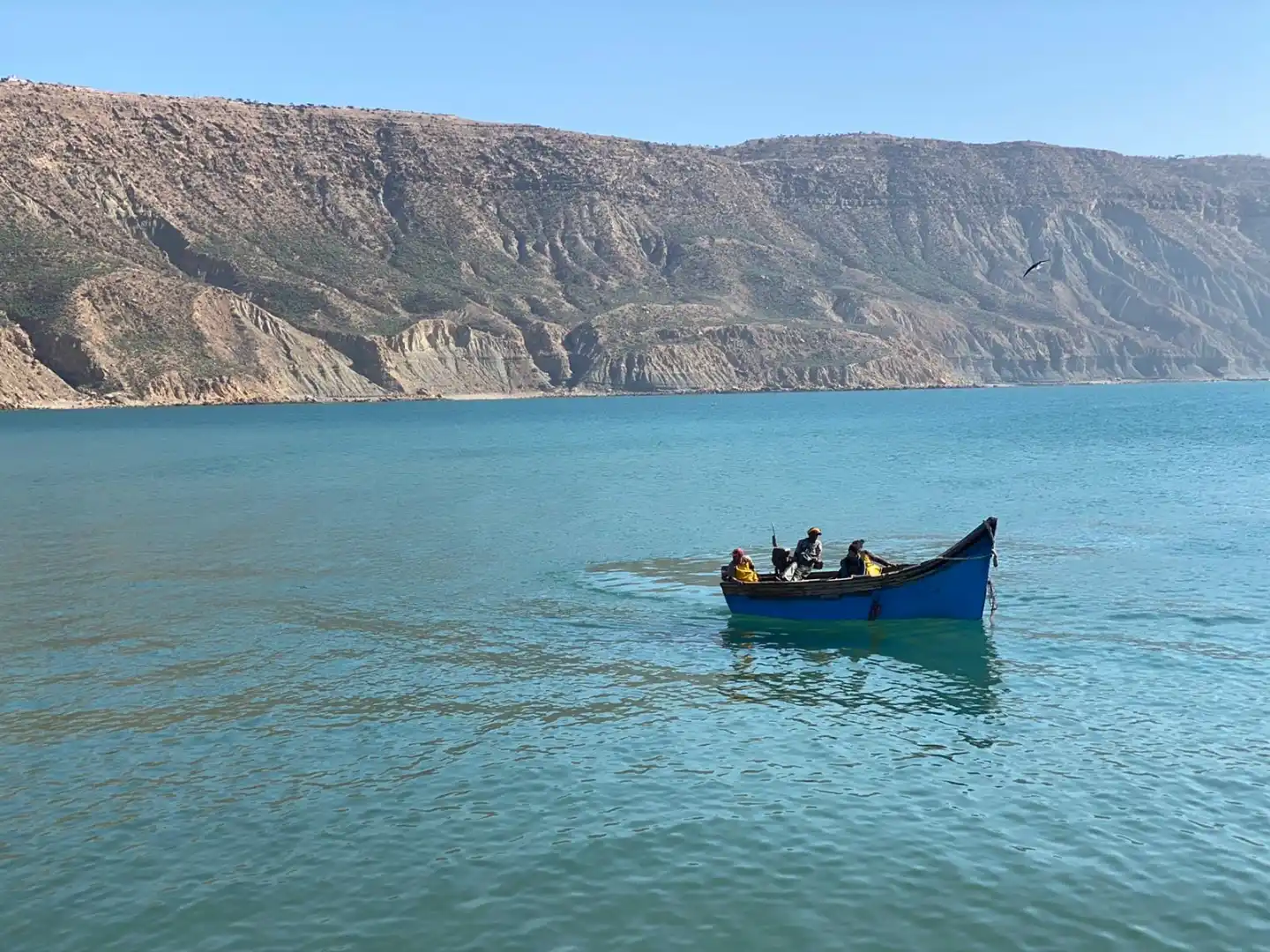
The last stretch to Imsouane is the one people remember: the road bends west, drops off the argan plateau, and the bay appears below the cliffs in the final few minutes — a white cluster of houses, a working fishing port, and a long crescent of beach. Nobody expects it, because you can’t see it until you’re almost there.
What the coast costs compared with the city
One thing that surprises people: leaving Marrakech usually makes the trip cheaper, not more expensive.
Marrakech is Morocco’s most touristed city and prices reflect it. A mint tea on a rooftop overlooking Jemaa el-Fna costs several times what the same glass costs in a coastal village café. Riads in the medina run from budget to eye-watering, and the good ones in high season are priced like European city hotels.
On the coast the whole cost base drops. A full dinner at a port grill in Essaouira or Imsouane — fish, salad, bread, the lot — lands around 60–100 MAD. Taxis are a few dirhams. Accommodation outside Christmas and the swell season is a fraction of medina prices.
The exception is Agadir’s hotel strip, which is priced like the resort destination it is, and Essaouira in July and August, when Moroccan holidaymakers arrive alongside foreign ones and everything tightens.
Budget roughly: Marrakech at €60–120 a day comfortably, the coast at €35–70 for the same standard of comfort. The drive between them costs €10 by bus or €80–150 by private transfer, split between however many of you there are.
Where to stay when you get to the coast
Essaouira runs on riads inside the medina, which are atmospheric and can be cold in winter. Agadir is hotels and apartments, most of them modern and functional. The surf villages run on camps, guesthouses and rentals, and we’ve broken those down properly in our guide to where to stay in Imsouane.
Book Essaouira ahead in summer — it’s a weekend escape for Marrakchis as well as a tourist town, and July and August fill up. The surf villages fill in December and around the February–March swell season.
For general orientation, Lonely Planet’s Atlantic coast pages cover the whole stretch, and the BBC’s Morocco country profile is a decent quick primer if this is your first trip.
If you only remember one thing
Pick one coastal base and stay there. The most common regret we hear from people who’ve come down the Marrakech to the coast route is that they tried to see Essaouira, Agadir, Taghazout and Imsouane in five days, spent most of it in transit, and never got past the surface of any of them.
Three nights in Marrakech, then one place by the sea for the rest. That’s the trip that works.
If that place ends up being here, we run camp weeks year-round and can arrange a transfer from Marrakech — it’s about four hours and we’d rather organise it than have you work out grand taxis with a board bag. Have a look at what’s free, or read our full account of a week here first to see whether it’s your kind of thing. And if you’re still deciding between coastal bases entirely, the Agadir and Imsouane comparison is the other half of this decision.
Frequently asked questions
How long does it take to get from Marrakech to the coast?
Essaouira is 2.5–3 hours, Agadir 3–3.5, and the surf villages of Taghazout and Imsouane 3.5–4.5 depending on the route. There’s no railway south of Marrakech, so every option is by road — bus, private transfer, grand taxi or hire car.
Is Essaouira or Agadir better as a coastal base?
Essaouira for culture, a walled medina and excellent cheap seafood, but it’s famously windy and not really a lying-on-the-beach town. Agadir for a sheltered beach, modern hotels and an airport with direct European flights. If you want to surf rather than sightsee, go further to Taghazout or Imsouane.
Can you do a day trip from Marrakech to the coast?
You can, but we’d advise against it. Six hours of driving for four hours in Essaouira is a poor exchange and it’s the excursion people most often regret. If you have a spare day, the Atlas Mountains are an hour away rather than three and make a far better use of it.
What’s the cheapest way to get from Marrakech to the coast?
The Supratours or CTM bus. Marrakech to Essaouira runs about three hours for roughly 100 MAD, air-conditioned and bookable online, departing beside the train station. Agadir is a little more. For Imsouane there’s no direct bus, so you’d need a transfer or a connection through Agadir.
Should I visit Marrakech before or after the coast?
Before, in almost every case. Marrakech is intense and tiring, and it lands better when you’re fresh at the start of a trip than after a relaxed week by the sea. It also works out better logistically if you’re flying home from Agadir rather than back through Marrakech.
How many days do you need in Marrakech?
Three nights is enough for most people — the medina, the Bahia Palace, the Majorelle garden, a hammam and a couple of long dinners. Beyond that the intensity starts to wear, which is exactly why so many itineraries pair it with a coastal stay.
Is there a train from Marrakech to Agadir or Essaouira?
No. Morocco’s rail network is good but stops at Marrakech and doesn’t extend south or west to the coast. Supratours buses connect to the rail network and are the usual substitute, with services timed to meet trains.
How should I split a week between Marrakech and the coast?
Three nights in Marrakech and four in one coastal place. The commonest mistake is trying to fit Essaouira, Agadir and a surf village into the same week — you spend most of it in a car and see none of them properly. Pick one base by the sea and stay put.



0 Comments