

By Olas Surf Team — 4 August 2026
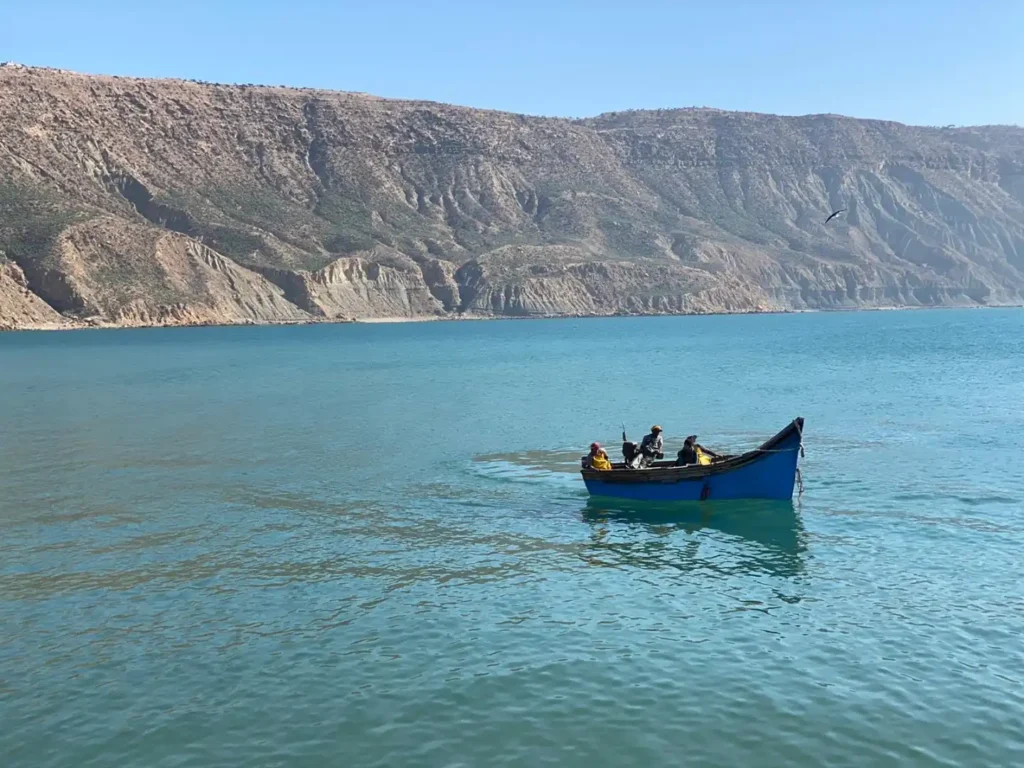
Deciding where to stay in Imsouane is simpler than it looks, because the village only really offers five kinds of bed: a hostel dorm, a surf camp, a small hotel or riad, a private apartment, or a patch of ground for a van. They cost wildly different amounts and they suit completely different trips. We run one of those places, which we’ll be upfront about — so this guide names the alternatives too, because a village this small makes pretending otherwise ridiculous.
Imsouane is about 800 metres end to end. Nothing is far from anything. So the question of where to stay in Imsouane isn’t really about location — what changes between one bed and another is who you’ll eat dinner with, how far you carry a board, and whether anyone gets you into the water.
Where to stay in Imsouane: the five options at a glance
Before the detail, the short version.
- Hostel dorm — cheapest, most social, least sleep. Roughly €10–18 a night.
- Surf camp — bed, meals and lessons bundled. Roughly €45–120 a night depending on room and season.
- Guesthouse, riad or small hotel — a private room and breakfast, nothing organised. Roughly €25–70.
- Apartment or house rental — self-catering, good for a fortnight or a family. Roughly €30–80.
- Campsite or van — the overland crowd, mostly November to March. A few euros a night.
Those prices are what people actually pay in 2026, not headline rates. Everything climbs in the last two weeks of December.
Hostels: cheap, sociable, and you will not sleep much
Imsouane has a handful of hostels and they’re the reason a lot of people can afford to stay a month. A dorm bed runs about €10–18 depending on season and how many bunks are crammed in. Breakfast is usually included and usually consists of bread, jam, olives and coffee.
What you get is company. Hostels here run on communal dinners and whoever’s cooking, and by day three you’ll have a crew. What you don’t get is quiet. The village goes to sleep early but hostel common rooms don’t, and if you’re surfing at seven you’ll be the only one having breakfast.
Two practical things. Hot water is often solar, so a late shower can be a cold shower — a genuinely common complaint across the cheaper places in the village, ours included on a bad day. And board storage varies; some hostels have a rack, some expect your board to live in the dorm with you.
Hostels suit solo travellers on a long trip, people who want to surf on their own terms, and anyone whose budget matters more than their sleep. If you’re travelling alone and weighing this against a camp, we’ve written separately about what a solo trip to a Moroccan surf camp actually involves.
Surf camps: the expensive option that often works out cheaper
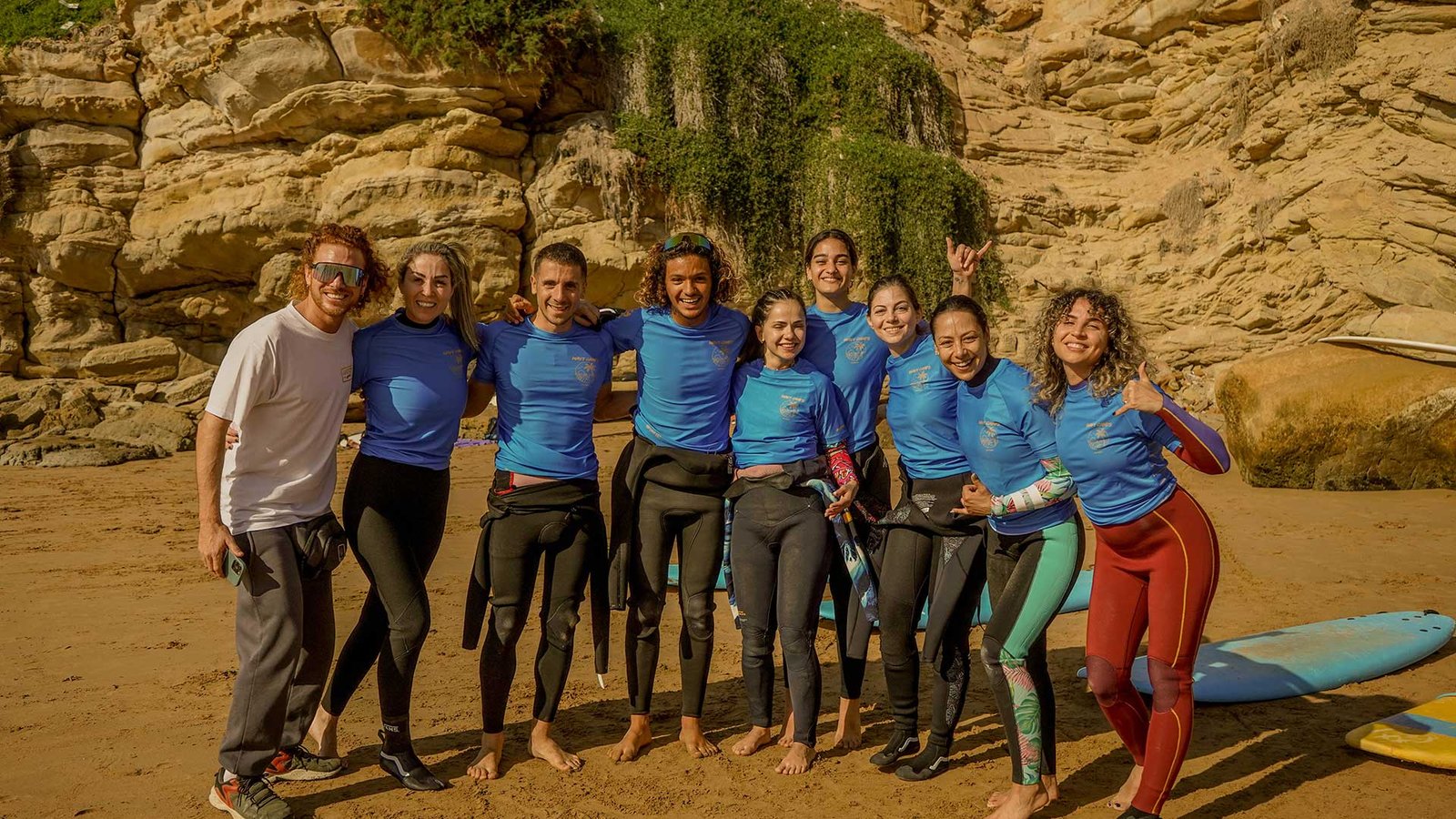
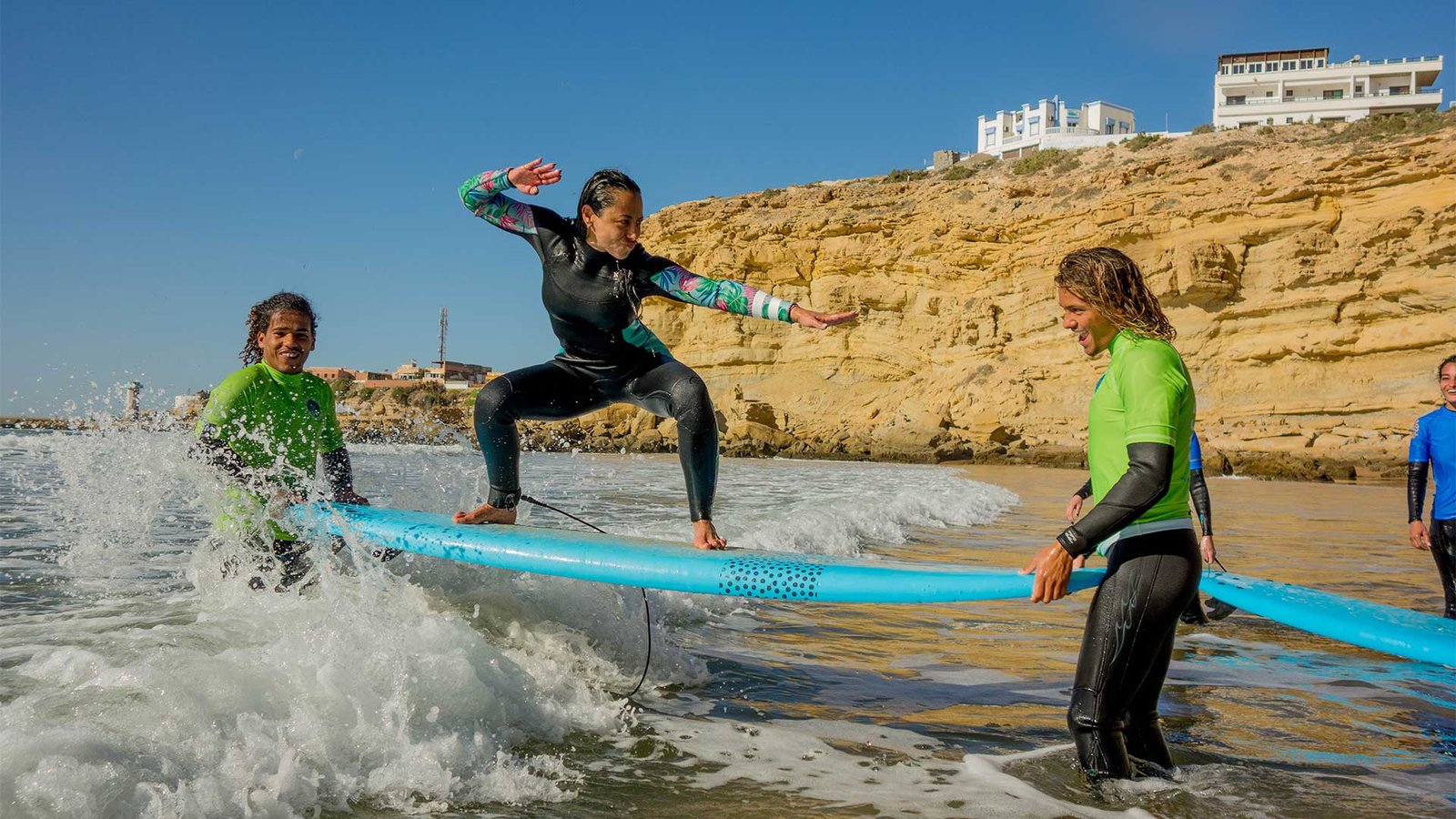
A surf camp bundles the bed with meals, board hire and coaching. In Imsouane that lands somewhere between €45 and €120 a night depending on whether you’re in a dorm or a private room, and whether it’s February or August.
The number looks high next to a hostel until you break it down. Two meals a day in the village costs €12–20. Board and wetsuit hire is €10–15 a day. A single lesson is €25–35. Add those to a €15 dorm bed and you’re at €60–80 anyway, with more admin and nobody telling you which end of the bay to paddle out at.
Where a camp genuinely isn’t worth it: if you already surf well, bring your own board, and would rather eat at the port than at a long table. You’re paying for coaching and logistics you don’t need.
Camps also differ from each other more than their websites suggest — group sizes, whether coaching is included or upsold, whether the food is actually cooked on site. We wrote a list of questions worth asking before you book any camp in Morocco, and it applies to our competitors as much as to us.
Ours is the Olas surf camp, a ten-minute walk from the Bay. If you want the unvarnished version of a week here, including who we think shouldn’t come, there’s a long honest account of it.
Guesthouses, riads and small hotels
This is the quietest option and the most underrated. A private room with a door that locks, breakfast on a terrace, and nobody organising your day. Expect €25–70 depending on whether you’re looking at a simple guesthouse or one of the handful of nicer riad-style places.
Note that “riad” is used loosely here. A true riad is a courtyard house from an old medina, and Imsouane is a fishing village, not a medina — so what’s marketed as a riad on the coast is usually a small guesthouse built in that style. Good ones are lovely. Just don’t arrive expecting Marrakech.
These places suit couples, people working remotely, older travellers, and anyone who has surfed before and doesn’t need a programme. The trade-off is isolation: you’ll have a nice room and you’ll eat dinner alone unless you go looking for people.
Apartments and house rentals
For anything longer than about ten days, renting a place starts to make sense. There’s a growing supply of self-catering apartments, mostly in the newer buildings above the harbour, going for roughly €30–80 a night with big discounts by the month.
The obvious catch is food. Imsouane has small shops and a decent vegetable stall, but no supermarket — the nearest real one is in Tamri or Agadir. People self-catering here typically do a big shop on the way in and top up locally. If you’re arriving without a car, that’s harder than it sounds.
Apartments work well for families, remote workers on a month-long stint, and groups who want to cook. Digital nomads in particular have made this the default; we went into the working-from-here side of it in our piece on the Imsouane nomad scene and its wifi realities.
Camping and vans
Between roughly November and March a steady stream of European campervans works its way down the Atlantic coast, and Imsouane is a regular stop. There’s a campsite, and there are informal spots above the bay where vans cluster.
Costs are small — a few euros a night at the campsite, which buys you water, a toilet block and somewhere to empty a tank. The community is largely French, German and Dutch, skews older than the hostel crowd, and is generally well organised about rubbish and water.
Two honest notes. Informal parking is tolerated rather than authorised, and that tolerance shifts — what was fine last winter may not be this one, so ask locally rather than trusting a two-year-old forum post. And if you’re driving down yourself, the road in is fine but narrow in places; our guide to driving in Morocco covers the checkpoints and the road rules nobody writes down.
Where to stay in Imsouane: harbour side or bay side?
This matters more than the star rating.
The village has two halves. The harbour side sits around the working fishing port — closer to the shops, the fish grills and the bus stop, busier, noisier, and the boats start early. The bay side looks over the long crescent beach and the point, is quieter, and puts you closer to the wave.
If you’re here to surf the Bay, staying bay side saves you a ten-minute uphill walk with a board twice a day. If you’re here for the village, food and general life, harbour side is more convenient. Neither is far — this is a walk of a few hundred metres, not a commute.
One thing worth checking before you book: “sea view” in Imsouane can mean a full sweep of the bay or a strip of blue between two buildings. Look at the photos properly, and if a place won’t show you the actual view from the actual room, assume the worst.
When everything is full
Two periods sell out. The obvious one is Christmas and New Year, which fills months ahead and prices accordingly. The second, which catches people out, is February and March — the biggest, cleanest swell of the year, which brings surfers who know that and book early. Our wave height archive shows why: March averages the largest surf of any month across four years of data.
Quietest and easiest to book on short notice are May, June and September. The water’s warm, the surf is small and consistent, and where to stay in Imsouane becomes a question you can answer on arrival rather than in advance.
If you want the festive week, book it in autumn. If you want March, book by December. Everything else is fairly relaxed — and you can check what we have free if a specific week matters to you.
What nobody mentions until you arrive
Cash. There’s an ATM in the village but it runs dry, especially at weekends and around holidays. Most small guesthouses and all the port grills are cash-only. Bring dirhams from Agadir.
Power. Cuts happen. They’re usually short. Nowhere here has a generator as standard.
Heating. Almost no building in Imsouane has any. Daytime highs of 21–22°C in January sound fine until you’re in a concrete room at 11pm. Bring layers for evenings between December and March — the sea is warmer than the buildings.
The 2024 demolitions. A stretch of unlicensed construction near the bay was cleared, which changed the look of the village and closed some places permanently. Listings for accommodation that no longer exists still float around on the bigger booking sites. If a place looks too cheap and the reviews stop abruptly in 2024, check before you pay.
Where to stay in Imsouane, depending on your trip
If you’ve never surfed and you’re coming for a week, a camp. You’ll be in the water on day one instead of working out board hire.
If you surf already and you’re here for the wave, a guesthouse bay side, with your own board.
If you’re on a long trip and money matters, a hostel, and eat at the port.
If you’re staying a month or bringing a family, an apartment, with a shop stop on the drive in.
If you have a van, come between November and March and ask locally where’s currently fine.
And if you’re still deciding between Imsouane and somewhere further south, that’s a bigger question than accommodation — our Imsouane and Taghazout comparison deals with it properly. For a wider view of the country’s coast, Lonely Planet’s Morocco pages are a reasonable starting point, and Surfline’s Imsouane report will tell you what the wave is doing this week.
Frequently asked questions
How much does it cost to stay in Imsouane per night?
A hostel dorm is roughly €10–18, a guesthouse or small hotel €25–70, a self-catering apartment €30–80, and a surf camp with meals and lessons €45–120. Camping is a few euros. Prices rise sharply over Christmas and New Year and are at their lowest in May, June and September.
Is it better to stay near the harbour or the bay?
Bay side if you’re surfing — it saves a ten-minute uphill walk with a board twice a day and puts you next to the point. Harbour side if you want shops, fish grills and the bus stop on your doorstep. The village is only about 800 metres end to end, so neither choice is a hardship.
Do I need to book accommodation in Imsouane in advance?
For Christmas and New Year, book months ahead. For February and March, book by December — that’s the biggest swell of the year and surfers book early. May, June and September are relaxed enough to arrange a week or two ahead, or even on arrival.
Is there a supermarket in Imsouane?
No. There are small shops, a vegetable stall and bakeries, which cover daily basics well enough. The nearest full supermarket is in Tamri or Agadir, so if you’re self-catering it’s worth doing a large shop on the way in.
Can you camp in Imsouane in a campervan?
Yes, and plenty of European vans do between November and March. There’s a campsite with water and facilities for a few euros a night, plus informal spots above the bay. That informal parking is tolerated rather than officially permitted and the situation changes, so ask locally rather than relying on old forum posts.
Is there an ATM in Imsouane?
There’s one, but it runs out of cash regularly — particularly at weekends and around public holidays. Most guesthouses and all the port fish grills take cash only. Withdraw dirhams in Agadir before you travel up.
Do places in Imsouane have heating?
Almost none do. January daytime highs sit around 21–22°C, but buildings are concrete and unheated, and evenings between December and March get cold indoors. Bring warm layers for the evenings even though the days are mild.
Are there hotels in Imsouane or only surf camps?
Both, plus hostels, guesthouses, riad-style places and self-catering apartments. Imsouane isn’t a resort town, so there are no large chain hotels — the biggest places are small guesthouses and camps, which is part of why the village still feels like a village.
0 Comments