

By Olas Surf Team — 4 August 2026
Nearly everyone looking for things to do in Agadir is passing through rather than staying — it’s the airport city for this whole stretch of coast, and most visitors have half a day at either end of a trip. That’s the honest framing for this guide. Agadir isn’t a destination most people build a week around, and it does have a solid day in it if you know where to point yourself.
We drive down from Imsouane most weeks. Here’s what we’d actually do with a spare day.
First, why Agadir looks the way it does
This explains a lot and almost nobody knows it.
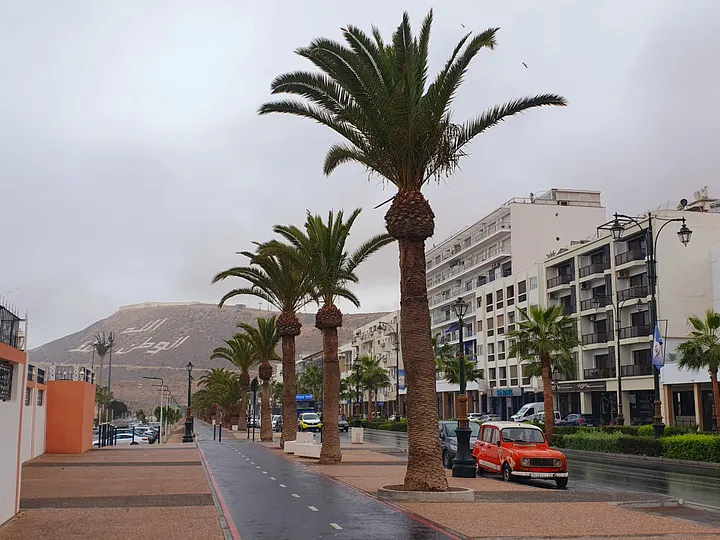
In February 1960, an earthquake destroyed Agadir in about fifteen seconds and killed something in the region of 15,000 people — roughly a third of the city. What stands today was rebuilt from nothing in the decade after, on a new site slightly south of the old one, designed by modernist architects working to an earthquake-resistant brief.
So Agadir has no ancient medina, no maze of alleys, no historic core. Visitors arriving expecting Marrakech or Fes are routinely disappointed, and the disappointment is a misunderstanding rather than a failing of the city. What it has instead is wide boulevards, a long clean beach, and the most relaxed street life of any Moroccan city — precisely because it isn’t a tourist medina where everyone is selling something.
Things to do in Agadir: the shortlist
Souk El Had. The one genuinely essential stop. It’s among the largest markets in Africa, with something like 6,000 stalls behind a walled perimeter, and unlike the medina souks in Marrakech it exists overwhelmingly for locals rather than tourists. Spices, olives, argan, ceramics, live poultry, secondhand clothes, tools, everything.
Go in the morning. It’s closed on Mondays. Prices are lower and the hassle level far below what you’d meet in Marrakech, though you should still expect to negotiate on craft goods. Give it two hours.
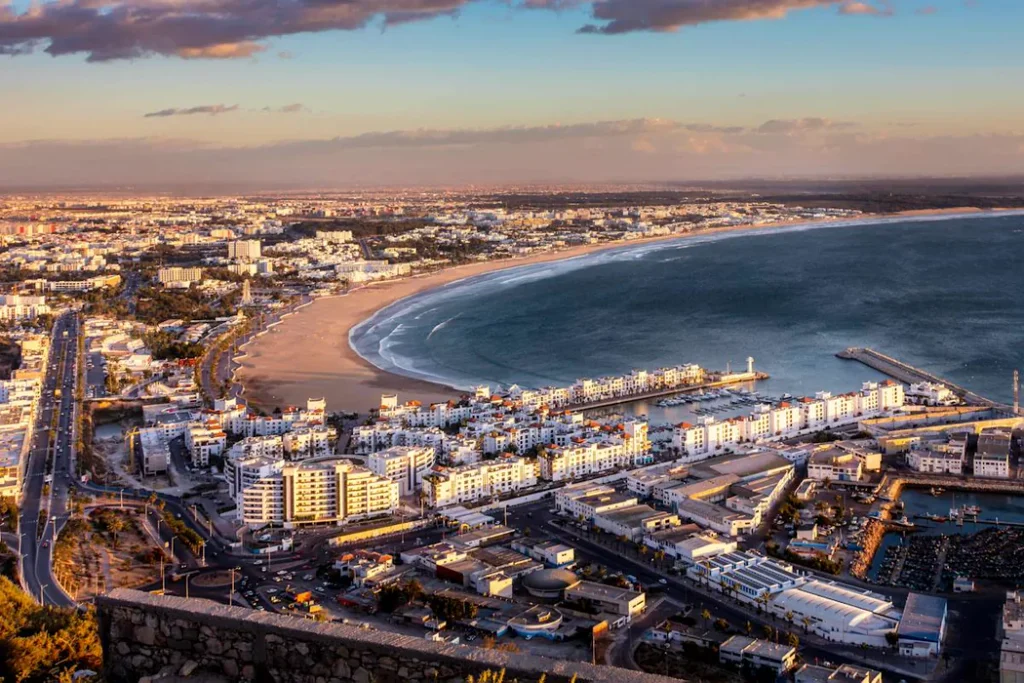
Agadir Oufella, the kasbah hill. The old fortress above the city, one of very few structures that partly survived 1960. There’s not a great deal left of the building itself, and that isn’t why you go — you go for the view over the entire bay, the port and the sweep of beach. A modern cable car runs up from the base, or you can drive. Best in the late afternoon as the light drops.
The fishing port. Agadir has one of the biggest sardine ports in the world, and it is a working industrial harbour rather than a pretty one. Go for lunch: there’s a row of stalls where you choose fish from ice and they grill it in front of you for a fraction of restaurant prices. Sardines, sole, prawns, whatever came in. This is the best cheap meal in the city.
The beach and the corniche. Ten kilometres of sand curving round the bay, sheltered enough that it’s genuinely swimmable — which is unusual on this coast, where most beaches face straight into the Atlantic. The promenade is pleasant, if resort-like. Fine for a couple of hours, not a reason to visit.
The marina. Modern, tidy, full of cafés with sea views and European prices. Pleasant enough for a drink. Skip it if your time is short.
Things to do in Agadir that are not worth your time
Being straight about this saves you a morning.
The “medina” of Agadir — Medina Polizzi — is a reconstruction built in the 1990s by an Italian architect, using traditional techniques, as an artisan showcase. It’s well made and it is not an old city. Worth knowing before you pay to enter thinking it’s historic.
Crocoparc and the various family attractions are fine if you have children and a car and a whole day. Otherwise they’re a long way from anything else.
Camel rides on the beach. Look at the animals first.
Anything sold as a “Berber market” excursion from a hotel. Souk El Had is a real market, it’s in the city, and you can walk in for nothing.
Things to do in Agadir with only a few hours
The layover version, which is what most people need.
Four hours or less: Souk El Had, then lunch at the port. That’s it, and it’s a good few hours. Both are close to the airport road.
Six to eight hours: add the kasbah for the view, ideally at the end.
A full day: souk in the morning, port for lunch, an afternoon on the beach, kasbah at sunset, dinner in town. That’s a genuinely decent day.
Agadir Al Massira airport is about 25 minutes from the city centre. A taxi should cost around 200–250 dirhams, and you must agree the fare before getting in — the meters are frequently “broken” for arriving passengers. Left luggage exists at the airport, which makes a layover day workable.
Where and what to eat
Agadir eats better than its reputation, mostly because it’s a working city rather than a tourist trap.
The port stalls are the standout, as above — pick your fish, watch it grilled, eat it with bread and a tomato salad for well under 100 dirhams a head. Busy at lunchtime with dockworkers as much as visitors, which is the point.
Talborjt, the older residential quarter inland from the beach, is where to eat in the evening. Small local restaurants, grilled meat, tagines, cheap and unpretentious. Considerably better value than the beachfront.
The beachfront and marina serve competent international food at European prices, aimed squarely at hotel guests. Fine if you want a familiar meal, poor value if you don’t.
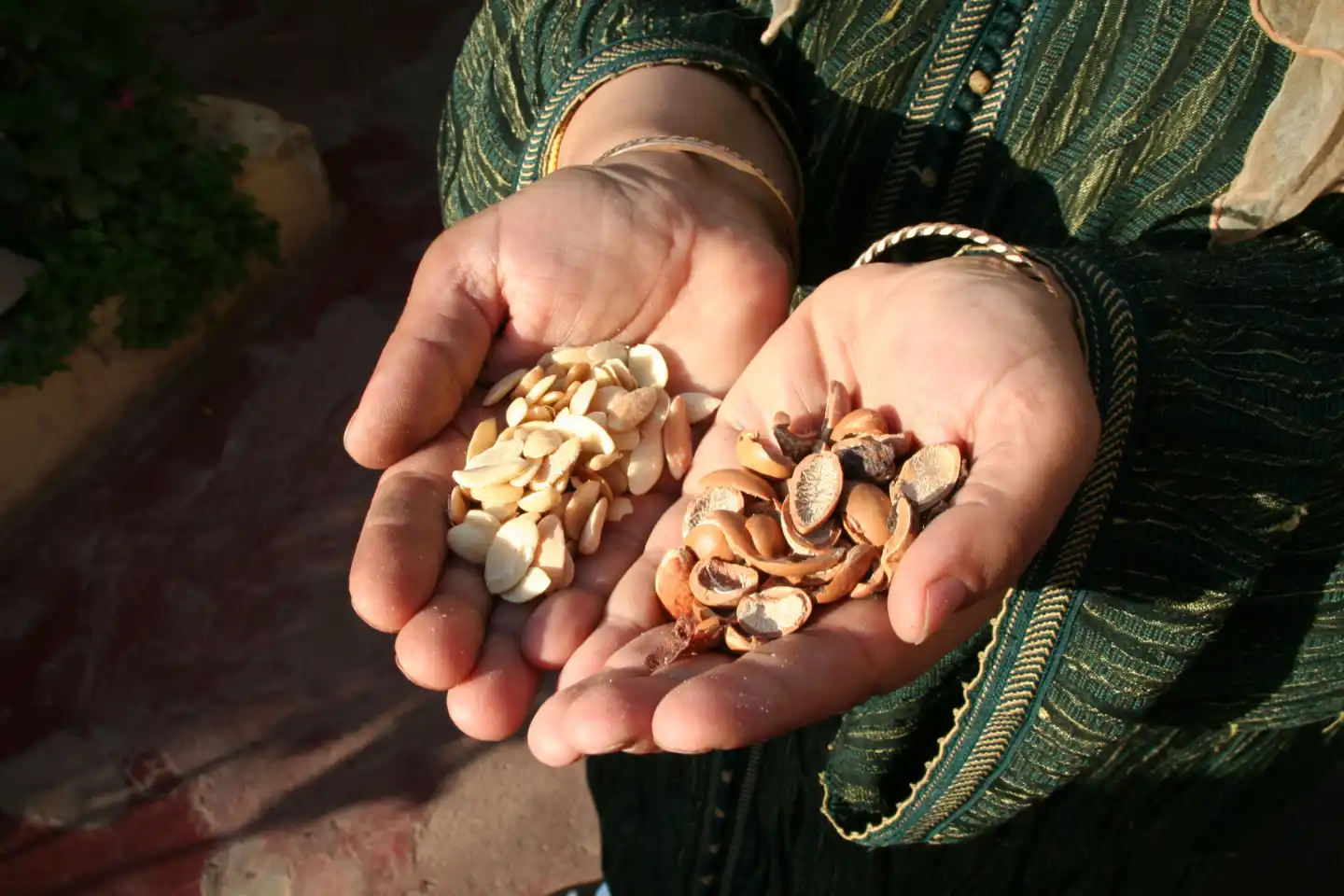
One thing worth trying while you’re here: amlou, the argan, almond and honey paste that belongs to this region specifically. You’ll find it at breakfast and in the souk, and it’s the single most regional thing on any menu in the city.
Where Agadir fits in a coastal trip
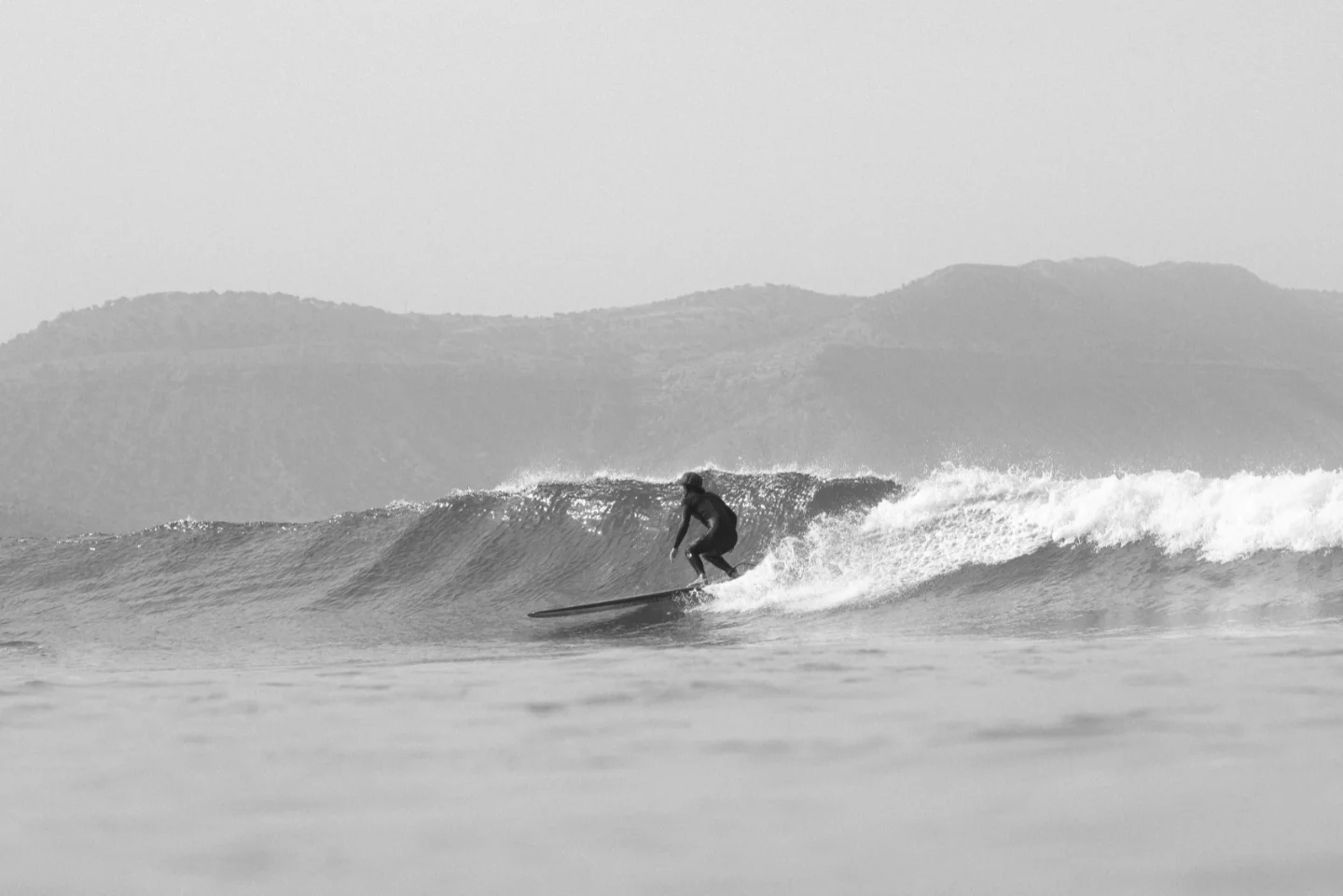
Most people we meet use Agadir as an entry and exit point rather than a base, and we think that’s right. The surf is better up the coast, the villages are quieter, and the city’s own beach is sheltered enough that it doesn’t get proper waves — which is exactly what makes it good for swimming and bad for surfing.
If you’re weighing whether to stay in Agadir or push north, we went through that comparison properly in our piece on Agadir versus Imsouane as a base. The short version: Agadir for hotels, restaurants, nightlife and a swimmable beach; the villages for waves and quiet.
The drive north to Imsouane takes about two hours through argan country, and it’s worth doing slowly — there are cooperatives worth stopping at, and goats in trees both genuine and staged, which we’ve covered in our guide to argan oil and how to tell the real thing. If you’re driving it yourself, read the driving guide first.
Going inland instead, Paradise Valley is about an hour from Agadir and makes a far better day trip from the city than from further up the coast.
Practical notes
- Agadir is the most relaxed Moroccan city for dress. It’s a resort city and standards are looser than inland. Beachwear on the beach still, not in the souk.
- Souk El Had is closed on Mondays. Plan around it.
- Agree taxi fares first. Petit taxis within the city should be 10–30 dirhams; the airport run is 200–250.
- Alcohol is available in hotels, the marina and licensed restaurants — more so than most Moroccan cities.
- It’s warm year-round. January daytime highs sit around 22°C, which is why the winter charter flights come. More on that in our guide to winter sun in Morocco.
- Cash for the souk and the port. Cards work in the marina and hotels and nowhere useful.
For a broader view of the city, Lonely Planet’s Agadir pages are a reasonable orientation, and the BBC’s archive on the 1960 earthquake is worth ten minutes if the city’s history interests you.
If Agadir is your arrival airport and you’re heading up the coast to us, we arrange transfers as part of a camp week — and if you’ve got a long gap before your flight home, tell us and we’ll build in a stop. Have a look at the dates, or read our honest account of a week here to see what you’d be heading to.
Frequently asked questions
Is Agadir worth visiting?
For a day, yes — the Souk El Had market, the hilltop kasbah view and lunch at the fishing port make a genuinely good few hours. As a week-long destination it’s weaker than the coast north of it, which has better surf and quieter villages. Most people use it as an arrival and departure point.
Why does Agadir have no old medina?
An earthquake destroyed the city in February 1960 in around fifteen seconds, killing roughly a third of the population. What stands today was rebuilt from scratch on a new site, designed to be earthquake-resistant. The “medina” you’ll see advertised is a 1990s artisan reconstruction, not a historic quarter.
What is the best thing to do in Agadir?
Souk El Had, one of the largest markets in Africa with around 6,000 stalls, and unlike the Marrakech souks it serves locals rather than tourists. Go in the morning, allow two hours, and note it’s closed on Mondays. Follow it with grilled fish at the port for lunch.
How much is a taxi from Agadir airport to the city?
Around 200–250 dirhams for the 25-minute run. Agree the fare before getting in — meters are frequently declared broken for arriving passengers. Petit taxis within the city itself should cost 10–30 dirhams for a short hop.
Can you swim at Agadir beach?
Yes, and it’s one of the few genuinely swimmable beaches on this coast. The bay curves round enough to shelter it from the Atlantic swell that hits everywhere else. That same shelter is why it’s poor for surfing — for waves you need to go north to Taghazout or Imsouane.
What can you do in Agadir on a layover?
With four hours, the souk and lunch at the port, both near the airport road. With six to eight, add the kasbah hill for the view over the bay. There’s left luggage at the airport, which makes a layover day straightforward.
Is Agadir good for a beach holiday in winter?
It’s one of the more reliable short-haul winter sun options in Europe’s reach, with January daytime highs around 22°C and very little rain. The sea sits at 18°C, so swimming is bracing. That combination is why the winter charter flights land here in numbers.
How far is Agadir from Imsouane?
About two hours by road heading north through argan country. There’s no direct public bus, so most people take a private transfer or grand taxi, or drive. The route itself is worth taking slowly — there are argan cooperatives and viewpoints along the way.
0 Comments