

By Olas Surf Team — 4 August 2026
The case for winter sun Morocco offers is a short one: it’s three to four hours from most of northern Europe, daytime highs on the Atlantic coast sit in the low-to-mid twenties through January, and flights land for less than a train fare across your own country. That’s why Jet2 keeps expanding its Morocco winter programme and why Agadir now takes more than sixty flights a week out of London alone.
What almost nobody tells you is that “Morocco is warm in winter” is only true of about a third of the country. We live on the coast and we watch guests arrive in November with the wrong clothes every single year. This is the honest version.
Winter sun Morocco: what the temperatures actually do
Here’s the Atlantic coast around Imsouane and Agadir, averaged across four years of records.
| Month | Daytime high | Night | Sea | Wet days per week |
|---|---|---|---|---|
| November | 26°C | 16°C | 19°C | 0.5 |
| December | 22°C | 13°C | 18°C | 1.0 |
| January | 22°C | 12°C | 18°C | 0.2 |
| February | 23°C | 13°C | 17°C | 0.9 |
| March | 22°C | 14°C | 18°C | 2.0 |
Two things jump out. The first is how flat that is — there’s barely a degree between December and March. The second is the gap between day and night. A 22°C afternoon and a 12°C night is a ten-degree swing, and Moroccan buildings are built to shed heat, not hold it. Almost nothing here has central heating.
So the practical answer to what winter sun Morocco feels like: shorts at two in the afternoon, a proper jumper by seven, and colder indoors than out by ten. Bring both.
Where in Morocco is actually warm in winter
The country is roughly the size of France with the High Atlas running through the middle of it, so generalising is useless. Broadly:
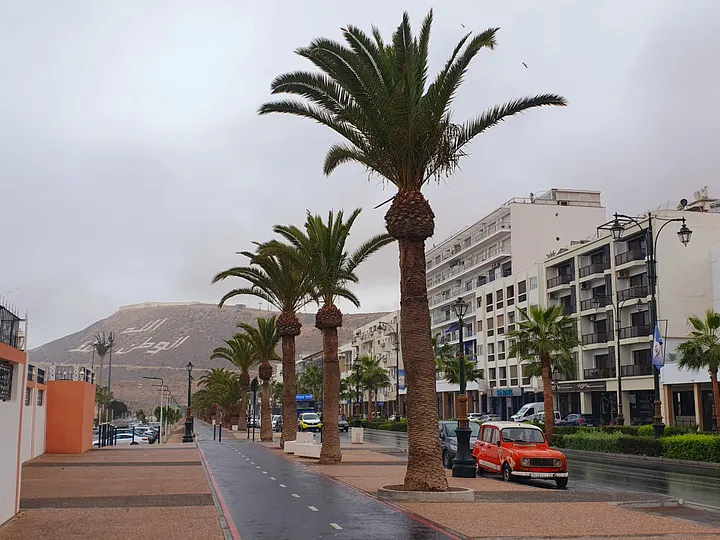
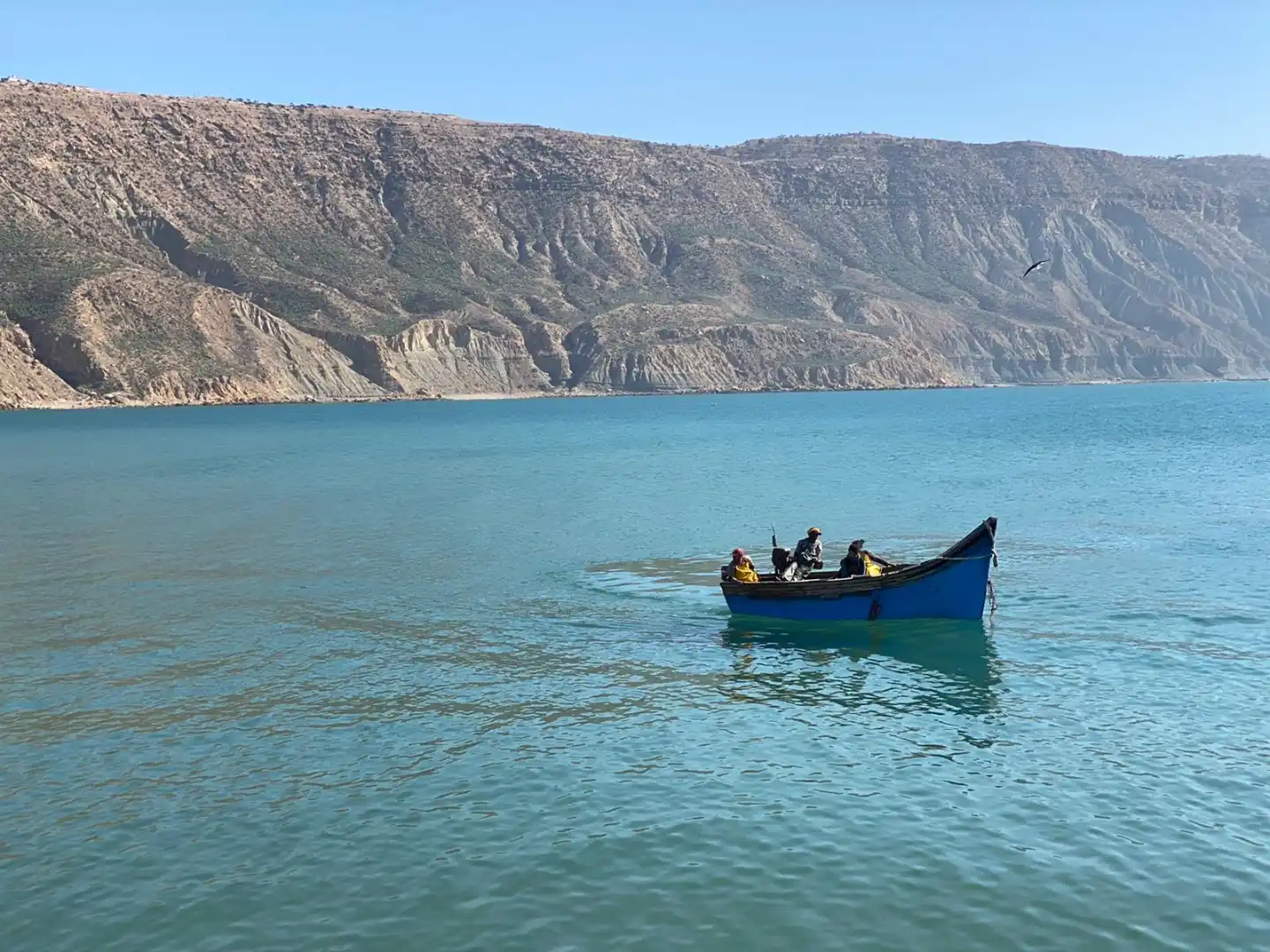
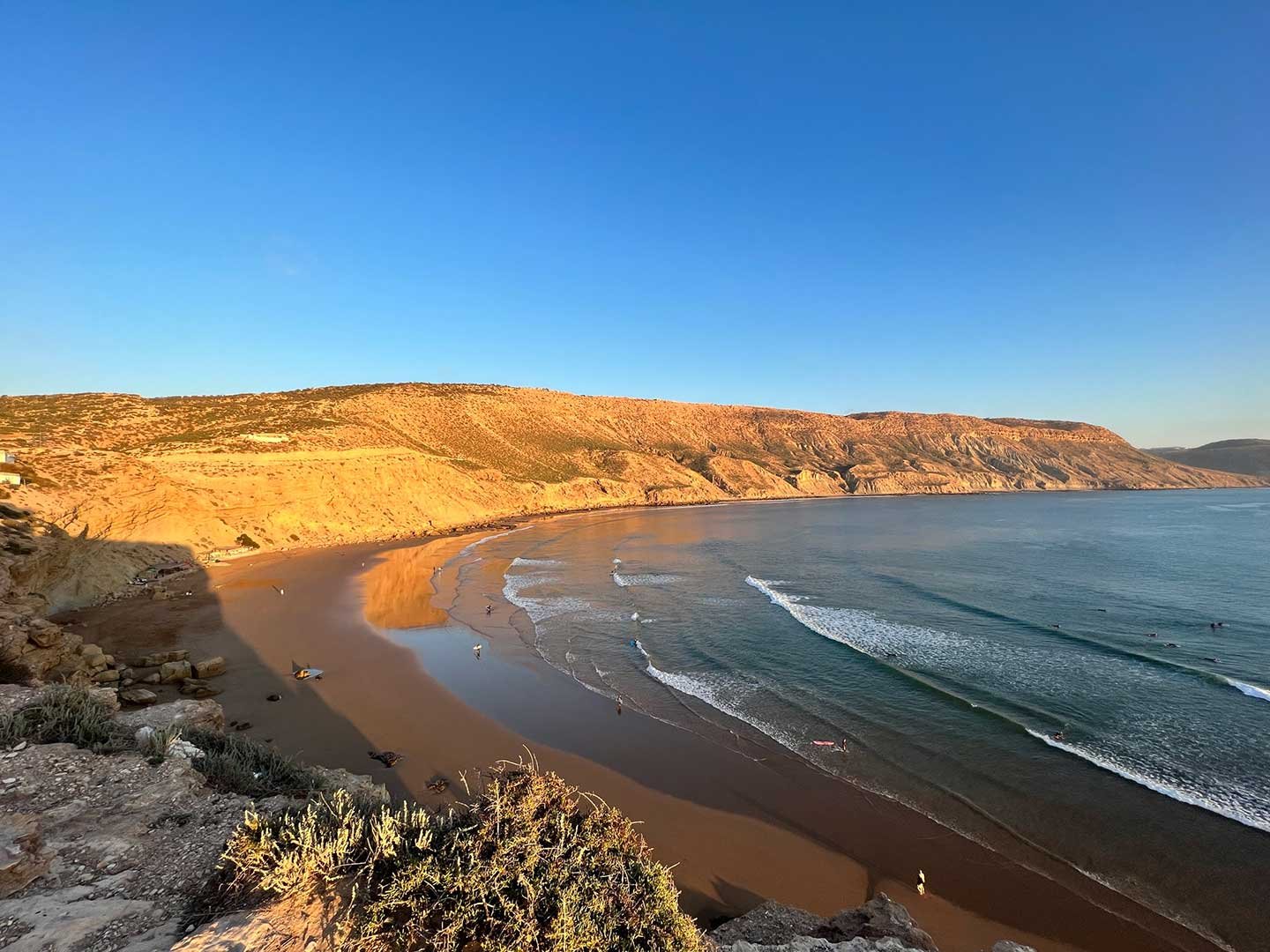
The Atlantic coast from Essaouira down to Agadir and beyond is the reliable winter belt. Low twenties, plenty of sun, cooled by the ocean rather than warmed by it. This is where the winter sun flights go and it’s where we are.
Marrakech is warm by day in winter — high teens to low twenties — and genuinely cold at night, dropping to 5–7°C in January. It sits at 470m with the Atlas right behind it. People are consistently surprised by this.
The Atlas Mountains get snow. Oukaïmeden has a ski station. If your winter sun plan includes a mountain day trip, that’s a different set of clothes.
The Sahara is hot by day and can go near freezing overnight in December and January. Desert camps hand out heavy blankets for a reason.
The north — Tangier, Chefchaouen, Fes — is the wet corner. Mediterranean-ish winters, real rain, and Chefchaouen in the Rif can be cold and grey for days.
If someone sells you a “winter sun Morocco” package that spends four of its seven nights inland, look closely at what the nights will be like.
Morocco versus the other short-haul winter options
Europeans chasing winter warmth realistically choose between the Canaries, southern Spain and Portugal, Madeira, Cyprus, and Morocco. Honestly:
The Canaries are warmer. Fuerteventura and Tenerife run 21–24°C with warmer sea. If pure temperature is the metric, they win, and pretending otherwise is silly.
Southern Spain and Portugal are cooler than people expect. The Algarve in January averages 16–17°C by day. Pleasant for walking, not for a beach.
Morocco is cheaper, and it’s a different country. That’s the real trade. You get comparable warmth to the Canaries at a lower cost, plus a place that doesn’t feel like an extension of home. You give up the guaranteed sea temperature and some convenience.
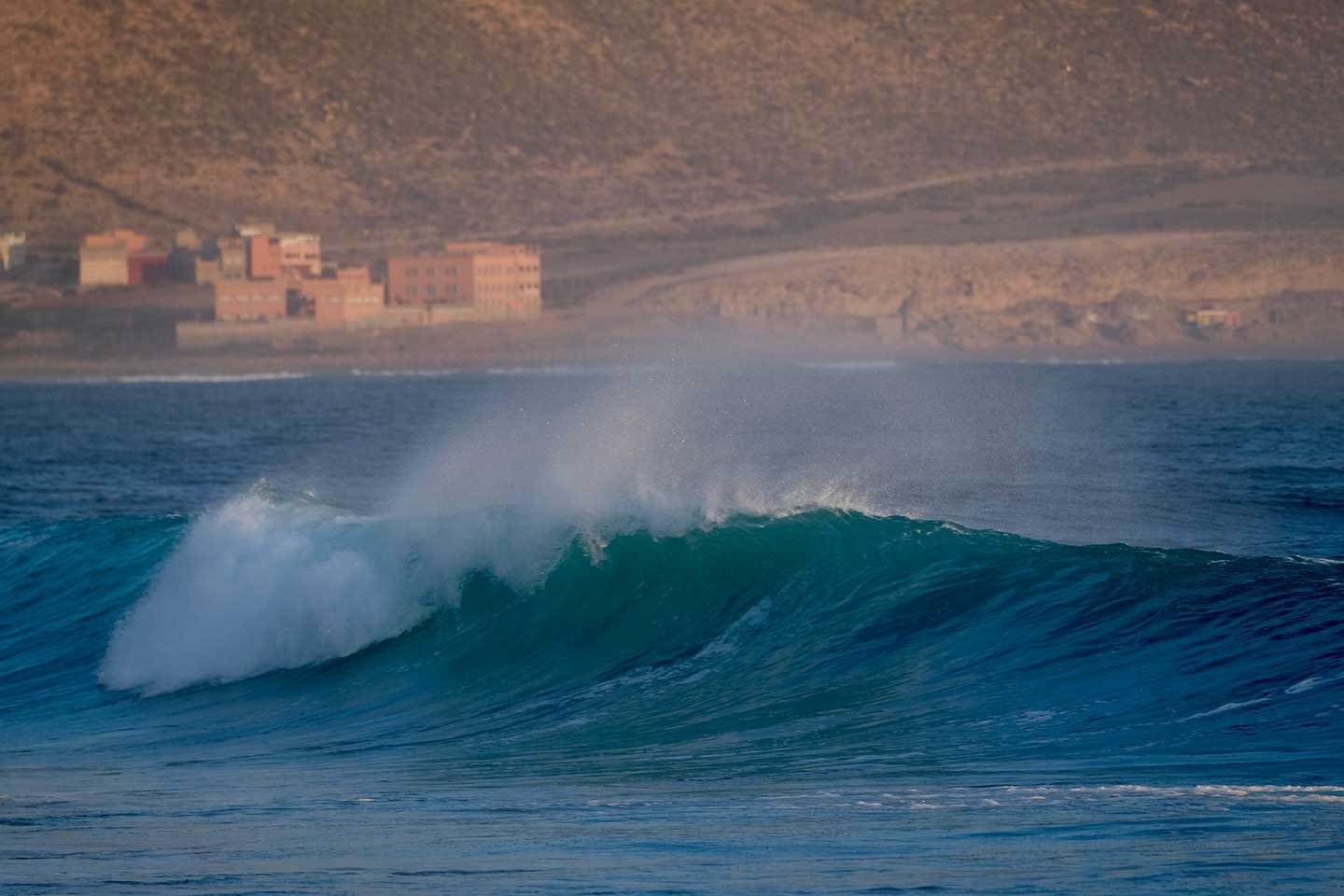
Where Morocco genuinely wins is if you want to do something. Winter is the Atlantic’s big swell season, so this is when the surf here is at its best rather than its most comfortable — the opposite of the summer-beach model. Our wave height archive shows the difference plainly: February and March carry the longest, cleanest groundswell of the year.
Winter sun Morocco month by month
November is the sleeper. Still 26°C, sea still 19°C, almost no rain, and the summer crowds gone. If we had to pick one month for a first winter trip, this is it.
December is warm, busy and expensive in the last two weeks. Christmas and New Year on this coast books out months ahead and prices double. The first three weeks are quiet and good value. We wrote up the specifics in our guide to December in Imsouane.
January is the best-value month of the year. Same temperatures as December, a fraction of the people, and the lowest prices you’ll see. The catch is that it’s the coldest sea and the coldest nights.
February brings the cleanest swell and the coldest water, at 17°C. Great if you’re in a wetsuit, less appealing if you planned on swimming.
March is the biggest surf and the wettest month of the winter, at about two wet days a week. Still 22°C. If you’re coming to be in the ocean rather than beside it, March is the one.
What there is to do on a winter sun Morocco trip
This is where the comparison with a Canaries package stops being about degrees. Winter is not the off-season here for anything except swimming.
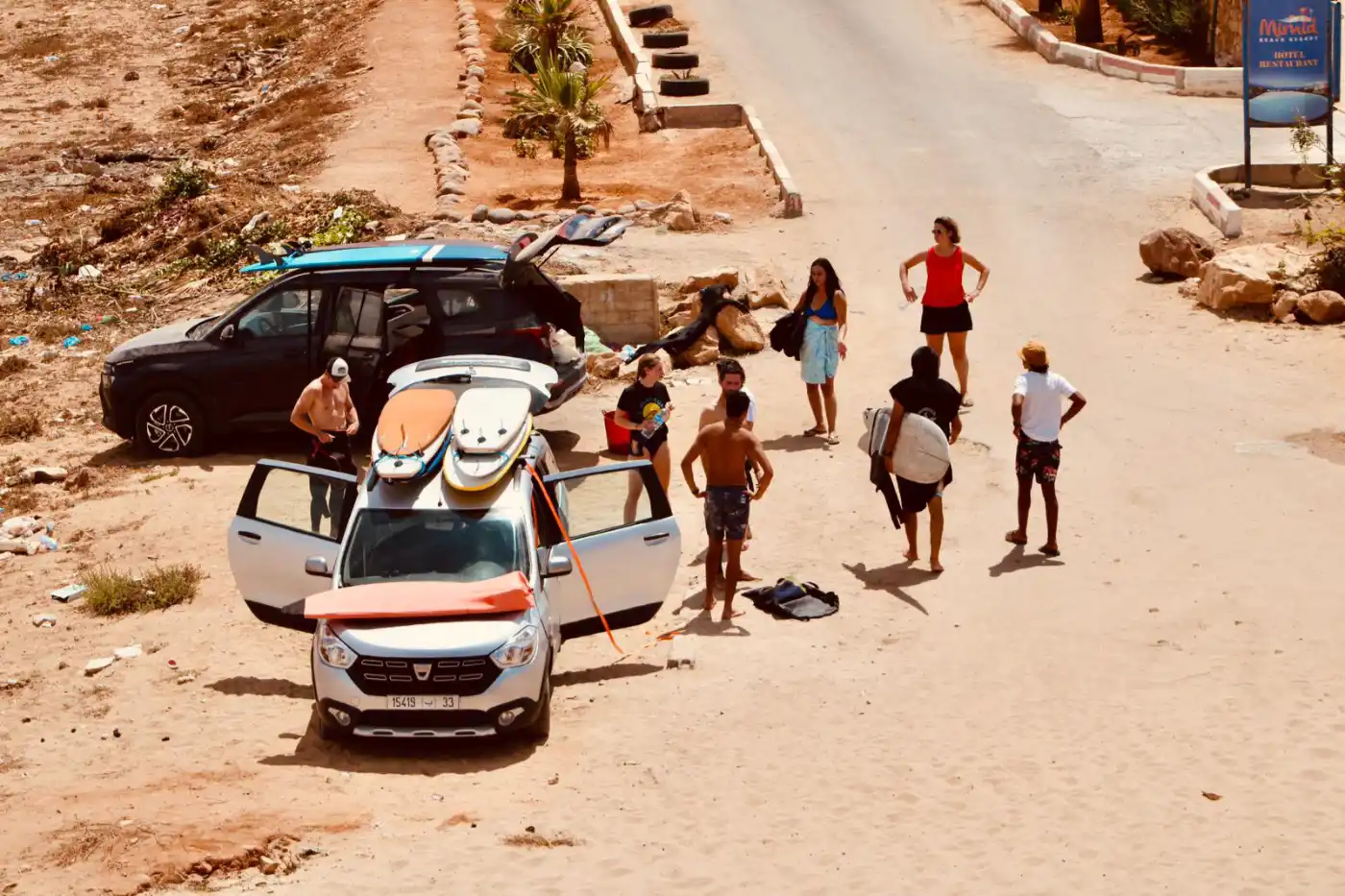
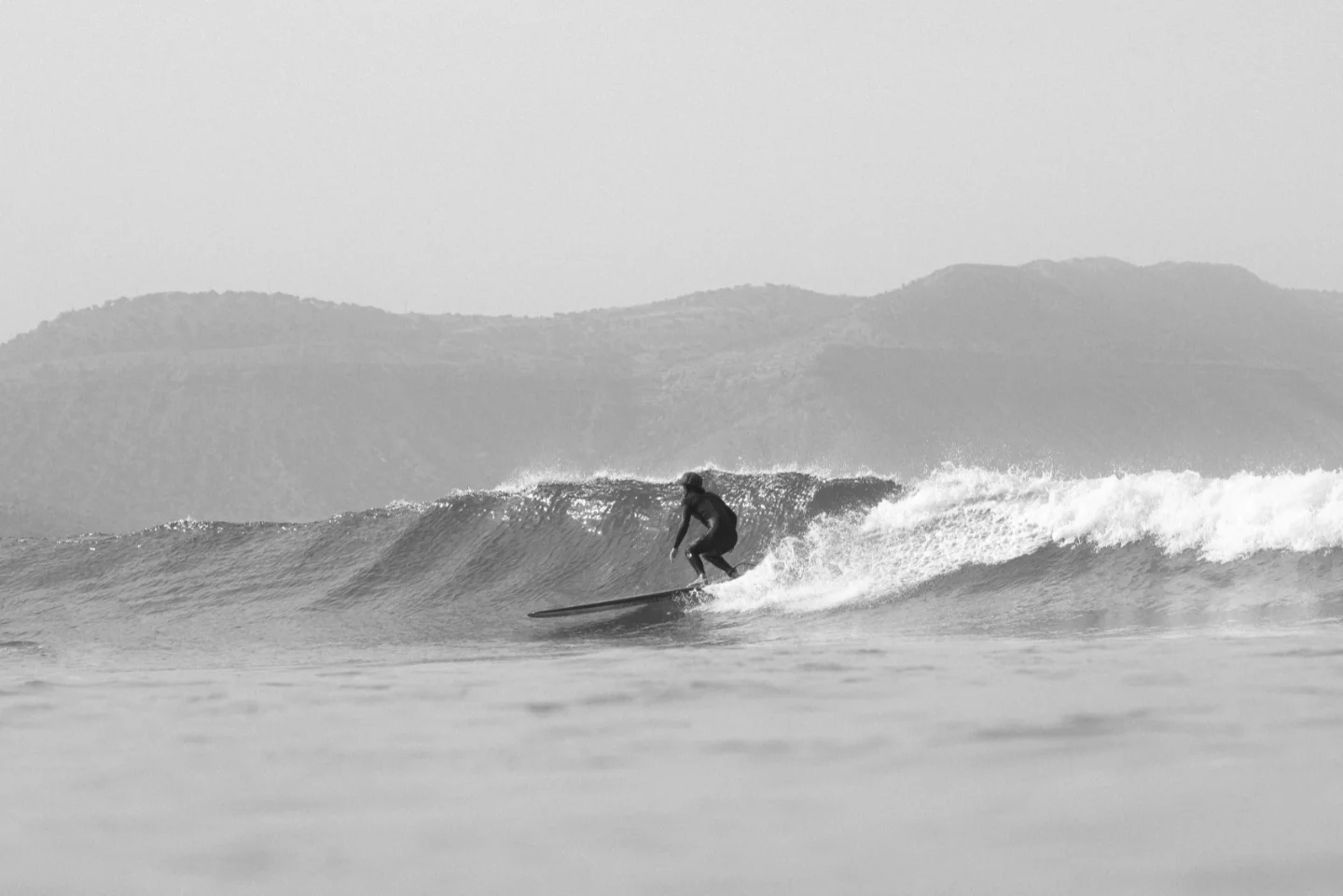
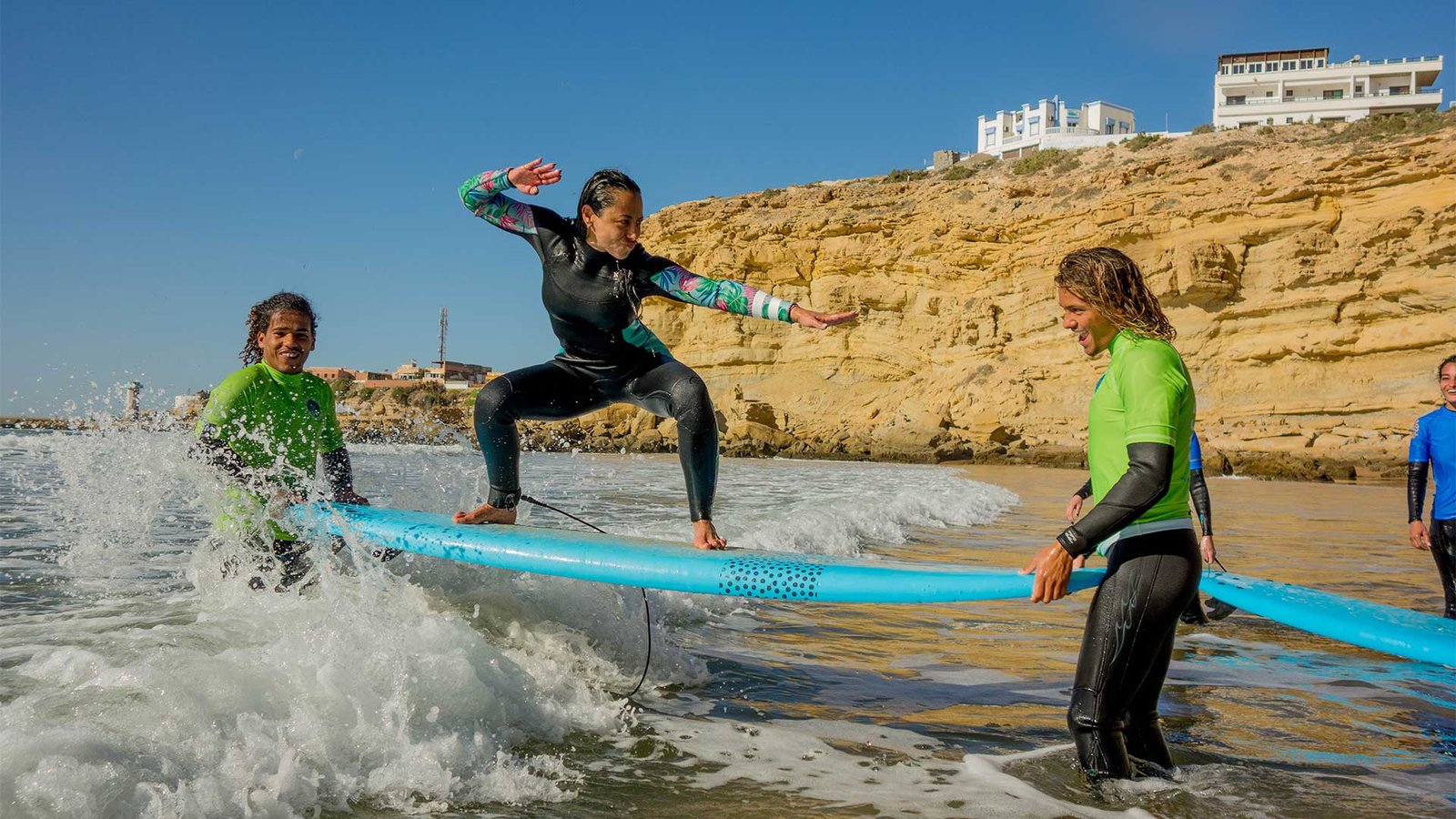
Surfing is at its yearly peak. The Atlantic sends its longest-period groundswell between November and March, which is why surf camps up and down this coast are fullest in what northern Europeans think of as the dead months — and why Imsouane’s point keeps turning up on lists of the best waves anywhere.
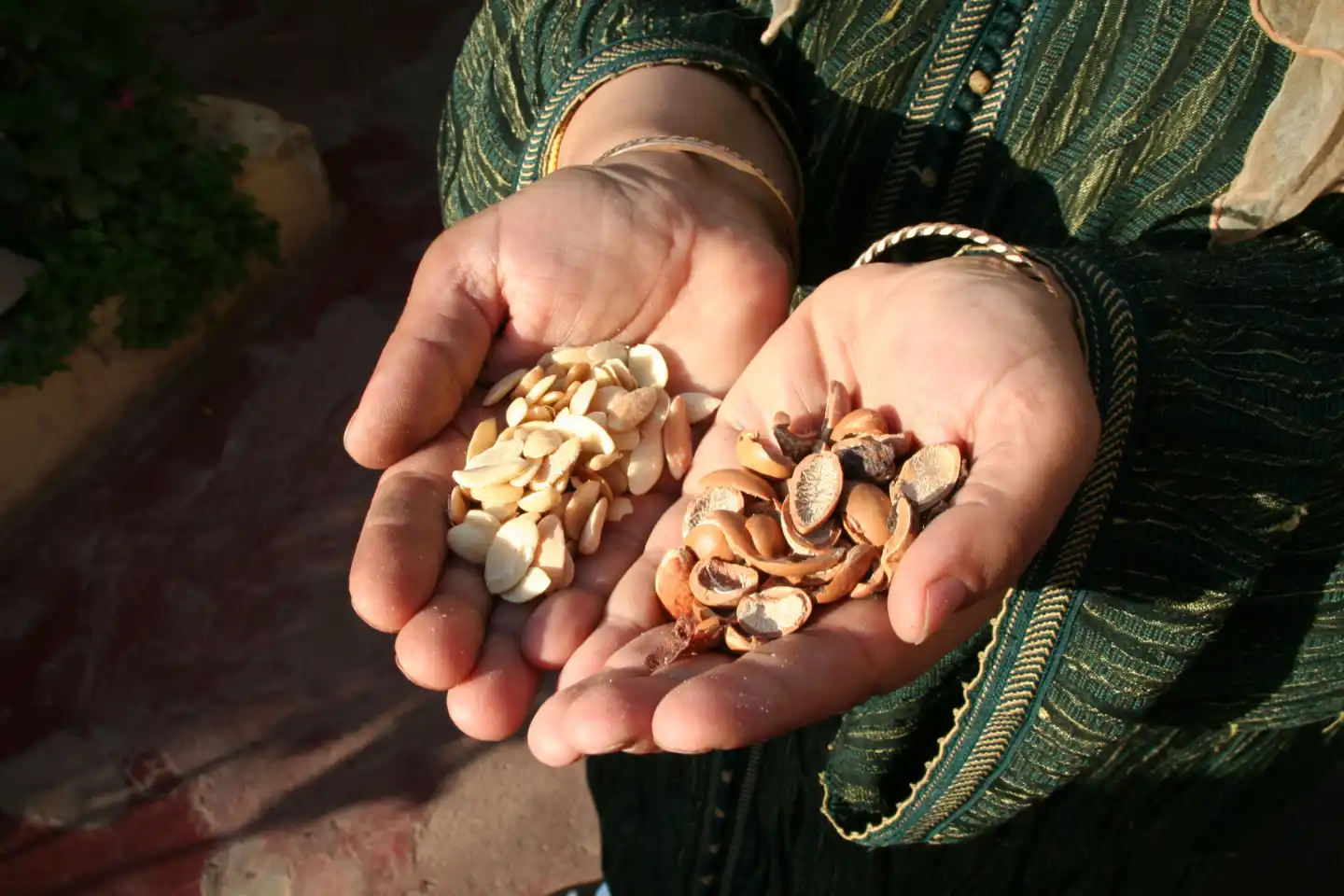
Walking is genuinely better in winter than summer. The coastal cliff paths around Imsouane are unpleasant at 32°C in August and lovely at 22°C in January, and the argan hills behind the coast turn green after the first rains — a landscape most visitors only ever see brown.
Day trips inland work well precisely because the coast is mild and the interior is cool. Paradise Valley is at its best after winter rain, when the pools actually have water in them. The Timlaline dunes are far more comfortable in January than in July.
Markets and towns are simply easier without summer heat. Agadir’s Souk El Had is one of the largest markets in Africa and walking it in August is punishing; in January it’s a pleasant morning. We’ve written up what’s worth doing in Agadir in a day if you’re passing through the airport city anyway.
Hammams come into their own. A steam bath is a strange thing to want in August and exactly the right thing after a cold-water surf in February — our guide to what actually happens in a Moroccan hammam covers the etiquette if you’ve never been.
What doesn’t work in winter: lying by an unheated pool, swimming without a wetsuit, and anything in the High Atlas that involves a mountain pass after heavy snow.
What to actually pack
The mistake is packing for the daytime number.
- Layers, not a coat. A fleece or light down jacket plus a windproof shell handles everything from a January evening to an Atlas day trip.
- Long trousers for evenings. Non-negotiable from December to March.
- Something warm for indoors. This sounds absurd until your first night in an unheated concrete room.
- A 4/3 wetsuit if you’re surfing between December and April. A 3/2 is not enough in February.
- Proper sun protection. The sun in January here is stronger than it feels — you’re at the latitude of southern Florida.
What you can leave: an umbrella, heavy walking boots unless you’re going to the mountains, and beachwear for anything other than the middle of the day.
Getting there and what it costs
Agadir Al Massira is the winter sun airport for this coast, with direct flights from the UK, France, Germany, Belgium, the Netherlands and the Nordics through the winter season. Marrakech is the other big option, three and a half hours from the coast by road.
Once you’re on the ground Morocco is cheap. A restaurant dinner runs €6–12, a coffee under €1, a taxi across town a couple of euros. The flight is almost always the biggest line on the trip.
Accommodation ranges widely and December distorts everything — we broke down the real numbers in our guide to where to stay in Imsouane. If you’re weighing the coast against the airport city, our comparison of Agadir and Imsouane as a base works through that choice. For the wider country in winter, BBC Weather’s seasonal guides and Lonely Planet’s Morocco section are both worth a look.
Who a winter sun Morocco trip suits, and who it doesn’t
It suits you if you want warmth without a long-haul flight, you’d rather explore than lie still, you like the idea of a country that isn’t organised around tourists, and you’re comfortable with a hot afternoon and a cold evening.
It doesn’t suit you if you want to swim in the sea every day without a wetsuit — 17–18°C is bracing. If you need guaranteed heat, go to the Canaries. If you want everything to work exactly as it does at home, this will frustrate you. And if you’re picturing a poolside week without leaving a resort, Agadir’s hotel strip will do that, but you could do it closer.
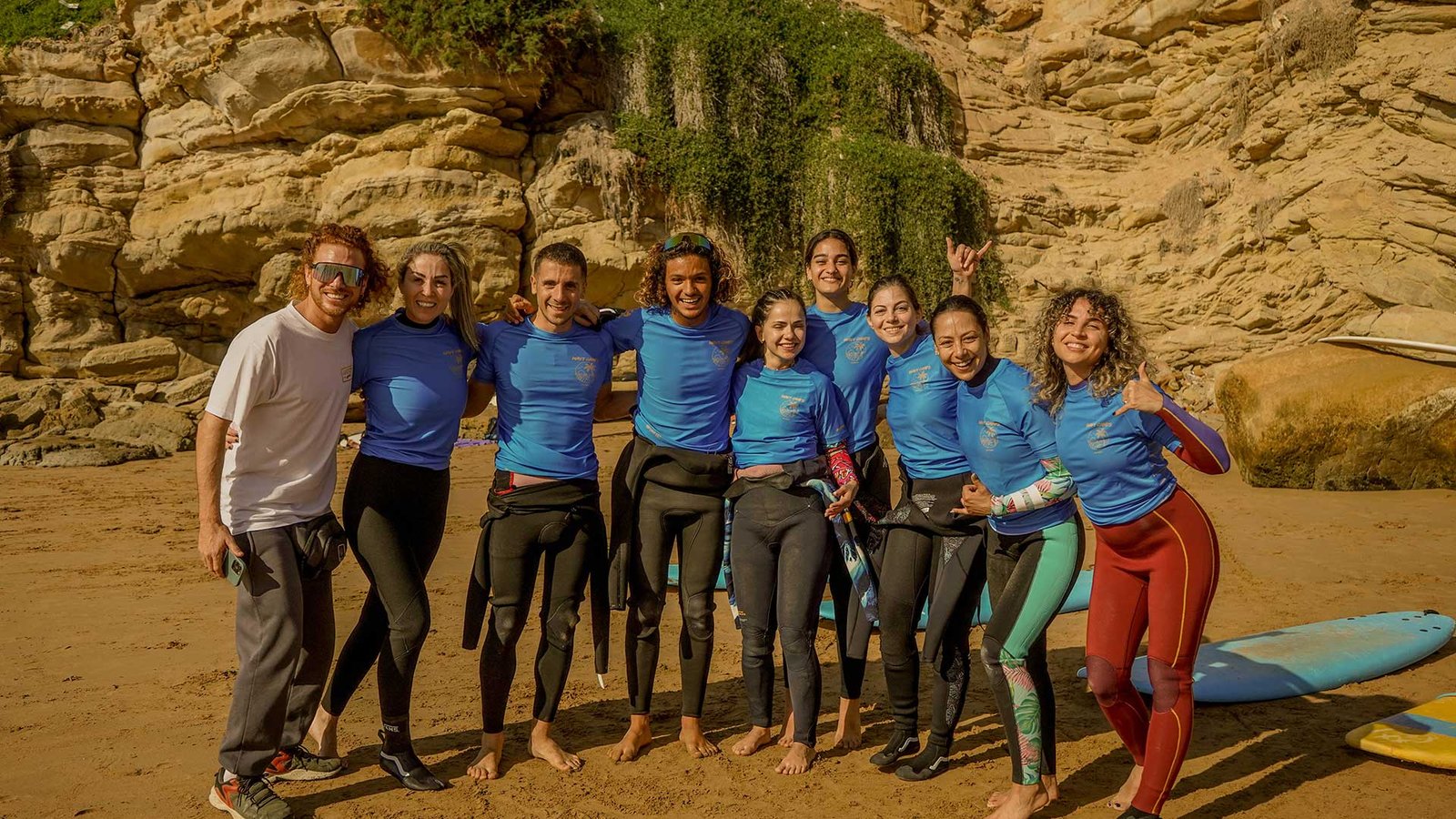
We run camp weeks right through the winter, which is our favourite season here and our busiest for a reason. If a particular month appeals, have a look at what’s free — January and early December are the quiet, cheap, underrated windows.
Frequently asked questions
Is Morocco warm enough in winter for a beach holiday?
On the Atlantic coast, daytime highs sit at 22–26°C from November to March, which is warm enough for beach days in the middle of the day. The sea is 17–19°C, so swimming is bracing rather than pleasant without a wetsuit. Evenings drop to 12–16°C and buildings are unheated, so pack layers.
Which part of Morocco is warmest in winter?
The Atlantic coast from Essaouira south through Agadir is the most reliably warm, sunny and dry. Marrakech is warm by day but drops to 5–7°C at night. The Atlas Mountains get snow, the Sahara gets near-freezing nights, and the north around Tangier and Chefchaouen is the wettest part of the country.
Does it rain much in Morocco in winter?
Not on the Atlantic coast. January averages roughly a fifth of a wet day a week and November is drier still. March is the wettest winter month at roughly two wet days a week. The north of the country is a different story and gets genuine Mediterranean winter rain.
What is the cheapest month for winter sun in Morocco?
January. Temperatures match December almost exactly, but the Christmas and New Year crowds have gone, accommodation prices fall sharply and flights are at their cheapest. The trade-off is the coldest sea and the coldest nights of the year.
Is Morocco warmer than the Canary Islands in winter?
No. The Canaries run a degree or two warmer by day with noticeably warmer sea. Morocco’s advantages are lower cost, better surf in winter, and being a genuinely different country rather than a European resort. If raw temperature is what you want, the Canaries win.
Do I need a wetsuit to surf in Morocco in winter?
Yes. Sea temperatures run 17–18°C from December through April, which calls for a 4/3 wetsuit. A 3/2 is thin across that whole window, and especially in February when the water is at its coldest.
Is Marrakech a good winter sun destination?
By day, yes — high teens to low twenties and reliably sunny. At night it drops to 5–7°C because it sits at 470 metres with the Atlas behind it, and riads are famously cold. It’s a good winter city break rather than a warm beach holiday.
What should I pack for Morocco in winter?
Layers rather than a heavy coat: a fleece or light down jacket, a windproof shell, long trousers for evenings and something warm for indoors, since almost nothing has heating. Add strong sun protection — the winter sun here is stronger than it feels — and a 4/3 wetsuit if you plan to surf.

0 Comments