

By Olas Surf Team — 4 August 2026
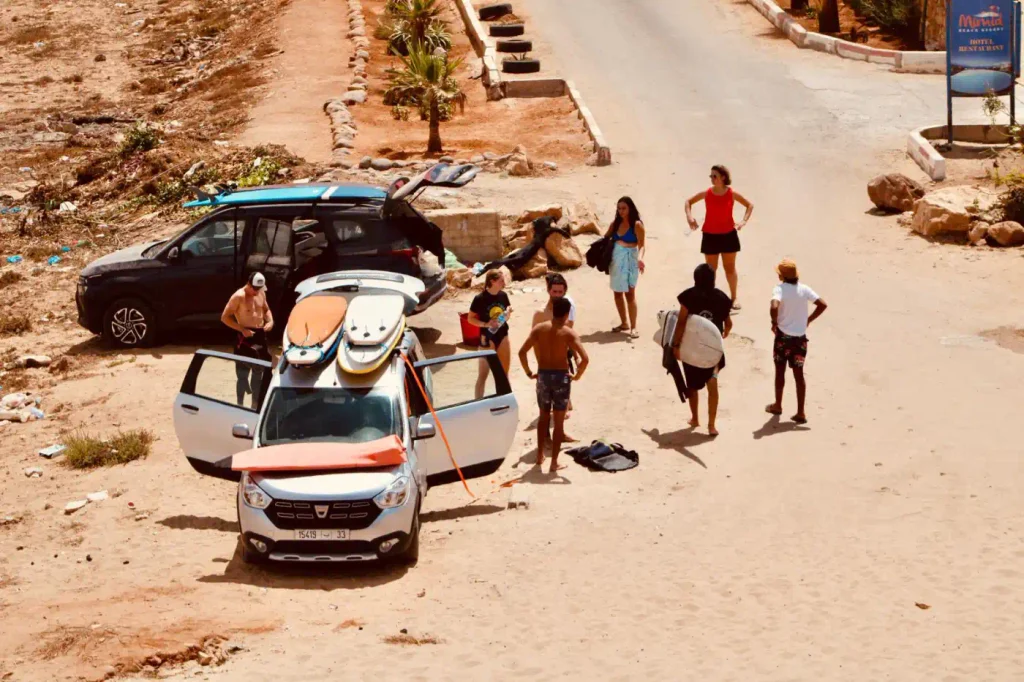
Driving in Morocco is easier than most people expect and harder than the rental company implies. The roads are genuinely good, the motorway network is modern and the main routes are well surfaced. What catches visitors out is everything around the driving: the checkpoints, the unwritten priorities, the speed traps, and the man in the hi-vis vest who appears the moment you park.
We drive this coast constantly, up and down between Agadir, the villages and the hills behind. Here’s what we’d tell a friend before they picked up a car, the practical shape of driving in Morocco rather than the brochure version.
Do you need an international driving permit?
Legally, if your licence is in French, English or Arabic, you can drive on it. That covers most UK, Irish and North American licences.
Practically, get an International Driving Permit anyway. Two reasons. Rental companies frequently ask for one regardless of what the law says, and a gendarme at a checkpoint who can’t read your licence has a slower conversation with you than one who can. An IDP costs very little from your national motoring association and takes a few minutes. It’s the cheapest friction removal available.
You’ll also want: your passport, the rental agreement, and the car’s insurance papers, which live in the glovebox. Keep all of it together and reachable without getting out of the car.
Checkpoints: the part of driving in Morocco that worries people most
This is the part that makes first-timers anxious, and it shouldn’t.
Gendarmerie checkpoints sit at town approaches, regional boundaries and randomly along main routes. On a two-hour drive you might pass three or four. Most of the time you’ll be waved straight through and nothing happens at all.
When you are stopped, the routine is simple. Slow down early. Window down. Hands visible on the wheel. Wait for the officer to speak first. Say bonjour. Hand over what’s asked for. Wait to be dismissed before pulling away.
They are checking documents and looking for local infractions, not hunting tourists. Officers are generally polite and often mildly curious about where you’re going. Being relaxed and friendly costs nothing and shortens the whole thing.
One genuine tip: Moroccan drivers flash their headlights at oncoming traffic to warn of a checkpoint or a speed trap ahead. If a line of cars flashes at you, slow down. That’s what they mean.
Speed limits and the traps
The limits are 40 km/h in built-up areas, 100 on open roads, and 120 on motorways. Enforcement has tightened a lot in recent years and fixed cameras are now common, particularly on the Casablanca–Marrakech corridor.
The classic trap is the town approach. Roads drop from 100 to 60 to 40 in quick succession as you enter a village, and the radar sits just after the sign. This catches people constantly, because 40 feels absurdly slow on a wide empty road. Do it anyway.
Fines are issued on the spot, in cash, typically 300–600 dirhams depending on severity. You’ll be given a receipt. Ask for one if it isn’t offered.
Alcohol is zero tolerance. Not a low limit, zero. Don’t have a beer with lunch and then drive. This is the rule visitors most often assume is flexible, and it is not.
The unwritten rules of driving in Morocco
These aren’t in any handbook and they matter more than the ones that are.
The headlight flash means “I’m coming through.” Not “after you”. This is the reverse of the convention in Britain and several other countries, and it is the single most dangerous misunderstanding available to a visiting driver. If someone flashes you at a junction, they are claiming the space, not offering it.
The horn is punctuation, not aggression. A short beep means “I’m here”, “I’m passing”, or “the light is green”. It carries almost none of the hostility it does in northern Europe. Don’t take it personally and do use it, a light tap before a blind mountain bend is standard practice.
Lane markings are advisory. Particularly in cities, where a two-lane road will carry three lanes of traffic plus a moped on each side. Hold your line, signal clearly, and don’t make sudden moves.
Roundabouts vary. On most, traffic already on the roundabout has priority. On some older ones, entering traffic does. Approach slowly and watch what the car in front does.
Expect anything on the road. Donkeys, goats, unlit carts after dark, pedestrians on the hard shoulder of a national road, mopeds carrying three people and a ladder. Night driving between towns is where this becomes genuinely risky, which is why we’d avoid it.
Parking and the guardians
Park anywhere in a Moroccan town and a man in a hi-vis vest will materialise, help you reverse whether or not you want help, and be there when you return.
This is a real job, semi-formalised, and not a scam. Pay him 2–5 dirhams for a short stop, 10–20 for several hours, more overnight. Pay when you leave, not when you arrive. Have coins.
It’s worth understanding what you’re buying: in a country where car crime is low partly because someone is always watching, the guardian system is part of why. Refusing to pay marks you out and achieves nothing.
Fuel, and what driving in Morocco costs to run
Petrol stations are frequent on main routes and sparse in the mountains and the far south. Fill up before a long inland stretch rather than after.
Diesel, gasoil, is cheaper than petrol and most hire cars are diesel. Attendants fill the car for you; there’s no self-service. Tell them the amount in dirhams or say plein for a full tank. A small tip of a few dirhams is normal but not obligatory.
Most stations take cards on main roads. Rural ones often don’t. Carry cash, as with nearly everything else in the country, which we go into in our guide to a first trip to Morocco.
Renting a car: what the insurance actually covers
Every legitimate rental in Morocco includes third-party liability by law. That covers damage you do to other people and their property. It does not cover damage to your own rental car.
That gap is where the arguments happen. The counter will offer you a collision damage waiver, usually with an excess of several thousand dirhams. Read what’s excluded, tyres, windscreen and undercarriage are very commonly carved out, and those are exactly the things that get damaged on rough roads.
Two practical habits. Photograph the car thoroughly before you leave the lot, including the roof, the wheels and the underside if you can, with the date visible. And use a company with a real office rather than the cheapest listing online. The saving on a week’s rental is small; the difference when there’s a dispute is not.
A credit card in the driver’s name is normally required for the deposit.
Is driving in Morocco worth it at all?
Honest answer: depends entirely on your trip.
Rent a car if you want to stop where you like, you’re travelling as a family or group, you’re doing a coastal road trip, or you’re going somewhere buses don’t reach. The freedom to pull over at a cooperative or a viewpoint is the whole point, half of what’s good about the road between Agadir and Imsouane is the stopping.
Don’t rent if you’re going city to city on routes the buses cover well, you’re staying in one place, or you’re nervous in traffic. Supratours and CTM buses are cheap, comfortable and reliable, and a private transfer for a single long journey often costs less than three days of car hire, the options are laid out in our guide to getting from Marrakech to the coast.
Driving in Marrakech or Casablanca specifically is not fun and there’s no reason to do it. Park outside the medina and walk.
Navigation, and what the maps get wrong
Google Maps works well on main roads and gets creative on small ones. It has a habit of routing you onto a shorter track that turns out to be unsurfaced, which is fine in a 4×4 and not fine in a Dacia Sandero with a low front bumper.
Download offline maps before you go inland. Mobile coverage on the coast and in towns is good, but it drops out in valleys and on mountain roads exactly where you’d most like to know where you are.
Two more habits worth having. Trust the road signs over the app where they disagree, signage on national routes is clear and in both Arabic and French. And check the surface before committing to any shortcut the app offers that saves ten minutes; on this coast a “shortcut” frequently means a piste, and pistes eat hire-car deposits.
Distances are also deceptive. A hundred kilometres of coast road with villages, speed limits and checkpoints is a two-hour drive, not a one-hour one. Budget accordingly, particularly if you’re trying to reach somewhere before dark.
Roads worth driving
If you do take a car, a few stretches justify it on their own.
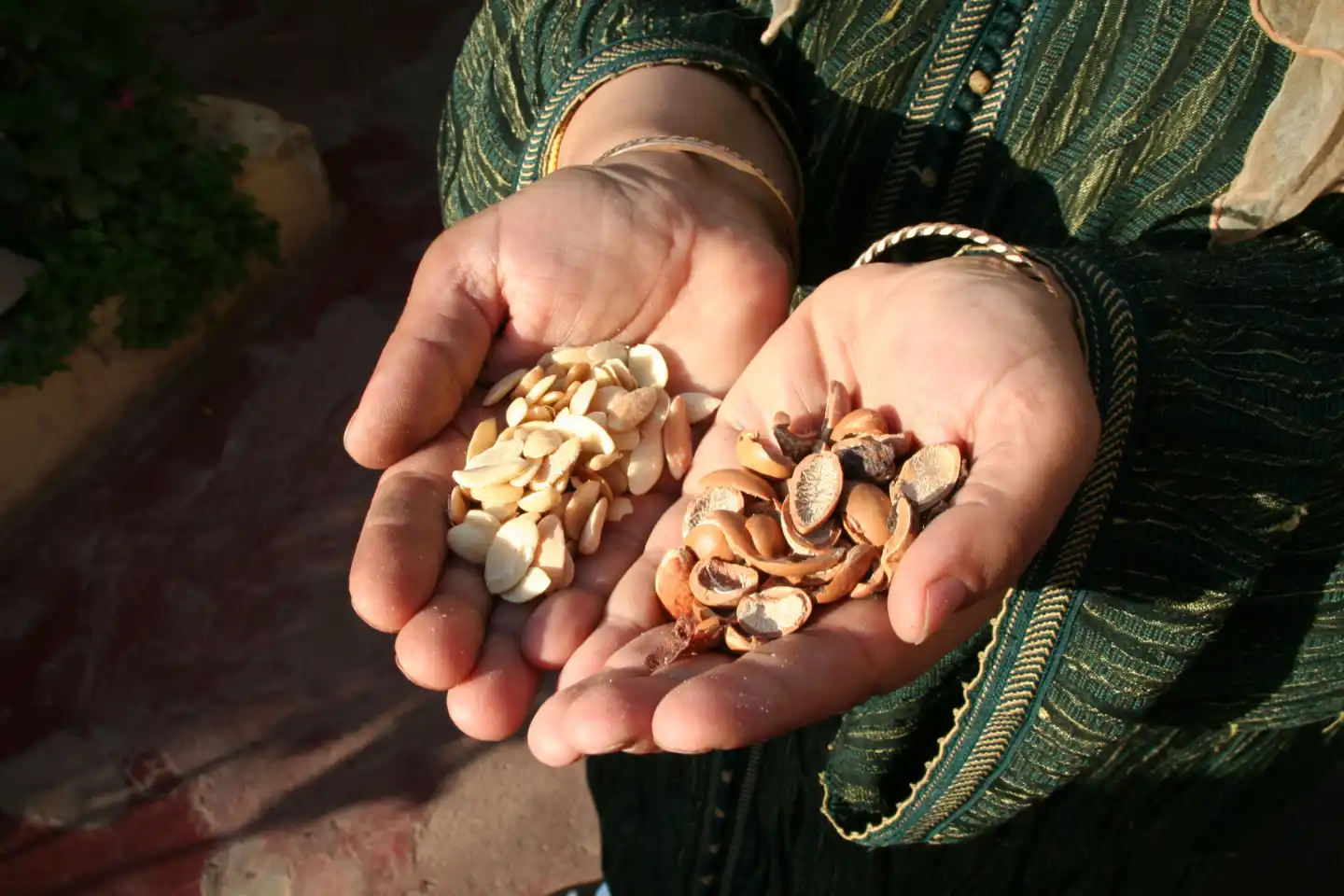
The coast road between Agadir and Essaouira runs through argan country, past the cooperatives and the goat trees, genuine and staged, as we’ve explained in our piece on argan oil and how to spot the fakes.
The climb inland to Paradise Valley is paved the whole way, narrow at the top, and completely changes the landscape within twenty minutes of leaving the coast. Details in our Paradise Valley guide.
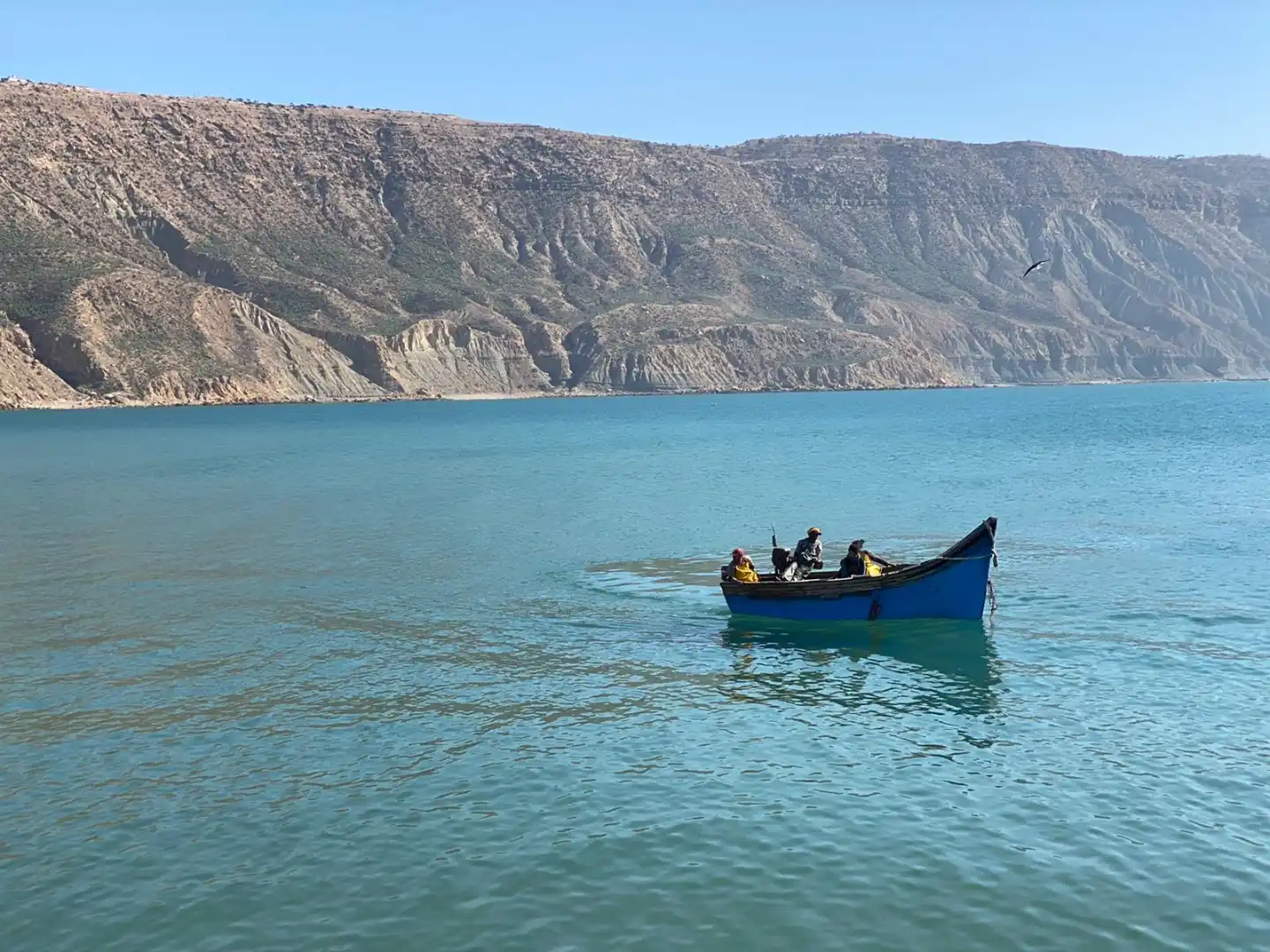
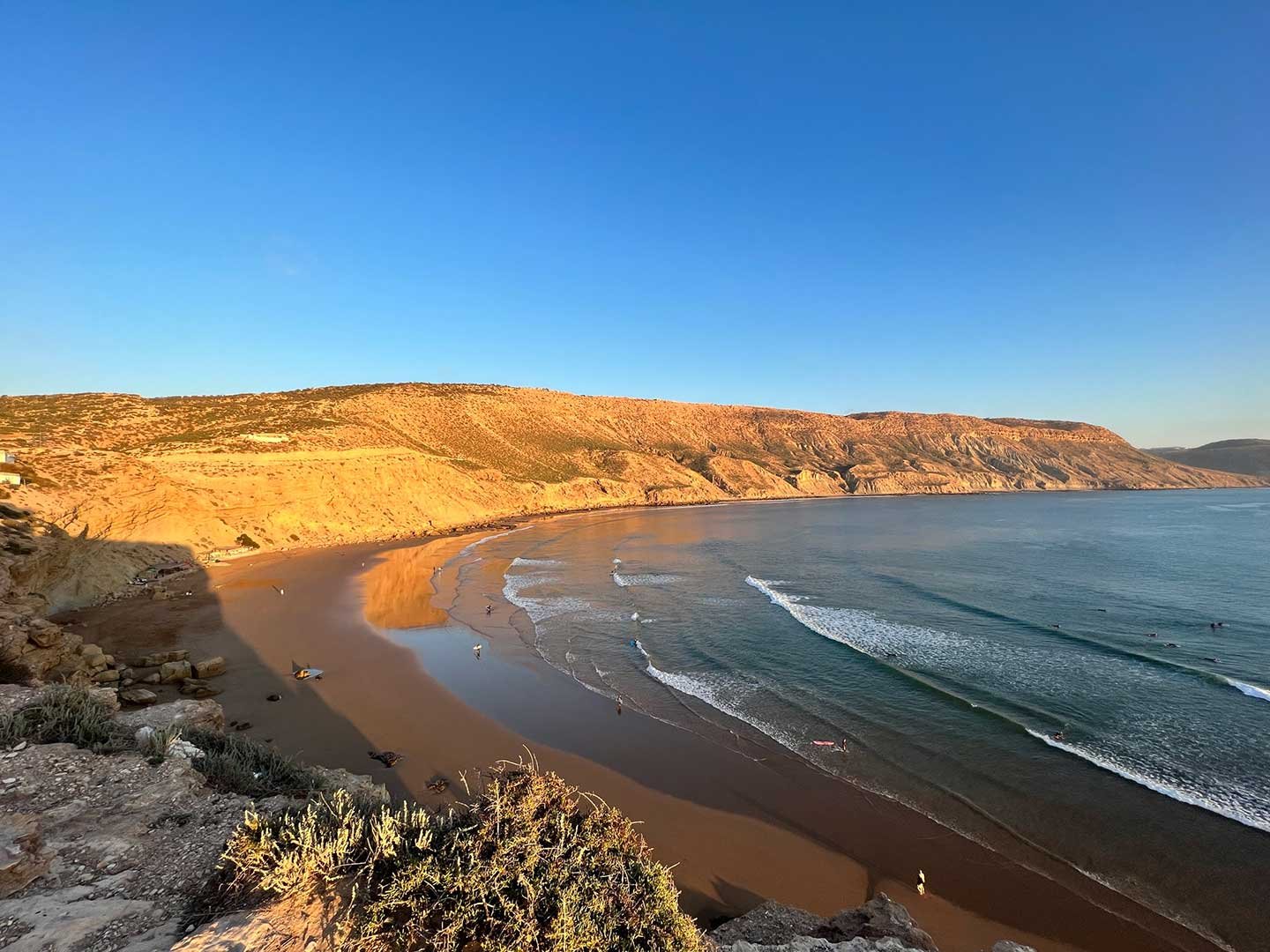
The last descent into Imsouane is the one guests remember, because the bay stays hidden until the final few minutes and then drops into view below the cliffs all at once.
For official guidance before you go, the UK government’s road safety advice for Morocco is current and sensible, and the AA’s driving-abroad pages cover the IDP process for UK licence holders.
If you’d rather not drive at all, we arrange transfers from Agadir and Marrakech for guests, worth mentioning when you book a week, especially if you’re arriving with boards. And if you’re weighing where to base yourself once you’re here, our guide to where to stay in Imsouane covers the options including parking, which not every place has.
Frequently asked questions
Do I need an international driving permit for Morocco?
Legally no, if your licence is in French, English or Arabic. Practically yes, rental companies often ask for one anyway and it makes checkpoint conversations quicker. It’s cheap and quick to obtain from your national motoring association, so there’s little reason not to have one.
What are the speed limits in Morocco?
40 km/h in built-up areas, 100 on open roads and 120 on motorways. Enforcement has tightened considerably and fixed cameras are common. The classic trap is a town approach where the limit drops to 40 and a radar sits just past the sign.
What happens at a gendarmerie checkpoint in Morocco?
Usually nothing, you’re waved through. If stopped, slow early, put your window down, keep your hands visible, wait for the officer to speak, hand over your licence and papers, and wait to be dismissed. They’re checking documents, not targeting tourists, and being relaxed and polite shortens it.
Can you drink and drive in Morocco?
No. Morocco enforces a zero blood-alcohol limit for drivers, not a low limit, zero. This is the rule visitors most often assume has some flexibility in it, and it doesn’t.
What do parking guardians in Morocco do?
They watch your car while you’re away, and it’s a real semi-formal job rather than a scam. Pay 2–5 dirhams for a short stop, 10–20 for a few hours and more overnight, when you leave rather than on arrival. Keep coins handy.
Does rental car insurance in Morocco cover everything?
No. Third-party liability is included by law, covering damage you cause to others, but damage to your own rental car isn’t. Collision damage waivers usually carry a large excess and commonly exclude tyres, windscreen and undercarriage, precisely what gets damaged on rough roads. Photograph the car thoroughly before you drive off.
What does it mean when a Moroccan driver flashes their headlights?
It means “I’m coming through”, not “after you”, the opposite of the British convention, and the most dangerous misunderstanding available to a visiting driver. A line of oncoming cars flashing at you generally means a checkpoint or speed trap ahead, so slow down.
Is it safe to drive at night in Morocco?
Between towns, we’d avoid it. Unlit carts, animals on the road, pedestrians on the hard shoulder and mopeds without lights are all common, and they’re much harder to see after dark. Daytime driving on the same roads is straightforward.


0 Comments