

By Olas Surf Team — 4 August 2026
Visiting Morocco during Ramadan is not a problem to be managed, but it is a genuinely different trip and worth understanding before you book. For one month the country’s daily rhythm inverts: the afternoons empty out, sunset becomes the event of the day, and the streets that were dead at four in the afternoon are full at ten at night.
Some travellers arrive without realising and find it difficult. Others plan their trip around it deliberately. Both reactions make sense.
When Ramadan falls
Ramadan follows the lunar calendar, so it moves roughly eleven days earlier each year against the Western one.
2027: expected to begin around 8 February and run to about 9 March, with Eid al-Fitr — Aid Sghir here — around 10 March. 2028 would fall roughly late January to late February.
Those dates are projections. Morocco confirms the start by physical moon sighting, announced by the Ministry of Habous and Islamic Affairs the evening before, so the actual date can shift by a day either way. If your trip is close to the boundary, don’t assume — the announcement is national news and easy to find.
Worth noting for anyone planning a surf trip: in the late 2020s Ramadan lands squarely in February and March, which is the biggest, cleanest swell window of the year on this coast. Our wave height archive shows March averaging the largest surf of any month. That overlap will matter to some people.
What actually changes
Muslims who are fasting take no food or water between dawn and sunset. In February that’s roughly twelve hours; in a summer Ramadan it’s considerably more.
The day flattens out. Mornings run more or less normally. The middle of the afternoon is when you notice it — people are tired, hungry and running down, and things slow markedly between about two and six.
Working hours shorten. Government offices, banks and many businesses shift to a compressed schedule, often finishing early afternoon. Anything administrative takes longer.
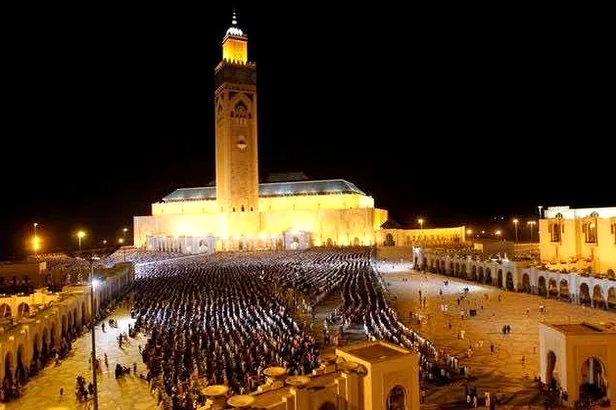
Sunset is the whole day’s pivot. In the half hour before, the streets clear completely. Taxis vanish. Shops shut mid-transaction. Then the call to prayer sounds, everyone eats, and for about forty minutes the country is entirely indoors and silent. It’s genuinely striking the first time you see it.
Evenings come alive. After ftour — the meal that breaks the fast — towns fill up. Cafés open, families walk, children play late, and the atmosphere is closer to a festival than a fast. Nightlife in Ramadan runs later than the rest of the year, not shorter.
What stays open in Morocco during Ramadan
The practical question.
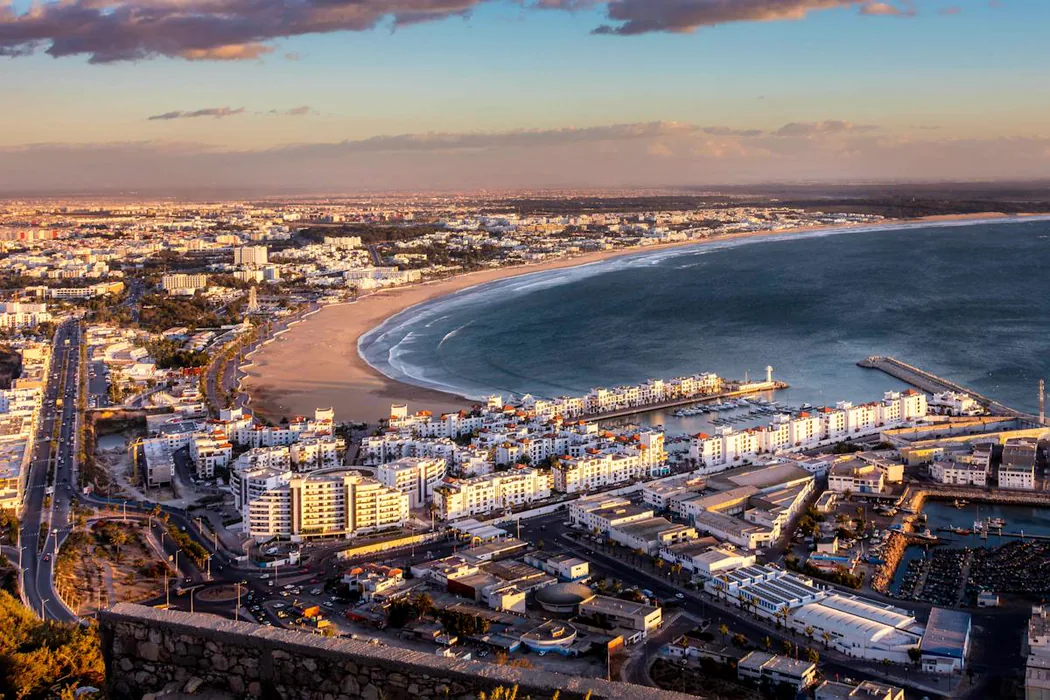
Tourist restaurants and hotels serve normally. Anywhere geared to visitors will feed you during the day. In Marrakech, Agadir and the coastal towns you will not go hungry.
Local cafés and restaurants mostly close until sunset, then open late and stay busy. The small place you ate at yesterday may be shuttered at lunchtime.
Shops, markets and supermarkets stay open, often with shifted hours. Food shopping is easy.
Museums and monuments stay open with reduced hours in some cases. Check before travelling across a city for one.
Alcohol is harder to find. Some licensed venues stop serving for the month and shops that normally sell it may not. Hotels catering to tourists generally continue. If this matters to your trip, plan for it.
Transport runs, though long-distance buses cluster awkwardly around sunset and drivers are fasting too. Avoid booking a journey that arrives right at ftour.
Etiquette that actually matters
Nobody expects visitors to fast, and nobody will be hostile if you don’t. What people notice is discretion.
- Don’t eat, drink or smoke in the street during daylight. Eat indoors, in your accommodation, or in a restaurant serving tourists. This is the one that matters most, and it’s about not eating in front of someone who’s twelve hours into a fast rather than any rule about you.
- Carry water discreetly and drink it out of sight. Nobody expects you to dehydrate.
- Dress a little more conservatively than you otherwise might. Same principle.
- Say “Ramadan Mubarak” or “Ramadan Karim”. It’s a small thing and it lands well.
- Be patient in the afternoon. Someone short with you at four in the afternoon has not eaten since before dawn.
- Accept an invitation to ftour if offered. It happens more than you’d think, and it’s one of the better things that can happen to you as a traveller here.
None of this is onerous. It’s the same courtesy you’d extend anywhere, applied to a specific situation. More general etiquette is in our guide to a first trip to Morocco.
Ftour, and the food worth staying for
The meal that breaks the fast is the reason a lot of people say Ramadan is the best month to eat in Morocco.
It starts with dates and milk, following tradition. Then harira — a tomato, lentil and chickpea soup that appears year-round but belongs to this month. Alongside it: chebakia, sesame pastry twisted into a flower and soaked in honey, made in enormous quantities in the weeks beforehand. Msemen and baghrir, the flat and the honeycomb pancakes. Boiled eggs. Dried fruit and nuts.
Then, an hour or two later, people eat dinner properly.
Many restaurants offer a set ftour menu at sunset, and it’s usually excellent value and the best cooking of their year. If you’re in Morocco during Ramadan and eat one meal out, make it this one. Book it, because they fill.
Surfing and outdoor activity
The specific case we know about.
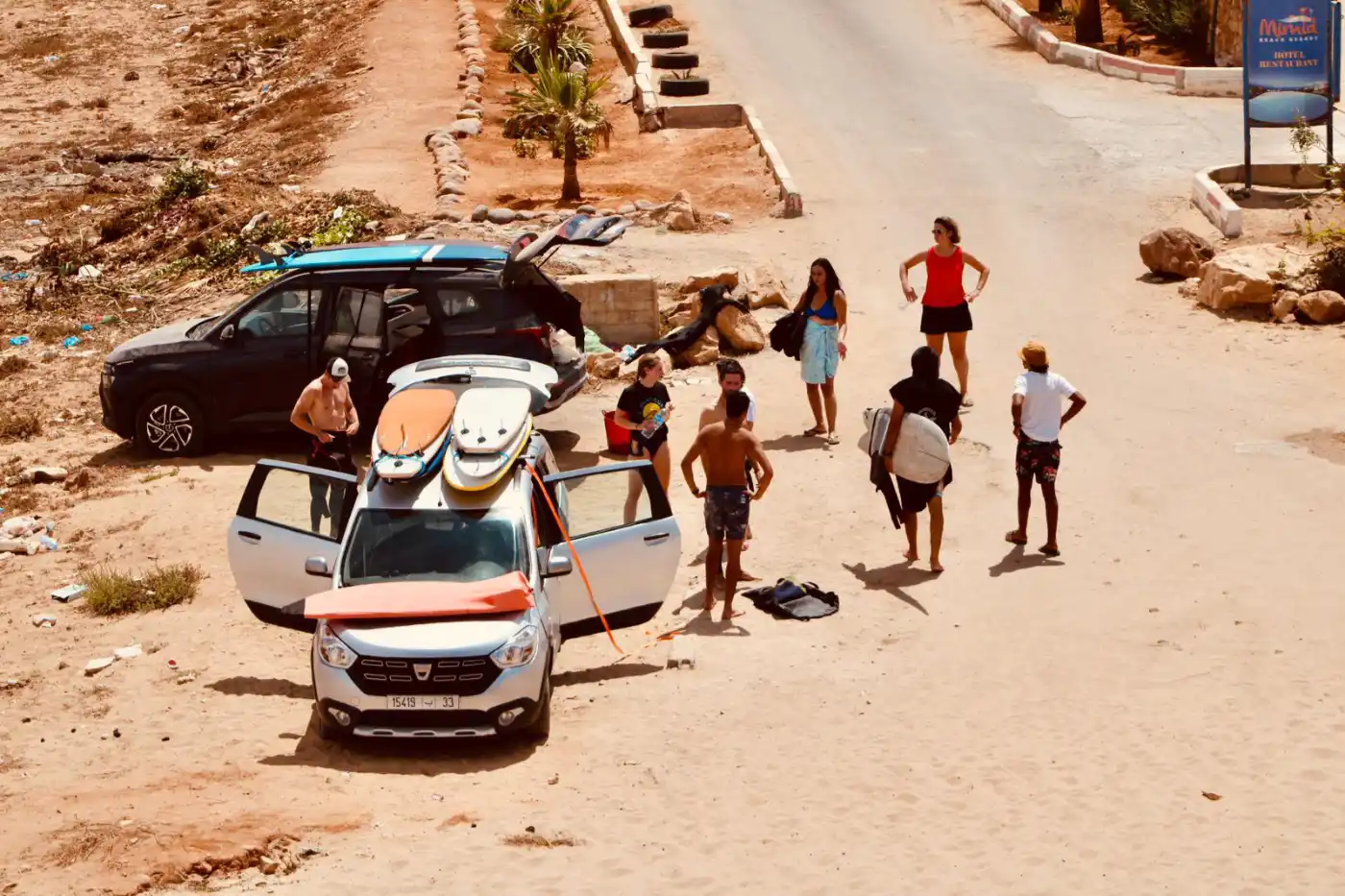
Surf schools, camps and guides run through Ramadan. Instructors who are fasting will often work mornings and take the afternoon, so lessons cluster earlier in the day. Ask when you book rather than assuming an afternoon session.
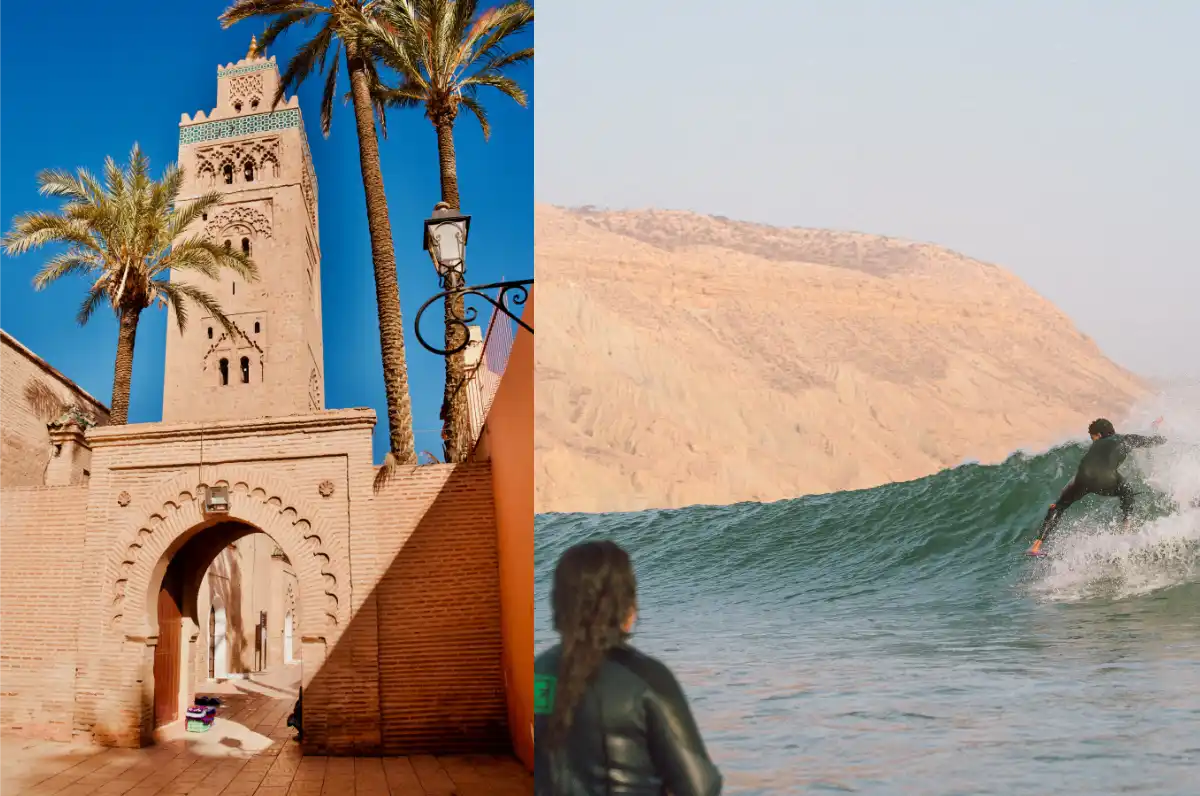
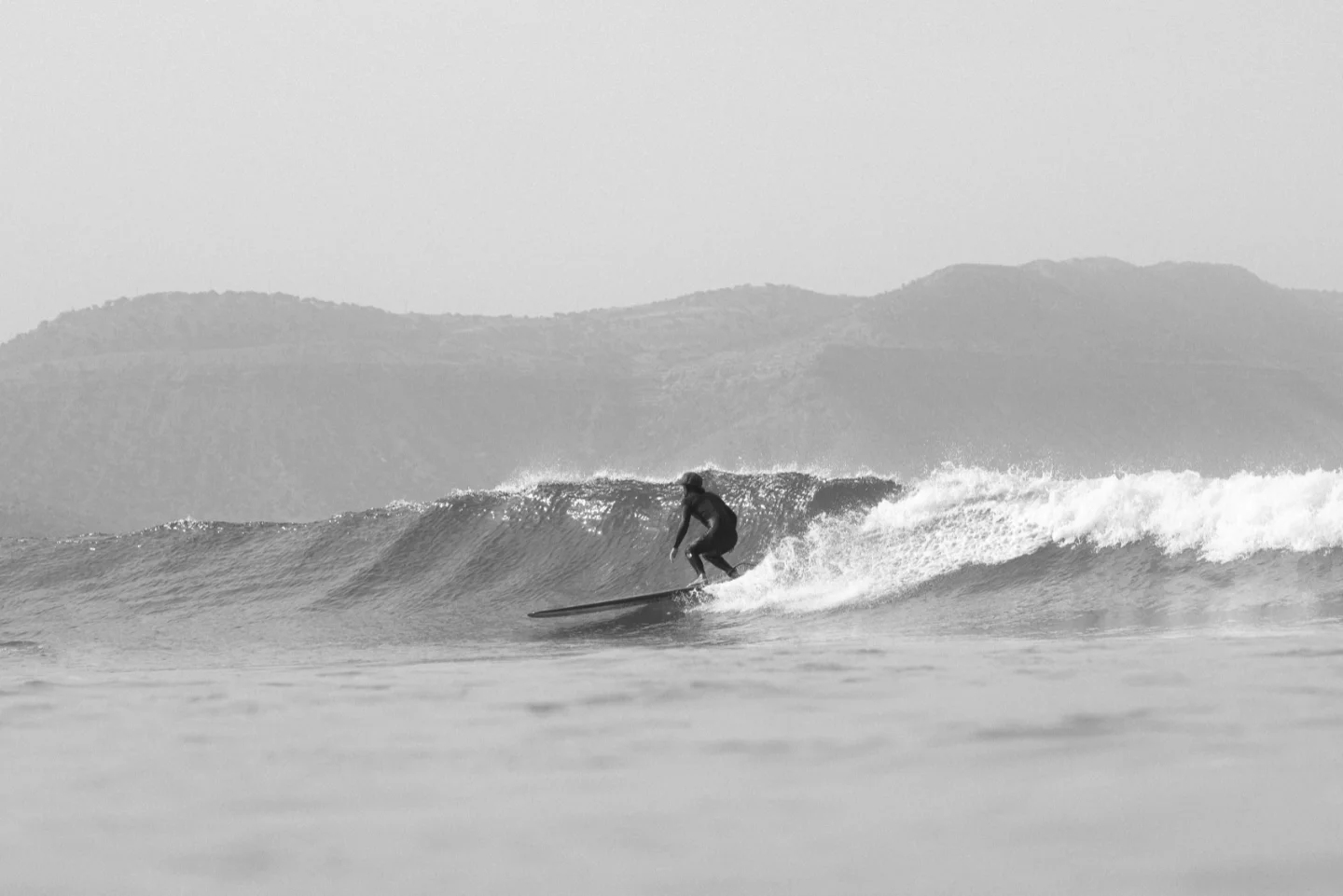
Practically, the water is unaffected and the swell doesn’t care. February and March are excellent months to surf here. What changes is the pace on land — an afternoon session followed by a village that’s completely closed until sunset takes some adjusting to.
Fasting instructors deserve a note. Not eating or drinking, then spending two hours in the Atlantic coaching beginners, is hard work. Most manage it without comment. A little patience and an early finish go a long way.
If you’re weighing whether the month suits your trip, our guide to where to stay in Imsouane covers what’s open when, and the things to do around the village mostly carry on regardless.
Should you visit Morocco during Ramadan?
Our honest read.
Go if you want to see the country at its most itself, you like evenings more than afternoons, you’re interested in food, or you’re coming to surf and February and March suit you. Prices outside the Eid week are often lower and the big sites are quieter.
Think twice if your trip depends on long restaurant lunches, a drink in the sun, packed daytime itineraries, or lots of administrative business. Also if you’re travelling with small children on a tight eating schedule, the afternoon closures are a genuine nuisance.
Avoid the Eid week specifically unless you have a reason to be there. Eid al-Fitr is a national holiday of two or three days when much of the country closes properly, transport is booked solid with people travelling to family, and prices spike. It’s a wonderful thing to witness and a difficult week to move around in.
For current dates and official guidance, the UK government’s local laws and customs page for Morocco is kept up to date, and the BBC’s explainer on Ramadan is a good short primer on the religious background if it’s unfamiliar.
We run camp weeks straight through the month and a fair number of guests come specifically for the swell without realising what else they’re arriving into. If your dates fall inside it, mention it when you book and we’ll tell you exactly how the week will run — which sessions, which meals, and what the village will be like at four in the afternoon.
Frequently asked questions
When is Ramadan in Morocco in 2027?
It’s expected to begin around 8 February 2027 and end about 9 March, with Eid al-Fitr around 10 March. Morocco confirms the start by physical moon sighting the evening before, so the date can move by a day. Ramadan shifts roughly eleven days earlier each year.
Can tourists eat in public during Ramadan in Morocco?
You can eat, but do it indoors or in restaurants serving visitors rather than in the street. Nobody expects tourists to fast and nobody will be hostile, but eating, drinking or smoking openly in front of people who’ve gone without since dawn reads as thoughtless. Carry water and drink it discreetly.
Are restaurants open in Morocco during Ramadan?
Tourist restaurants and hotels serve normally through the day. Local cafés and restaurants mostly close until sunset, then open late and stay busy well into the night. Shops, markets and supermarkets stay open with adjusted hours, so self-catering is straightforward.
Is it a bad time to visit Morocco?
Not at all — it’s a different trip rather than a worse one. Sites are quieter, prices outside Eid are often lower, and the evening atmosphere is one of the best things about the country. It suits you less if your holiday depends on long lunches, daytime drinking or packed afternoon itineraries.
What is ftour and can visitors join?
Ftour, also called iftar, is the meal that breaks the fast at sunset — dates and milk, then harira soup, chebakia pastries, msemen and more. Many restaurants offer a set ftour menu, usually excellent value and worth booking. If a Moroccan family invites you to theirs, accept.
Can you drink alcohol in Morocco during Ramadan?
It’s harder to find. Some licensed venues stop serving for the month and shops that usually sell alcohol may not. Hotels catering to tourists generally continue. If it matters to your trip, check with your accommodation before you arrive.
Do surf schools operate during Ramadan?
Yes. Sessions tend to cluster in the morning, since instructors who are fasting often work early and rest in the afternoon. Ask when booking rather than assuming an afternoon slot. The swell is unaffected, and February and March are among the best surf months of the year here.
Should I avoid travelling during Eid al-Fitr?
If you can. Eid is a national holiday of two or three days at the end of Ramadan when much of the country properly closes, transport books out with families travelling home, and prices rise. It’s a remarkable thing to witness but a difficult few days to move around in.
0 Comments