
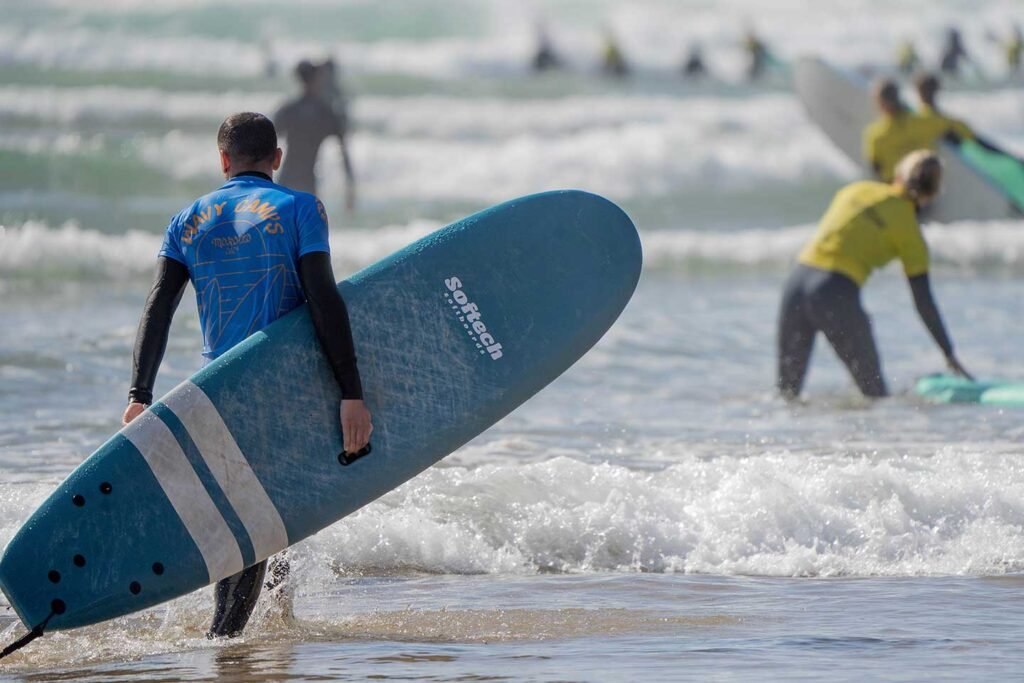
Surfing in Morocco is one of those things that sounds more intimidating than it actually is. The Atlantic coast is long, the waves are consistent, the water stays warm enough for most of the year, and the whole scene is genuinely easy to fall into — even if you’ve never been on a board.
You don’t need experience. You don’t need your own gear. You just need to show up.
Here’s everything worth knowing before your first session.
Why Morocco Works So Well for First-Time Surfers
Morocco has an unusual combination of things that make it genuinely great for beginners — not just “fine,” but actually ideal.
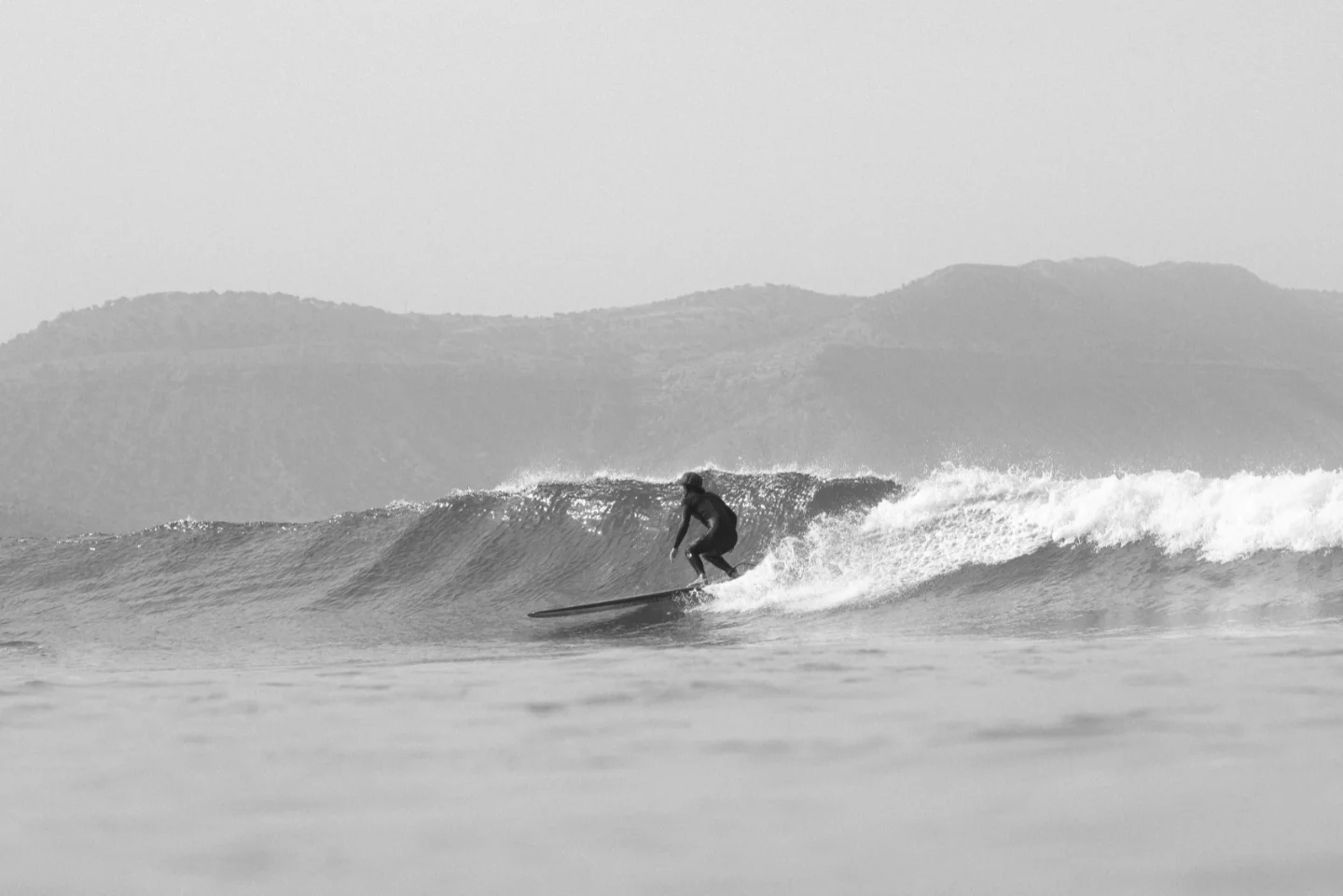
The Atlantic swell hits the Moroccan coast from the north and west all year round, which means there’s almost always something rideable. But the coast also has protected bays that absorb some of that energy, producing long, slow, rolling waves that give beginners enough time to actually stand up. At Imsouane, the bay wave breaks for up to 800 metres on a good day — long enough that you’re still riding while you’re still figuring out what happened.
It’s also affordable. Surf lessons with a qualified instructor typically cost less than half of what you’d pay in Portugal or Spain. The accommodation is solid, the food is excellent, and there’s a relaxed energy to the coast that makes it easy to slow down and actually learn something.
Surfing in Morocco: When to Go
Almost any time of year works, but some months are better than others.
October through April brings bigger swells — great for intermediate surfers, but still manageable for beginners at the right spot. The water cools to around 17–19°C, so a 4/3mm wetsuit is the call from December to April, with a 3/2mm fine in October, November and May. May through September is when the waves mellow out and the sun shows up reliably. This is prime time for beginners — smaller, cleaner waves, full days of sunshine between sessions, and water that reaches 22°C by August.
The sweet spot for most people is March to May or September to October. The swell is consistent, the crowds are smaller, and the weather is genuinely lovely. For a full breakdown of conditions by month, this guide to the best surf season in Morocco covers it well.
Surfing in Morocco — The Best Spots for Beginners
The two most-visited areas for surf travel along the coast are Taghazout and Imsouane.
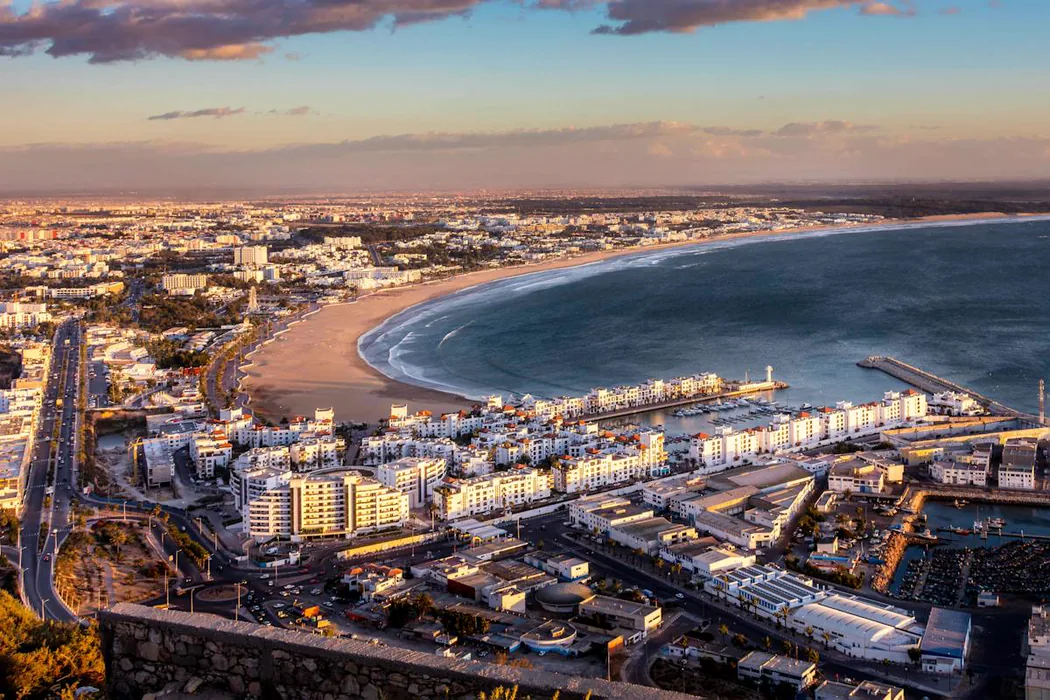
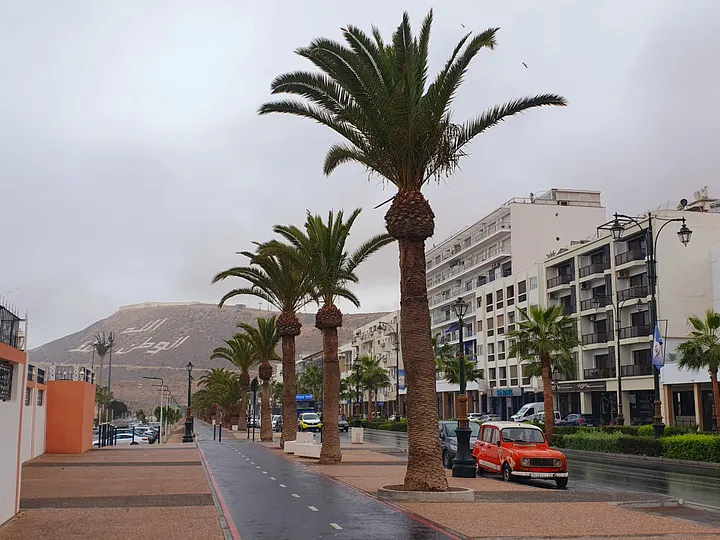
Taghazout sits about 20km north of Agadir. It’s busier — more camps, more instructors, more of a scene. The reef breaks there aren’t ideal for total beginners, but there are beach breaks nearby that work fine for early sessions.
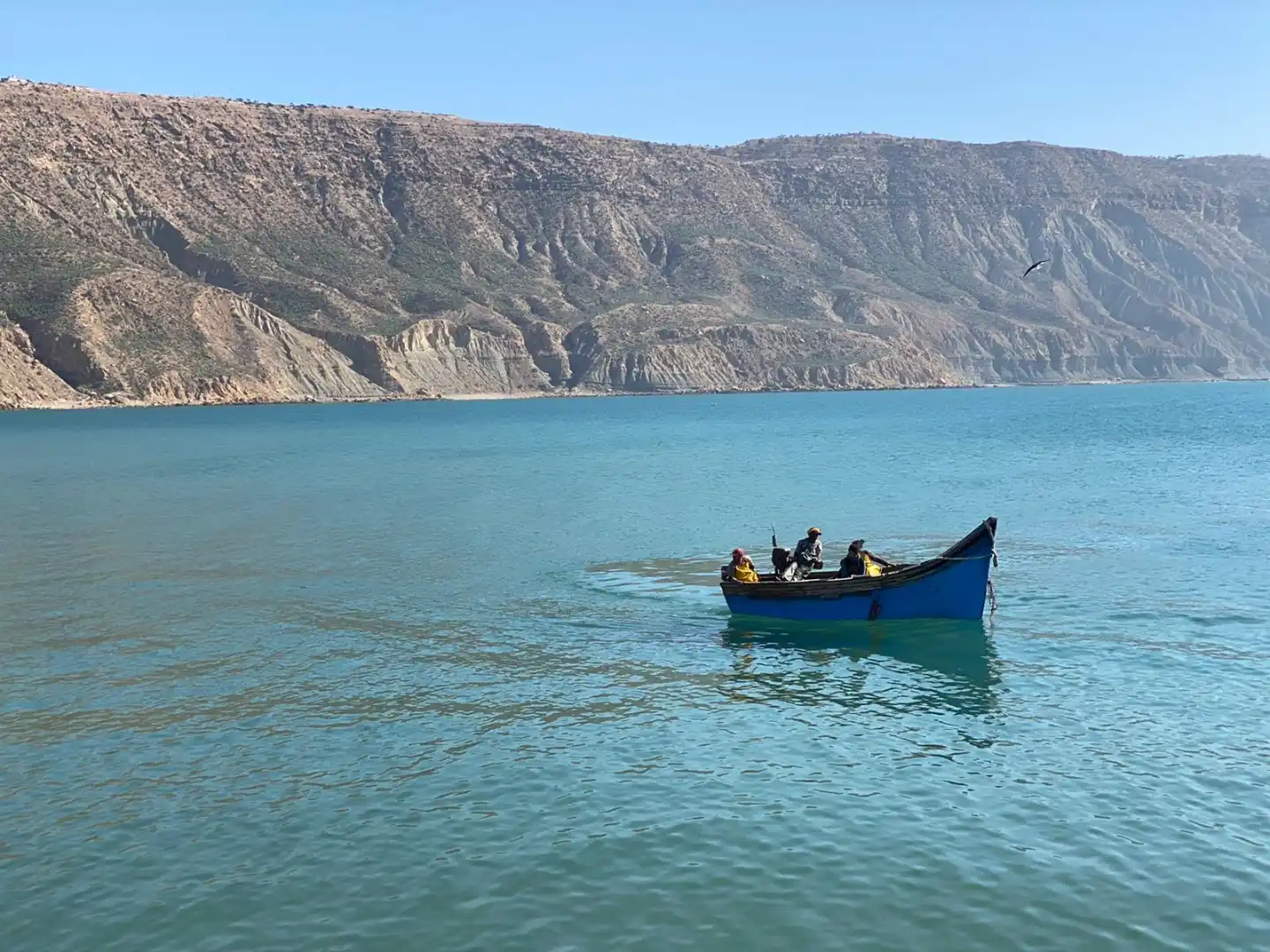
Imsouane is a different world. The village is small and low-key, and the bay produces what’s considered one of the longest rideable waves in Africa. It breaks slow, it holds its shape, and the sandy bottom means you’re not landing on rock when you fall off — which you will, and that’s fine. A lot of people arrive planning to stay three nights and end up rebooting their flights at the two-week mark.
For a first trip, Imsouane wins. That long, forgiving wave does something to people.
What Your First Surf Lesson Actually Looks Like
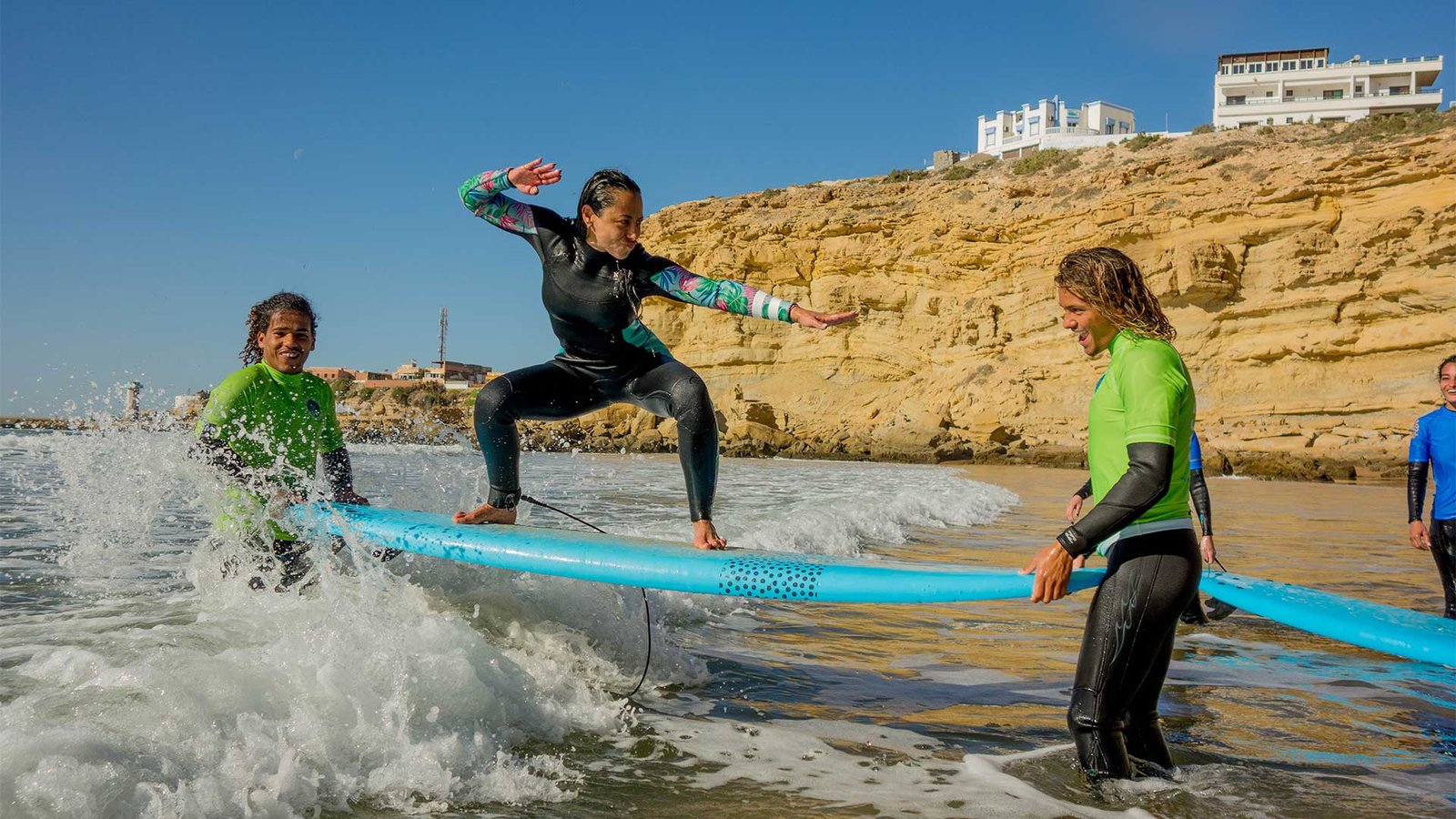
Your first lesson starts on the sand, not in the water. A good instructor will spend 20–30 minutes on the beach going through your stance, how to read a wave, when to pop up, and where to position your weight on the board. It sounds slow. It isn’t. Those 30 minutes on the sand are the difference between standing up on day one and spending three sessions confused about why you keep falling forward.
Then you paddle out. Your instructor pushes you into waves, shouts when to pop up, and watches your form from the water. Most people get a few seconds standing on their first day. Some get much more.
Sessions run 1.5 to 2 hours. By the end, you’ll be tired in that specific way that makes you eat twice as much and sleep deeply.
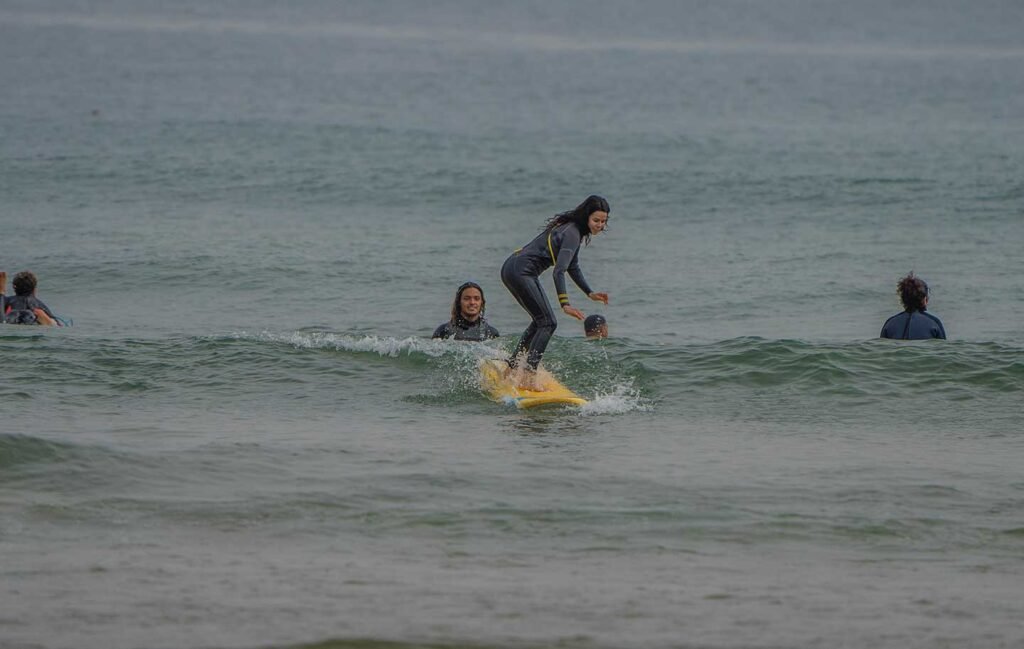
What board should you use?
As a beginner, bigger is always better. A foam longboard — anywhere from 8 to 10 feet — gives you the volume and stability you need to actually catch waves instead of sliding straight off. Your surf camp will have boards sorted, but if you want to understand the options before you arrive, this guide to choosing the right surfboard in Morocco is worth a read.
Surfing in Morocco at a Surf Camp: Is It Worth It?
For beginners — yes, without hesitation.
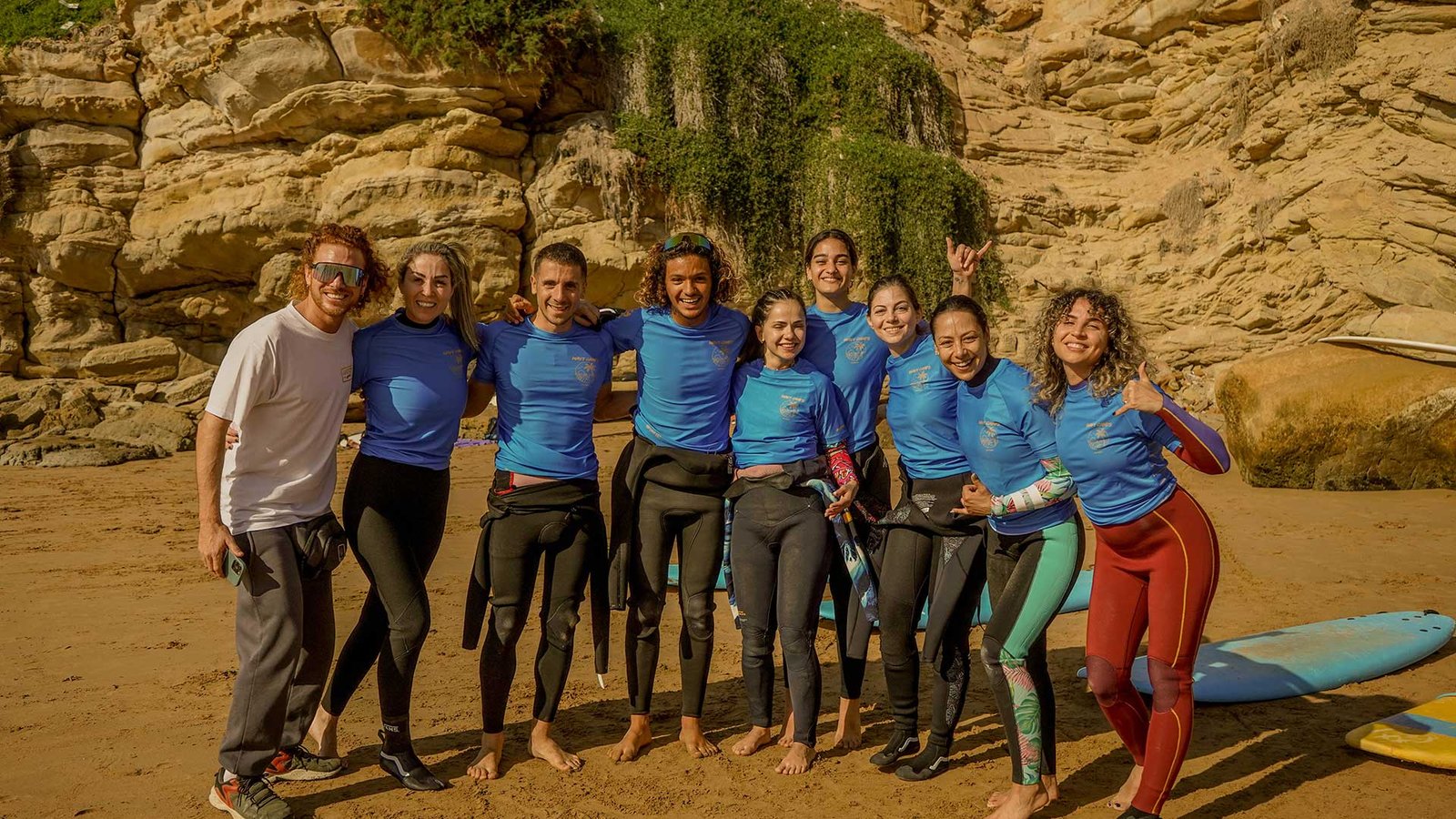
Going solo means figuring out board hire on your own, finding a spot that’s actually safe for your level, and hoping you pick up technique from watching other people. Going with a surf camp means your board is ready when you wake up, your instructor knows which break to use depending on the swell and wind direction, and you’re surrounded by people at roughly the same level as you. The social side matters more than you’d expect — watching someone else stand up for the first time is genuinely motivating in a way that’s hard to explain.
Olas Surf Camp in Imsouane runs small groups, so you actually get feedback from your instructor rather than waiting your turn in a crowd. The team surfs every day — they know the bay like their own kitchen, and they’ll put you exactly where your chances of standing up are highest.
You can go the surf and stay route if you want everything handled — accommodation, lessons, meals — or keep it flexible with morning sessions only.
Ready to book? Check availability and packages at Olas Surf Camp — spots fill fast in peak season.
Surfing in Morocco: life between sessions
This is the part people don’t expect to love as much as they do.
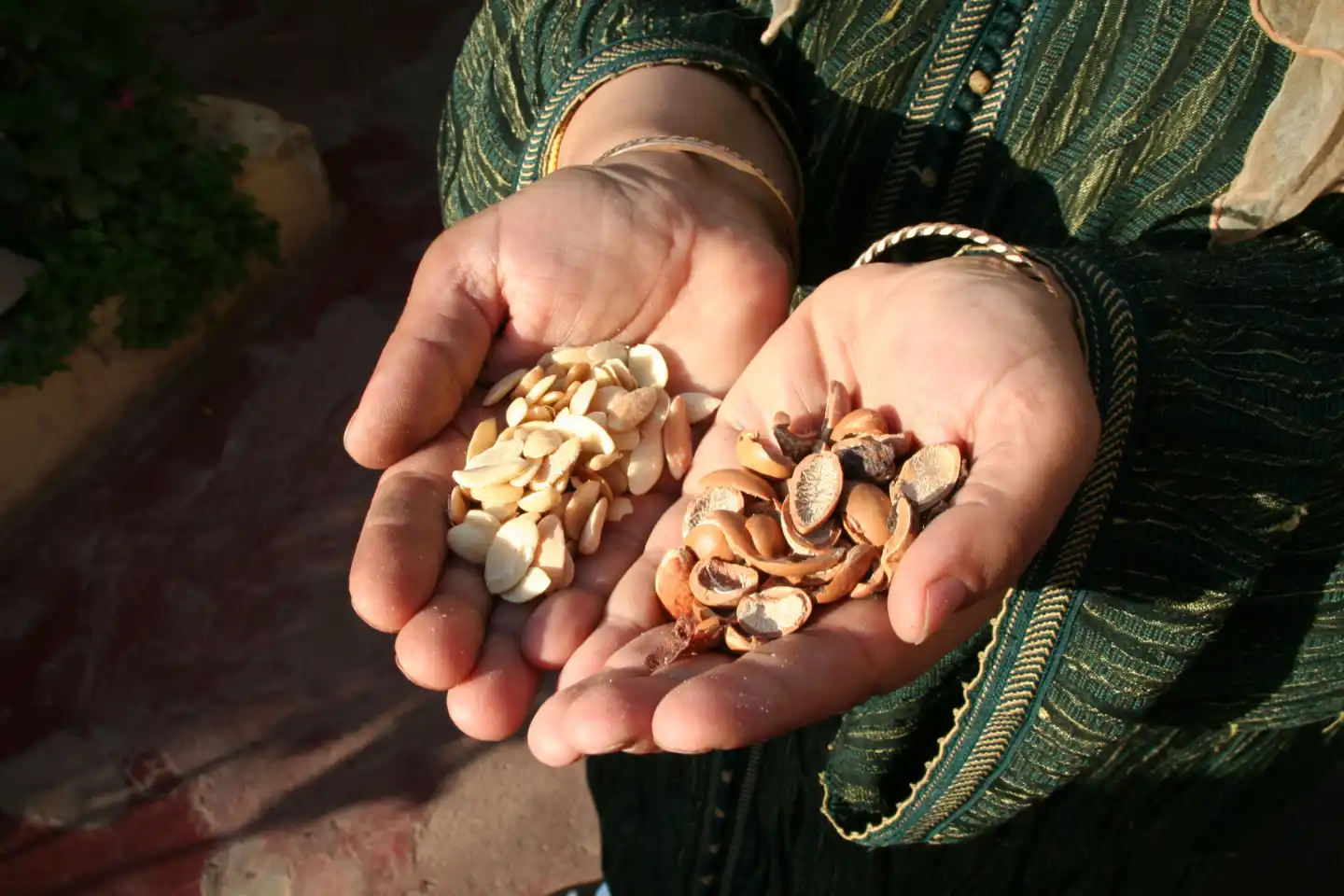
Imsouane has a rooftop sunset ritual that happens every evening without being organised by anyone. Somebody always has a guitar. The food is fresh — fish from the port, tagines made from scratch, argan oil on everything. Days move slowly in a way that doesn’t feel wasted.
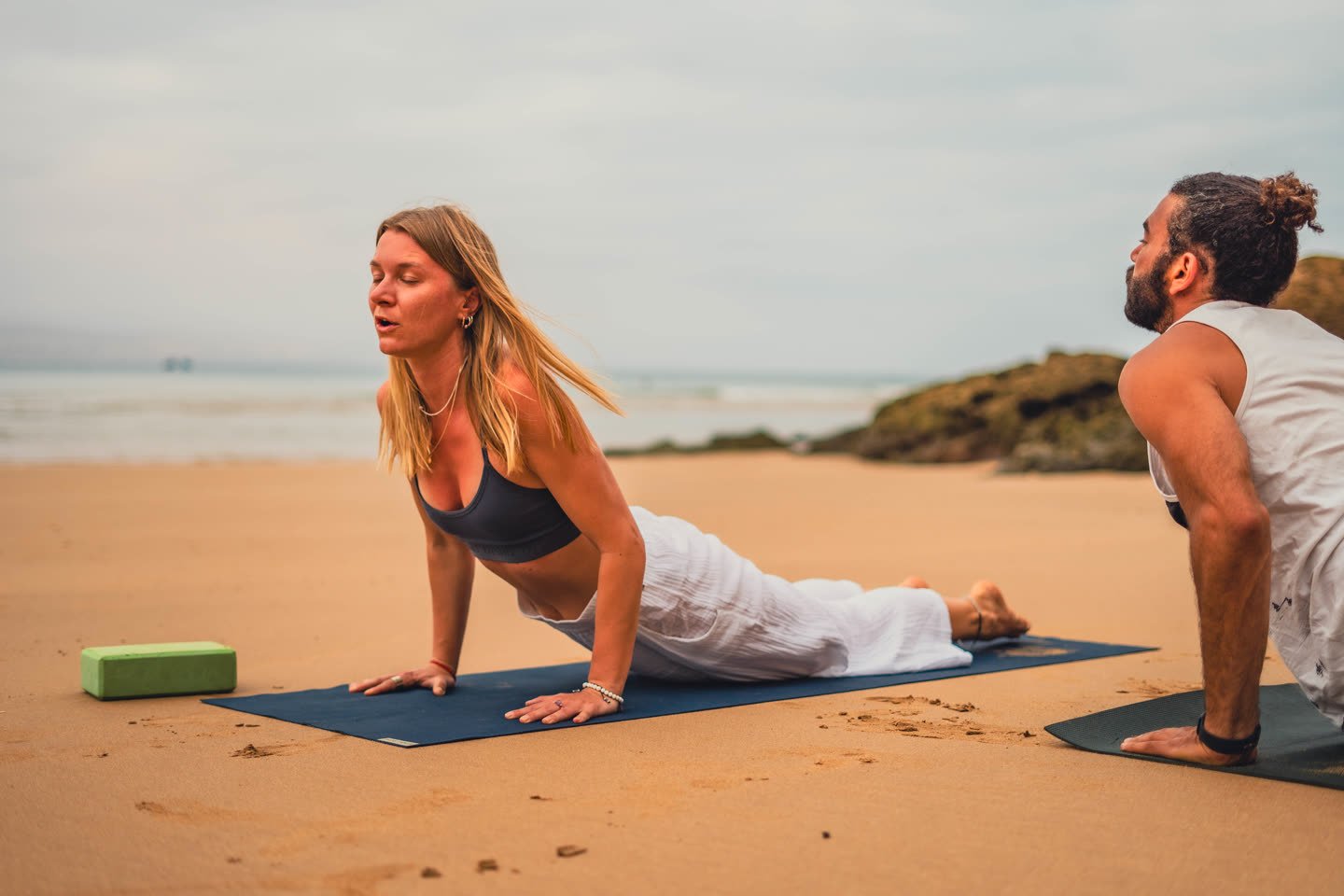
Between sessions, most people read, wander down to the port, eat too much bread, and occasionally make a half-hearted attempt at some work. If you want more structure, there are extra activities available — sandboarding near Timlaline, day trips to Agadir, hammam visits. But most people end up just surfing and eating and watching the waves come in.
What to Pack and How to Get There
A few practical things worth knowing before you go:
- Flights: Agadir (AGA) is the closest airport — about 1.5 hours from Imsouane by car or shared taxi. Marrakech also works if you want a few days in the city first.
- Getting there: Shared grand taxis run from Agadir toward Imsouane. Expect to pay around 50–70 MAD per seat. Most surf camps can arrange a pickup if you ask in advance.
- Cash: Imsouane is mostly cash. Bring dirhams from Agadir — ATMs in the village are unreliable.
- Sun: The Moroccan sun is intense even on cloudy days. High-SPF sunscreen, a rash guard, and a hat between sessions are non-negotiable.
- Fitness: You don’t need to be an athlete, but surfing does use your shoulders and core in ways you won’t expect. A few weeks of swimming beforehand won’t hurt.
For checking swell and conditions before you book, Surfline is the most reliable forecasting tool for the Moroccan coast. Lonely Planet’s Morocco guide is also solid for general travel planning around your trip.
If you’re ready to lock in dates, Olas Surf Camp’s booking page has everything you need — packages, pricing, and what’s available.
Once you’re paddling, the best places to surf in Morocco for your level vary by season — start mellow at Imsouane Bay, build up from there.
Frequently Asked Questions
Do I need any surfing experience to come to Morocco?
Not at all. Most people who arrive at surf camps in Morocco have never stood on a board. Lessons start from absolute zero — paddling, stance, reading waves, timing your pop-up — and build from there. If you can swim, you can learn to surf.
How long does it take to stand up on a surfboard?
Most beginners get to their feet within the first session or two, even if it’s only for a few seconds. Actually riding a wave with control takes longer — usually a week of consistent time in the water. Getting out every day makes a bigger difference than anything else.
Is surfing in Morocco safe for beginners?
Yes, if you’re at the right spot with a qualified instructor. Imsouane’s bay wave is particularly well-suited to beginners — it breaks slowly, holds its shape, and has a sandy bottom. Avoid reef breaks until you’ve built up proper experience and some local knowledge of the area.
What should I wear in the water?
Summer (June–September): a rash guard or shorty is usually enough, with water reaching 22°C. December to April: a 4/3mm wetsuit in water around 17–19°C. October, November and May: a 3/2mm is plenty. A full-length suit isn’t usually necessary unless you’re there in January or February.
Can I do other things besides surf?
Easily. Morocco rewards the curious traveler — sandboarding, hammams, day trips to Agadir or Essaouira, hiking, local markets. Most people build a trip where surfing is the main event but not the only one. The mornings are for waves; the afternoons belong to wherever curiosity takes you.
How much does surfing in Morocco cost?
A single surf lesson typically runs €25–€45 depending on group size and camp. A full week with accommodation, meals, and daily lessons usually lands somewhere between €350–€700 — considerably less than comparable destinations in Portugal, Spain, or the Canaries.
Do surf camps in Morocco provide all the gear?
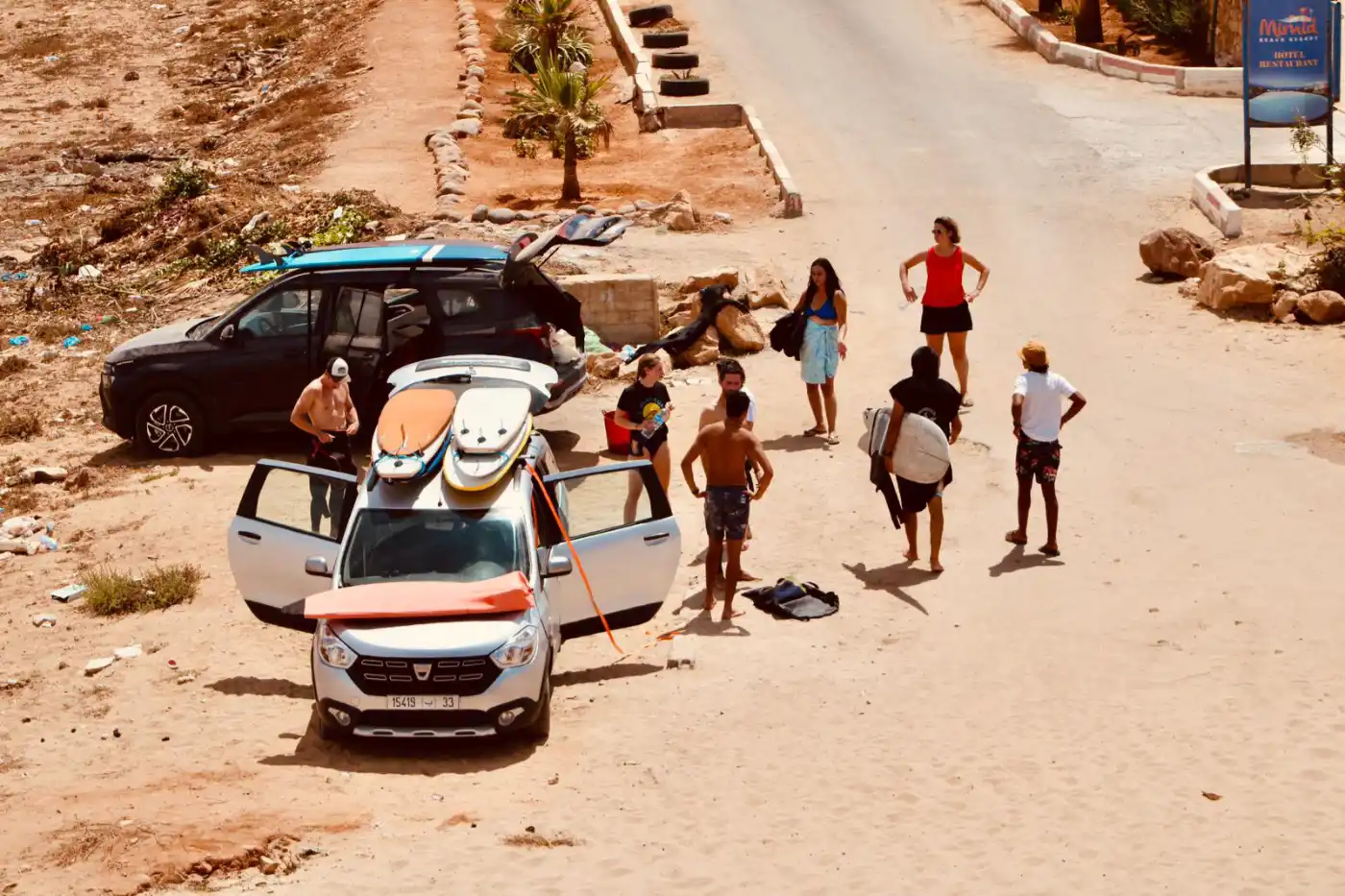
Yes. Boards, wetsuits, and leashes are all included at most camps. You don’t need to bring anything except sunscreen, a rashguard, and yourself. Some camps also provide reef shoes, which are worth wearing if you’re surfing anywhere near rocks.
0 Comments