
A surf trip to Morocco is one of the best decisions a surfer can make from Europe — consistent Atlantic waves, low costs, good food, and a country that genuinely welcomes travellers. But like any trip, the difference between a great experience and a frustrating one usually comes down to how well you planned before you left.
This guide covers everything: when to go, where to stay, how to get there, what to budget, and what to pack. No padding, just the useful stuff.
Why Morocco for a Surf Trip?
Morocco has been on surfers’ radars since the 1960s, when the first Europeans discovered the point breaks around Taghazout. What’s kept it relevant isn’t just nostalgia — it’s the surf itself. The country has 2,500km of Atlantic coastline, consistent swells from September through April, and a remarkable variety of breaks covering every skill level.
Add in: sub-€1,000 return flights from most European cities, accommodation at a fraction of European costs, world-class fresh food, and a surf culture that’s mature enough to have great infrastructure but not so developed that it feels like a surf resort conveyor belt. Morocco surf holidays hit a sweet spot that’s genuinely hard to find elsewhere.
Choosing Your Base for a Surf Trip to Morocco
Most people base themselves in one of two areas:
Imsouane — Best for Beginners and Intermediates
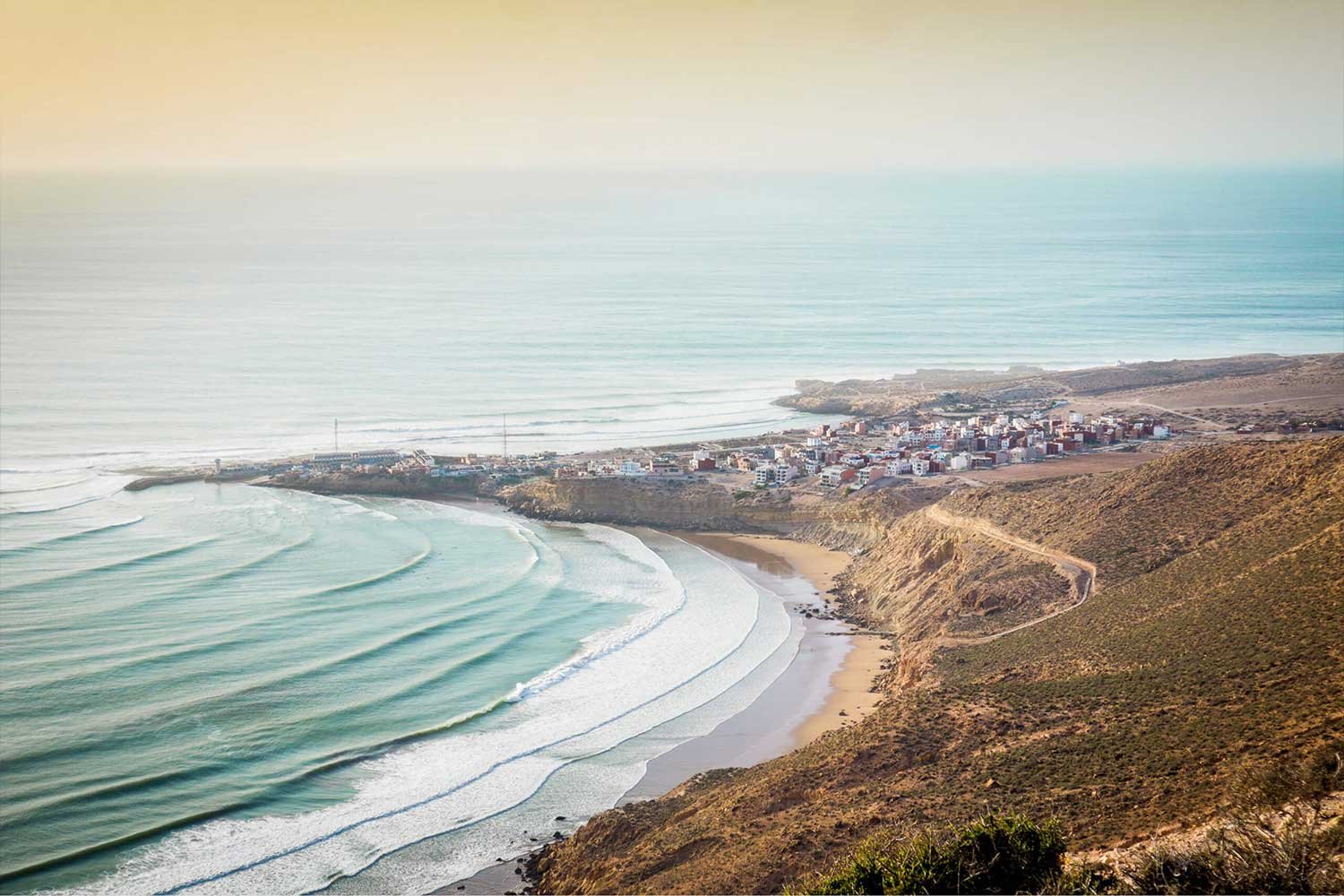
A small fishing village 70km north of Agadir with one of the longest right-hand waves in Africa. The Bay is forgiving, consistent, and works year-round — even on summer swells that would make Taghazout’s breaks go flat. The village is quiet, cheap, and genuinely lovely. If you’re at the learning end of the spectrum or you want to combine surf with a slow, relaxed holiday, Imsouane is the answer.
Taghazout — Best for Intermediate to Advanced Surfers
Morocco’s surf capital, packed with breaks (Anchor Point, Killer Point, Boilers, Hash Point) and surf camp options. More infrastructure, more options, more crowds in the lineup. If you’re comfortable in overhead surf and you want to access multiple world-class breaks in one trip, Taghazout is your base.
Many people combine both in a longer trip — 5–6 days in Imsouane and 5–6 in Taghazout. The drive between them is about 90 minutes.
When to Go: Morocco Surf Trip Timing
- October–November: The sweet spot for most surfers. Swells building, fewer tourists, warm-ish weather, good prices. Excellent for all levels.
- December–February: Peak swell season. Anchor Point fires properly. Water is cooler (15–17°C). Bring a 4/3mm wetsuit. Best for intermediate to advanced surfers who want proper waves.
- March–April: Swells start to ease, weather warms up. Excellent for beginners and intermediates — easier conditions, beautiful spring light. Strong recommendation for first-timers.
- May–September: Smaller swells, warmer water (20–22°C). Better for lifestyle trips than heavy surf progression. Imsouane’s Bay still works well in low-swell conditions; Taghazout’s main breaks need more size.
If you can only go once and you’re a beginner or intermediate: March–April or October–November. If you’re an experienced surfer chasing size: December–February.
How Long to Go
- 7 days: The minimum for a proper surf trip. Gives you 5–6 actual surf days with buffer for travel and any flat spells. Best with a single base.
- 10–14 days: The ideal length for most surf holidays to Morocco. Enough time to explore two areas, let your surfing find its rhythm, and not feel rushed.
- 3–4 weeks: For digital nomads or long-term travellers. Morocco allows 90-day stays for UK, EU, and US citizens without a visa.
Getting There
Flights
Agadir (Al Massira Airport, AGA) is the main gateway for south Morocco surf travel. Direct flights from the UK run on easyJet, Ryanair, and TUI from London, Manchester, Bristol, and other major cities. Flight time is 3–3.5 hours. From most European cities, you’re looking at 2–4 hours.
Marrakech (RAK) is another option — closer to Essaouira and Safi surf areas but 3–4 hours from Taghazout/Imsouane. Worth it if you want to combine a city visit with surfing.
Getting to Your Surf Base
- Taghazout: 25 minutes from Agadir airport. Shared taxi €10–15, private transfer €25–35.
- Imsouane: 90 minutes from Agadir airport. Shared taxi €20–25, private transfer €50–60. Many surf camps offer pickup — worth asking when you book.
Car Hire
Not essential but useful if you want to explore. Agadir airport has all the major agencies plus locals like Rent a Car Morocco. Driving in Morocco is straightforward outside of the big cities — roads between Agadir, Taghazout, and Imsouane are in good condition. Budget €25–40/day for a small car.
What to Pack for a Morocco Surf Trip
Surf Gear
- Wetsuit: 3/2mm for October–April, 2mm or boardshorts for May–September. Bring your own — rental wetsuits at camps are functional but a good personal suit is worth it.
- Surfboard: Most camps provide boards, so bringing your own is optional. If you do bring boards, budget ~€50–80 each way for airline surfboard bag fees on budget carriers.
- Surf wax: Bring a few bars. Available locally but not always the right temperature rating.
- Reef boots: Optional but useful if you’re surfing the Cathedral at Imsouane or Boilers at Taghazout — both have rocky exits.
- Rashguard/sun protection: Morocco sun is stronger than it looks, especially spring and autumn.
General Travel Essentials
- Passport valid for 6+ months beyond your return date
- Travel insurance (get one that covers surfing and water sports)
- Local currency (Moroccan Dirham, MAD) — available at airport and ATMs. Note: dirhams cannot be exported or imported, so exchange on arrival.
- Power adapter (Morocco uses European Type C/E plugs)
- SIM card — buy at Agadir airport for cheap local data (Maroc Telecom or Inwi, ~€10 for 20GB)
Budgeting Your Morocco Surf Holiday
- Flights: £80–200 return from UK (book 6–8 weeks out for best rates)
- Accommodation (surf camp with meals): €50–90/night
- Surf lessons: €20–35/session if not included in your camp package
- Food (eating out): €15–25/day if you’re not on an all-inclusive plan
- Transport in-country: €30–60 for the trip depending on how much you move around
- Extras (souvenirs, hammam, day trips): €50–100 for the trip
Total budget estimate for a 10-day surf trip: £700–1,200 including flights. That’s competitive with a surf camp in Portugal and significantly cheaper than Bali or the Canaries once you factor in flights.
Looking for a surf + stay package that takes the planning out of the accommodation side? Olas Surf & Stay in Imsouane includes accommodation, homemade meals, and surf access — so you know exactly what you’re getting before you land.
Booking a Surf Camp in Morocco
Most surf camps in Morocco offer two main structures:
- Surf & Stay: Accommodation + daily surf lessons bundled together. Good value, especially if you’re a beginner who wants consistent instruction.
- Bed & Breakfast: Accommodation + breakfast. More flexibility — you surf when you want, hire an instructor when you want.
Key things to check when booking any surf camp for your Morocco surf trip:
- Maximum group size in the water (smaller = more instruction time)
- Instructor qualifications (ISA or equivalent certifications)
- What’s actually included (meals, board hire, wetsuit, transport to breaks)
- Reviews on Google and Booking.com — look for recent ones
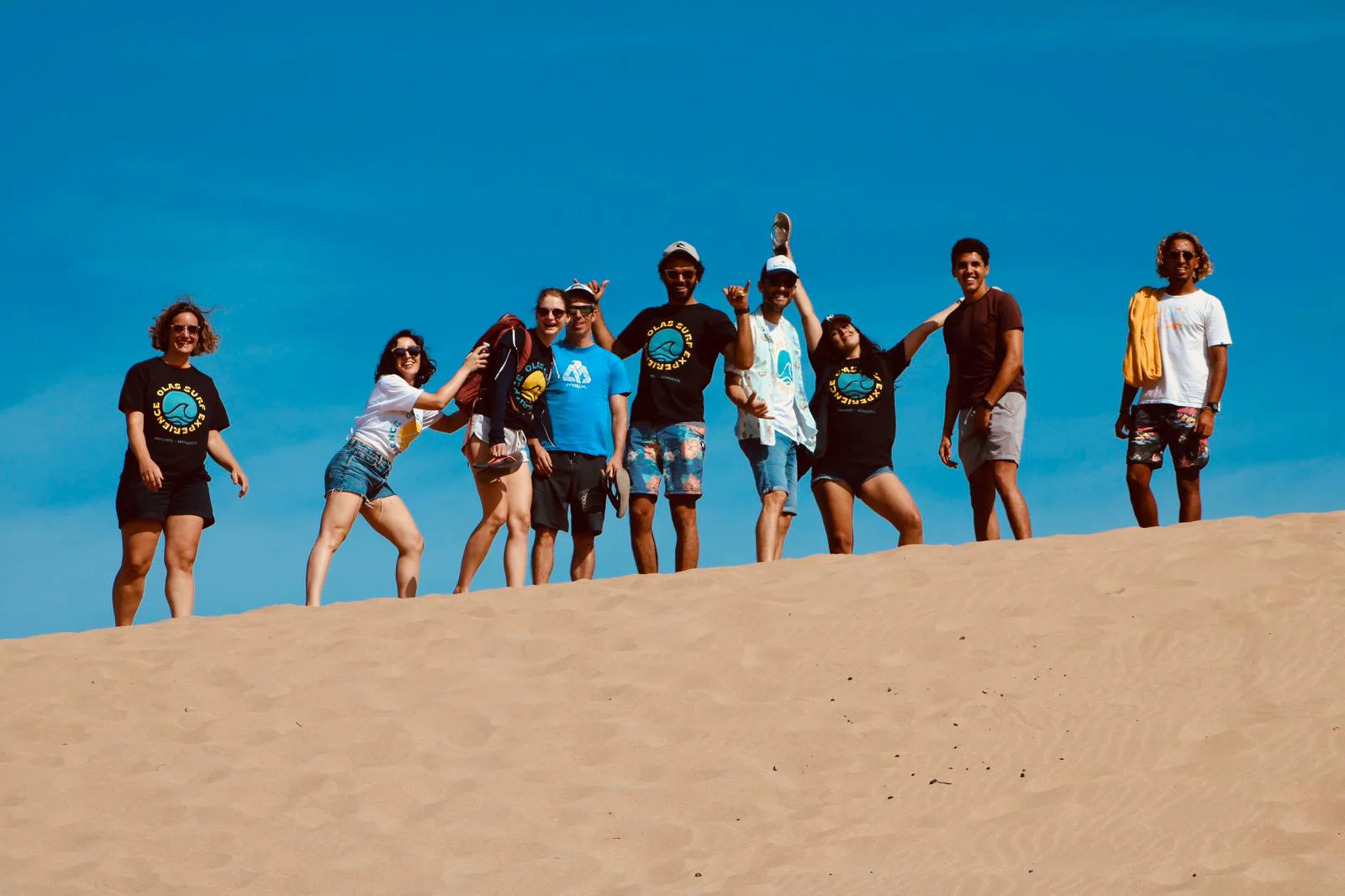
At Olas Surf House, we keep group sizes small, the food is made from scratch, and the instructors know the Bay at Imsouane better than anyone. It’s a good starting point for anyone planning their first Morocco surf holiday.
FAQ: Planning a Surf Trip to Morocco
Do I need a visa to surf in Morocco?
UK, EU, and US citizens don’t need a visa for stays up to 90 days. Your passport needs to be valid for at least 6 months beyond your planned return date. Check your country’s specific requirements before travelling.
Is Morocco safe for surf travellers?
Yes. Morocco is one of the more stable and tourist-friendly countries in North Africa. The surf areas around Imsouane, Taghazout, and Agadir see thousands of international visitors every year. As with any destination, standard travel awareness applies — don’t leave boards or gear unattended, keep valuables secured, and respect local customs.
Can I bring my surfboard on the plane to Morocco?
Yes. Most airlines flying into Agadir accept surfboard bags in the hold. Budget carriers like easyJet and Ryanair charge €40–80 per board each way. Always check the airline’s specific policy before booking. If you’re a beginner or don’t want to deal with board transport, most Morocco surf camps have a range of boards available to hire.
How many waves will I catch per session in Morocco?
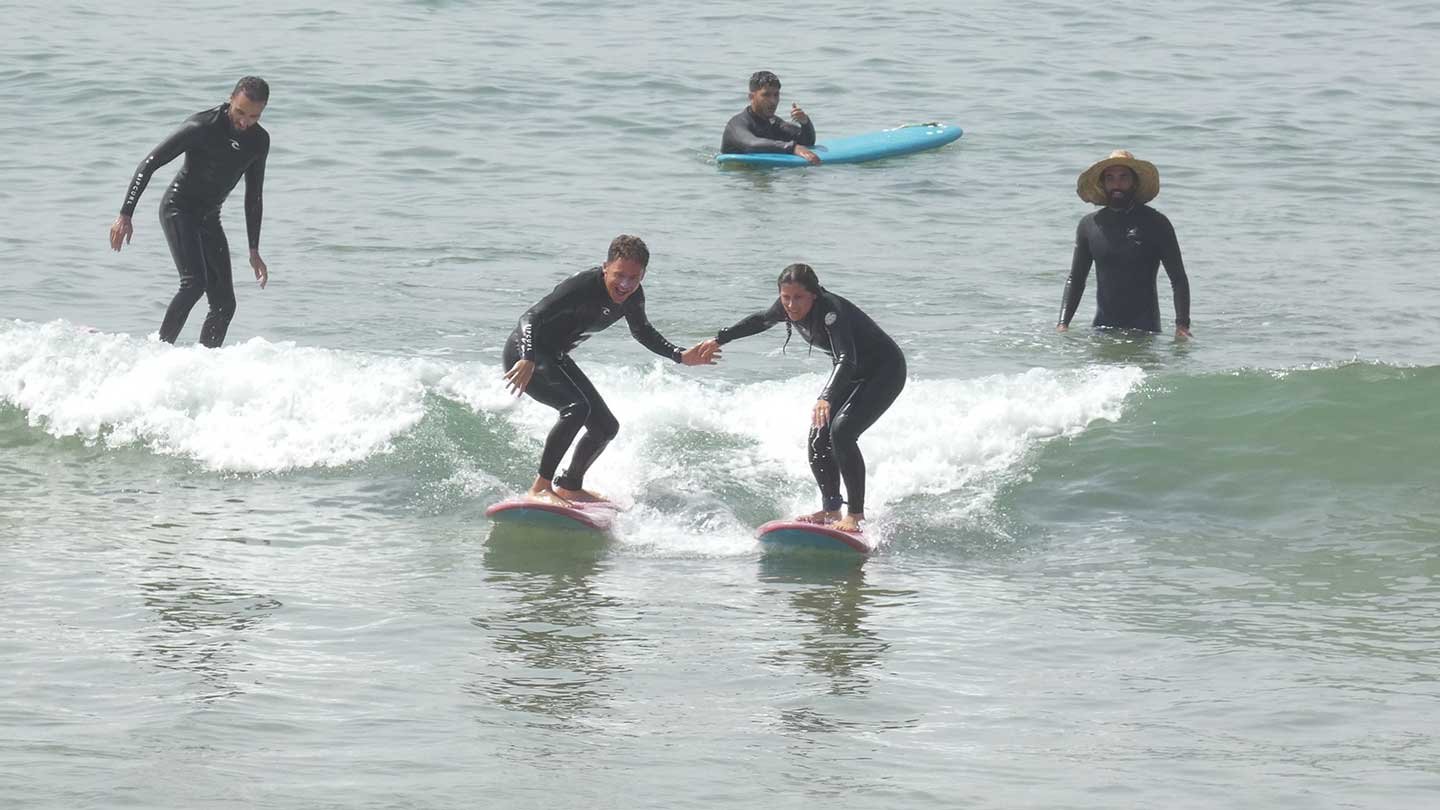
Highly variable. At Imsouane’s Bay on a mid-swell day with 10–15 people out, a beginner can easily catch 10–20 waves per 2-hour session. The wave is so long that you get proper time on your feet each time — which is why progression here tends to be faster than at more crowded or punchier breaks.
What currency does Morocco use?
Moroccan Dirham (MAD). Currently roughly 12 MAD to £1 and 11 MAD to €1. Important: dirhams are a closed currency — you can’t buy them outside Morocco and you can’t take them out. Convert leftover dirhams back to your currency at the airport before you leave. Cash is widely used in smaller towns like Imsouane; Agadir and larger towns also accept cards.
Can I combine a Morocco surf trip with other travel?
Easily. Marrakech is 3–4 hours from Agadir by road — worth 2–3 days if you haven’t been. The coast between Agadir and Essaouira has plenty to explore by car. Some surfers pair Morocco with a stop in the Canary Islands on the way back (Lanzarote and Gran Canaria both have good surf). The country rewards slow travel more than a rushed week — if you can take two weeks, do it.
0 Comments